A cat flattened under the sofa, pupils wide, tail-tip twitching as your feet cross the room is not being naughty, aggressive, or spiteful. She is hunting, with complete commitment, the only prey-shaped thing her indoor world provides.
Why Ankles, and Why From Under the Furniture
The ambush has a recipe, and your hallway provides every ingredient. Prey behaviour in a cat is triggered by movement glimpsed at floor level — a foot appearing and disappearing past a sofa edge mimics something darting between cover, and the gap beneath furniture is a ready-made hunting blind that hides her until the last half-second. It peaks in young, indoor, under-stimulated cats, and at the crepuscular hours — early morning and evening — when a cat's hunting drive is naturally highest, which is why bare ankles on the way to the bathroom are the classic target. Recognise the play face so you do not misread the problem: ears forward or slightly turned, body low and wiggling before the launch, a grab with the front paws and a bite that usually does not break skin, followed by bunny-kicking if the 'prey' struggles. That is play, however unwelcome — flattened ears, growling, and hard biting that draws blood is a different conversation and one to raise with your vet, particularly if it starts suddenly in an older cat.
Feed the Hunt Somewhere Legal
The core fix is scheduled, deliberate play that lets the full sequence run: stalk, chase, catch, and eat. Use a wand toy — it keeps the action at a distance from all feet — and play like prey: darting away, freezing, hiding partly behind furniture legs, never charging at the cat. Ten to fifteen minutes in the evening, and a shorter morning session on the days you can, matters more than one marathon at weekends. Let her win often; a hunt that never ends in a catch frustrates rather than satisfies. Then finish the session with a small meal or a few treats scattered to 'kill', and put the wand away out of reach — a toy that lives on the floor all day becomes furniture, not prey. Rotate two or three end-of-line toys so the game stays novel.
When She Strikes Anyway: Freeze, Redirect, Repeat
Your reaction in the three seconds after a pounce decides whether the game continues. Yanking your foot away, hopping, and squealing is, to a hunting cat, perfect prey behaviour — the ambush gets replayed tomorrow at a higher intensity. Instead, freeze completely. A still foot is a boring foot, and most cats release within seconds once the movement stops. Then throw a toy away from you, past her, so she chases something that is not attached to you, and walk on once she is engaged with it. Every person in the house has to do the same thing, including guests you brief with a smile, because one person who plays the hopping game re-teaches the whole behaviour. Absolutely retire feet as toys everywhere else too: no wiggling toes under the duvet as a game, no hands or feet used as playthings with kittens — the rule cannot have evening exceptions.
Remove the Stage
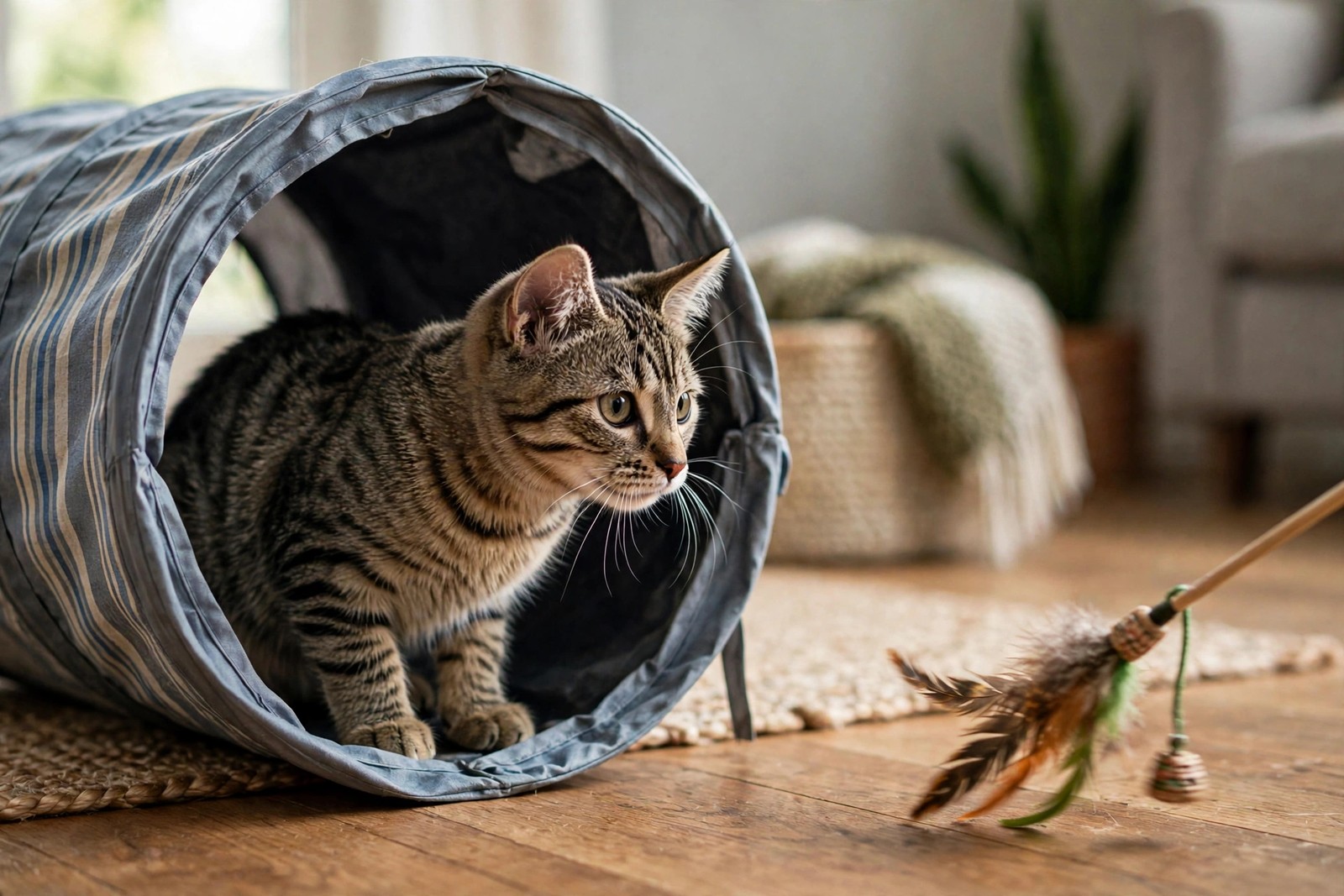
While the play routine takes hold, manage the geography. Block the worst ambush gaps — a line of storage boxes, a draft excluder, or purpose-made blockers under the sofa and bed she favours — so the blind she hunts from simply is not available on your main walking routes. Give her a legal ambush spot instead: a tunnel or a box with holes near a play area, where launching at a toy mouse dragged past the entrance is the house sport. If she is a dawn ambusher, an evening play-and-feed session plus a puzzle feeder left out overnight absorbs the early shift. Most cats fade the habit as the scheduled hunts land, and KinsLe's Care Teams keeps those hunts from depending on one person's memory — set the morning and evening play as assigned duties across the household, each marked done with a timestamp, so the cat gets her hunt every day whether or not anyone was bitten into remembering.