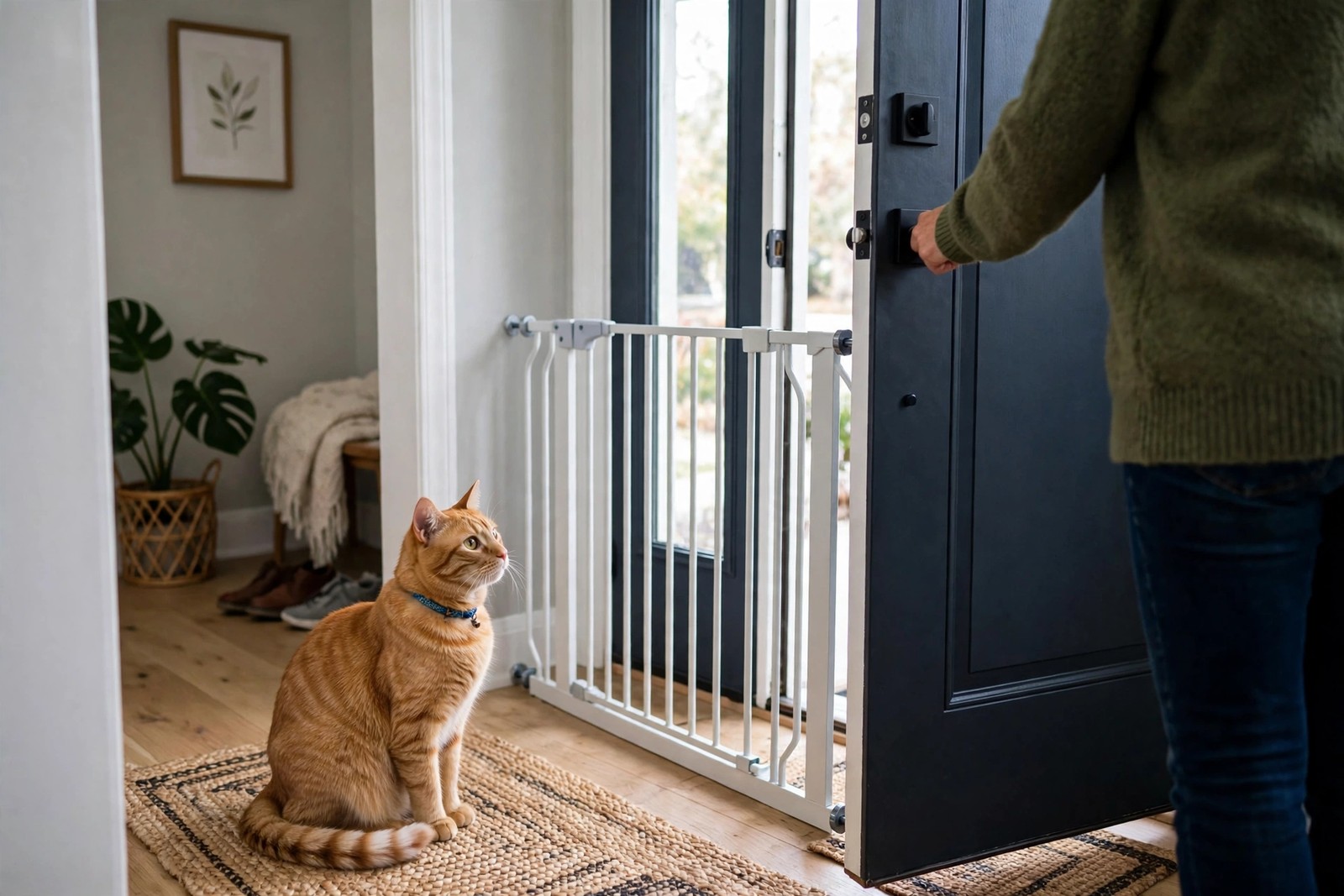
You stop a door-dasher by changing the routine around the door, not by scolding the cat: hellos happen well inside the house, play and treats stay far from entrances, and people come in singly, closing the door behind each of them. Add a physical buffer like a baby gate or a two-door routine for determined cats, and most dashing fades within a few weeks.
Why Cats Make for the Door
It is rarely wanderlust. The front door is the most exciting place in the house — it predicts visitors, deliveries, interesting smells, and you arriving home. Many cats have learned that the threshold is where good things happen because owners fuss over them the second they walk in. Others dash from boredom, from curiosity about outdoor sounds and birds, or because dashing once earned them a thrilling chase game. Unneutered cats may have stronger roaming urges, which is worth discussing with your vet. Understanding that the door itself has become the reward tells you the fix: move the reward away from the door.
Building a Habit Buffer
Create a greeting spot several feet inside — a mat, a chair, a particular rug — and make that the place where hellos, treats, and strokes happen. When you come home, walk calmly past the door zone, close the door, then greet your cat at the buffer spot. Within days most cats start waiting at the new spot instead. Keep wand toys, treat jars, and play sessions in the middle of rooms, never near entrances, so the doorway becomes the most boring place in the house. Feed her away from the door too, ideally on a schedule that has her occupied at your usual arrival time.
Household Rules That Actually Hold
- One person, one door: Everyone enters alone, closes the door, then lets the next person in. No holding the door wide while chatting on the step.
- Bags down outside the swing zone: Set shopping down, step in, close the door, then retrieve it — or pass bags through a barely open door.
- Visitors get a heads-up: A small sign by the bell — "Cat inside, please close the door quickly" — saves the awkward shout.
- Kids get a job, not a lecture: Make them the official "door captain" who checks where the cat is before opening up.
For a truly determined dasher, add a baby gate in the hallway or keep an interior door closed during peak coming-and-going times, creating an airlock. A tall cat tree or shelf near — but not at — the entrance can also give her a legal perch to watch arrivals from.
What Not to Do
Never punish a cat for dashing or for coming back; punishment teaches her that you near the door are scary, which can make her bolt faster and hide when found. Avoid chasing, which turns escape into a game, and avoid picking her up at the threshold as a routine, which rehearses the exact spot you want her to avoid.
Keeping Everyone Consistent With KinsLe
A door routine only works if the whole household — and regular visitors — follow it. Write the greeting spot, the one-at-a-time entry rule, and the visitor heads-up down where everyone in the house can find them, instead of relying on three remembered versions of them. Set the rules once, share them clearly, and the front door stops being a daily standoff. Her profile, too, stays limited to the relatives you invite, because KinsLe Family Sharing opens it to nobody else.