
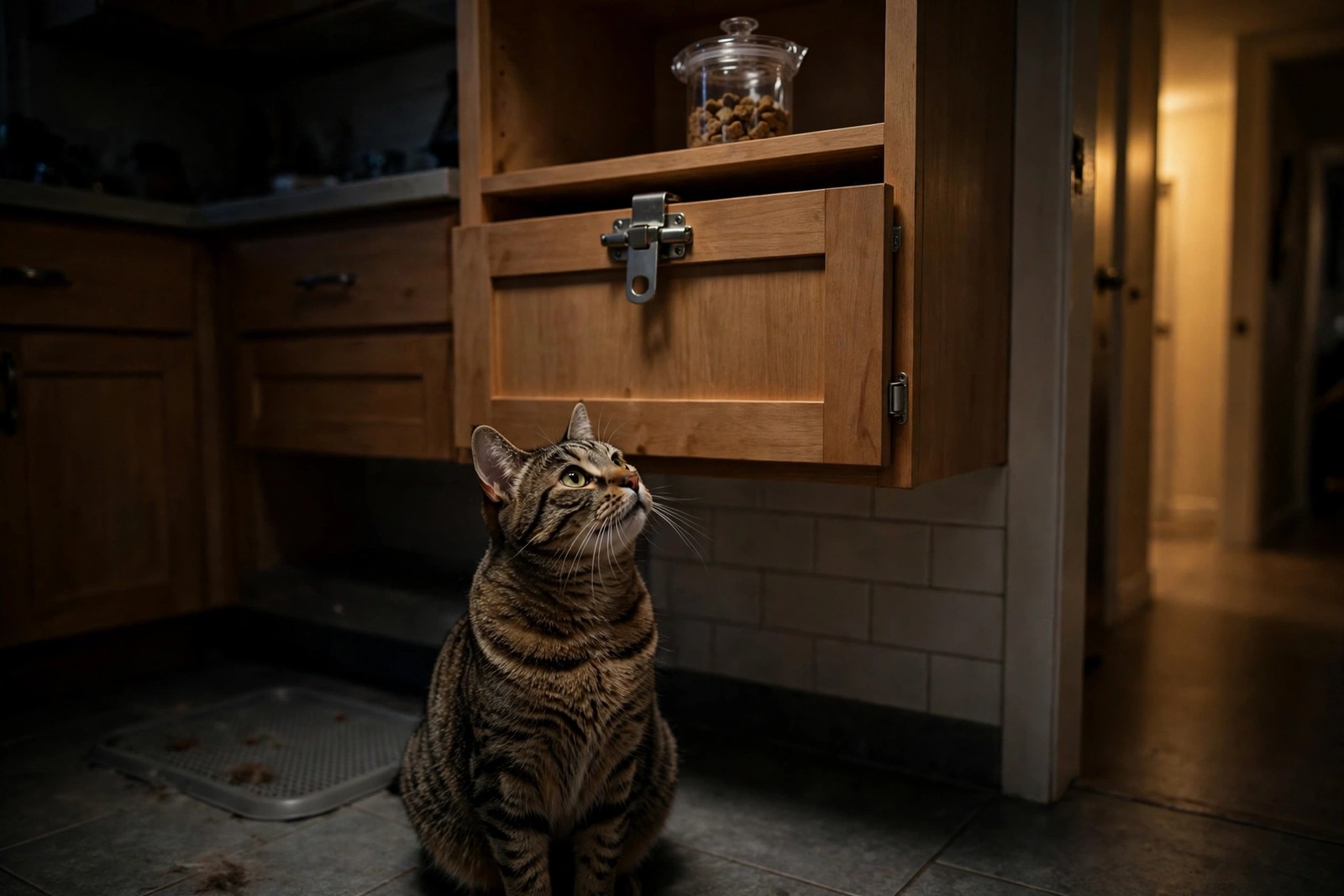
A cat that opens cupboards at night is not being defiant. It has solved a puzzle, been paid in treats for solving it, and now works the route on the quietest shift, when nobody interrupts. Stopping the raids takes three moves together: hardware the cat cannot operate, a treat supply relocated somewhere genuinely unreachable, and an evening routine that removes the restlessness sending the cat hunting through the kitchen in the first place. Any one move alone usually just relocates the problem to the next cupboard.
Fit Latches the Cat Cannot Work
Start with the doors and drawers already being opened, because those are the ones the cat has practiced. Plain childproof catches do the job: press catches that need a firm squeeze and push together, or magnetic catches that release only when a key piece is held against the door. Fit them exactly as their instructions describe, test each one with a hard pull, and check the treat drawer itself as well as the cupboards around it, since a cat that loses one route tests the neighbors within the night. Doors that close on sprung hinges or sit slightly warped deserve attention too, because a gap a paw can hook is an invitation hardware cannot fully answer.
Move the Prize, Not Just the Problem
Locking the drawer while the treats stay inside it leaves the cat working at a smell it knows is there. Relocate the supply into a sealed, rigid container, and store that container inside a latched cupboard or on a high shelf the cat cannot reach from any counter or appliance. The same applies to food bags and any medication, which should never share a raided space in the first place. Then make the old territory boring: leave the formerly raided cupboards holding dull, sealed, low-interest items, so even a door that does get opened pays nothing. Learned success fades when the cupboard stops rewarding the effort, and most cats abandon a route that has paid out nothing for a run of nights.
Drain the Night Motive
Night raiding is often a schedule problem wearing a lock problem's clothes. A cat that slept through the evening, ate early, and watched the house go dark is awake, hungry, and under-occupied at exactly the hour the raids happen. Shift the rhythm instead: a real play session in the evening, worked like a hunt with a wand toy, followed by the day's last meal timed just before the household settles. A cat that has hunted and eaten on schedule tends to groom and sleep through the hours it used to spend testing handles. Questions naturally surface while you make these changes, such as which catch suits a heavy drawer, whether a high shelf is truly out of reach, or how late the last meal should land, and those specifics are worth asking about rather than guessing.
If Raiding Turns Into Something Else
A cat that suddenly raids after years of ignoring cupboards, eats far more than usual, loses weight while eating more, or cries at night in a new way deserves a veterinarian's look, because appetite and restlessness changes can have physical causes a latch cannot answer. Ordinary learned raiding, by contrast, fades steadily once the hardware holds, the prize has moved, and the evenings carry real occupation. Give the new arrangement a fair run of nights before judging it, and recheck the catches after the first week, because early failures are usually one loose fitting rather than a failed plan. When the next latch or routine question comes up mid-fix, Kimmy will meet it in KinsLe with an answer taken from KinsLe Answers.