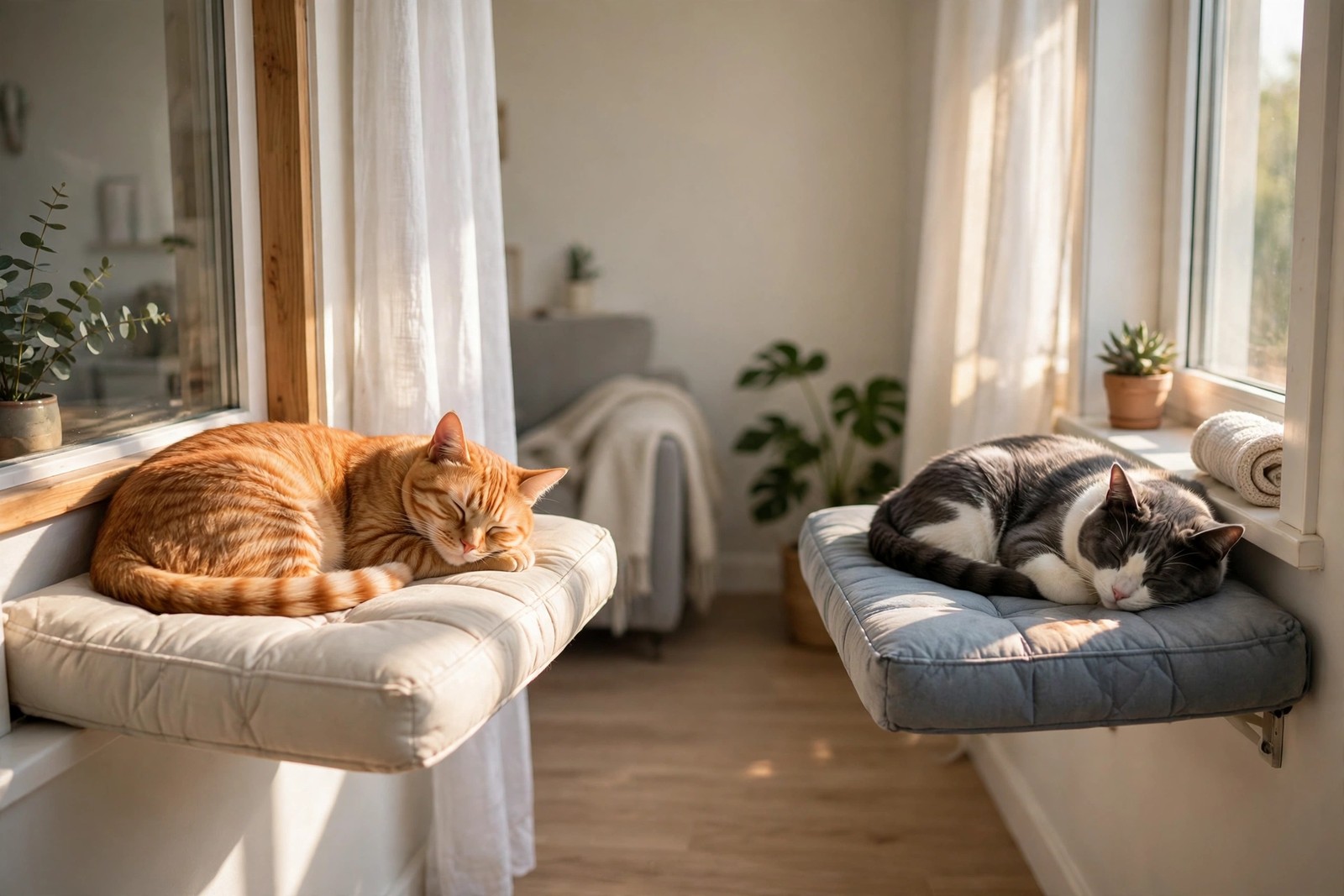
When two cats fight over one sleeping spot, owners usually try to manage the cats. The experienced fix manages the furniture. A sleeping spot becomes 'the best' for concrete, copyable reasons, and a household that supplies those reasons twice rarely needs to intervene in the argument at all.
What Makes That Spot the Prize
Dissect the disputed bed before you shop or move anything. The classic prize combines several currencies at once: warmth — a sun patch, a radiator's reach, the top of a warm appliance; height, so the sleeper surveys the room and cannot be ambushed; softness with the household's scent in it, often the cushion on the chair you sit in most; and a position on a route the cat patrols anyway, near a door or window she monitors. A copy placed where it is merely convenient for you — a cold floor-level basket in a corridor — fails every term of that list, and the cats will tell you so by continuing to fight over the original.
The Rule of One Each, Plus a Spare
Provide at least as many high-quality sleeping spots as you have cats, plus one extra — the spare matters, because it means a cat displaced from one bed always has a genuinely good option that is not another cat's bed, and choice is what dissolves guarding. Build each copy to the same specification as the prize: if she fights for the sunny sill, put a padded perch or cushion in a second sunny window at a similar height; if the prize is your chair, a bed on a raised platform nearby with an unwashed blanket from your sofa borrows the scent honestly. Place the copies in different areas, not in a row — two beds side by side are one territory with a seam in it, and the stronger cat will simply own both. Let each cat discover and claim a spot in her own time; never lift a cat and deposit her in the new bed, which teaches her it is where she gets put, not where she chooses to rule.
Managing the Clashes While the Copies Land
Expect a settling period and handle incidents by lowering temperature, not by verdicts. If you find one cat staring the other out of the prize bed — the long fixed look, the slow approach, the sleeper's ears flattening — interrupt quietly with a thrown toy or a call to the kitchen before contact happens, and note which cat was displaced and at what hour. Never punish the cat holding the spot and never remove her to install the other; that teaches both cats the bed is contested by you as well. Guarding that spreads beyond sleeping spots — to food, litter trays, doorways — or staring matches that become daily furniture in the house suggest the resource map needs widening generally: more trays, more feeding stations, more vertical routes, all spread out, applying this same duplication principle room by room.
When It Is Not Really About the Bed
Read a sudden change in the pattern as a flag. A cat who has shared peacefully for years and starts evicting her housemate, or one who begins sleeping in odd, low, hidden places instead of contesting the spot at all, may be sore, unwell, or stressed by something outside the sleeping arrangements entirely — pain makes cats both more defensive of rest and less able to climb to high beds. If the fighting is new, escalating, or paired with appetite or litter changes, a vet check comes before any more furniture. Where the pattern is the familiar one — same spot, same sunny hour, two healthy cats — the diary of clashes is your design tool, pointing to where the next bed should go. And if you want another angle on a stubborn stand-off, put a follow-up question to KinsLe's Kimmy; she answers using the KinsLe Answers library.