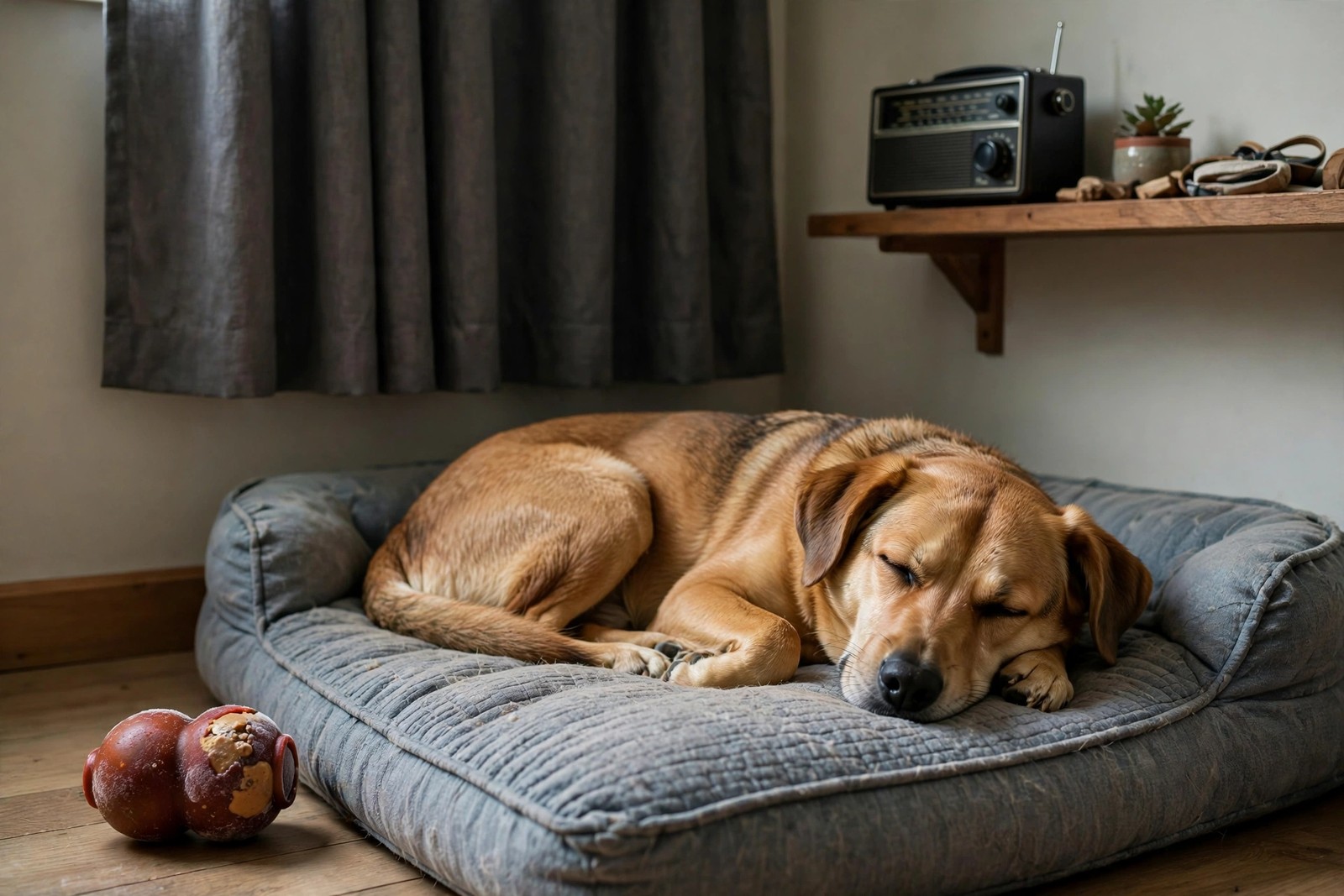
Window barking is self-rewarding in a way few behaviours are. Your dog barks at a passer-by, the passer-by leaves, as passers-by always do, and your dog concludes the barking worked. Repeated for six or seven hours a day, that conclusion becomes a deeply practised job. Because you are at work, you cannot interrupt the rehearsal, so the plan works differently: change the room so the show cannot run, give the day a shape that leaves less empty arousal, and install a better routine during the hours when you are home to teach it.
Remove the Stage During the Day
Close curtains or blinds on street-facing windows, or fit removable frosting film to the lower half of the glass so light still enters but figures do not. Base your dog in a back room or a part of the house away from the front window, with the bed, water and toys there, rather than leaving the best seat in the house at the glass. Many dogs bark far less within days once the visual trigger is gone, because there is nothing to guard against.
Add masking sound at a modest volume: a radio or television left on at the level you would use yourself blurs the sharp sounds of footsteps, voices and car doors that start barking. Test your setup with a camera or a recorder for a few days. What you learn matters: a dog who sleeps most of the day once the view is blocked had a boredom and trigger problem, while a dog who paces, pants, drools or barks at nothing visible may be anxious about being left, which needs a different plan and often professional help.
Give the Day Occupation and a Break
A tired, occupied dog rehearses less. Walk properly before work, including sniffing time rather than a brisk toilet lap, and leave a sniffing game or a frozen food toy as you depart so leaving predicts something good. Frozen toys and lickable mats left at departure occupy the first restless half hour, which is when window habits usually ignite.
Break the middle of the day if you possibly can: a dog walker, a neighbour, or a family member working from home some days changes that long daily rehearsal into two shorter, sleepier halves. Keep greetings at the break calm and the routine plain, a toilet trip, a short game, fresh water, then settle again, so the visit lowers arousal instead of spiking it.
Retrain the Alert Routine in the Evenings
In the evenings, with the curtains open and you present, teach the replacement. When your dog notices someone and gives a brief bark, thank your dog calmly, call your dog away from the window, and reward the arrival and the quiet that follows with food and a small game away from the glass. If barking continues, you were too late or the setup is too hard; close the curtains for that evening and practise the recall away from windows until it is solid.
Once coming away is reliable, reintroduce the view in stages: film partly removed, or one curtain open for supervised evening periods, while the daytime setup stays blocked. Rush this stage and the daytime rehearsal returns. If neighbours report barking despite blocked views and a broken-up day, or your camera shows distress rather than alerting, ask your veterinarian to refer you to a behaviourist, because separation distress does not yield to window film. In KinsLe, Care Teams keeps the midday visits, frozen-toy prep and evening practice sessions assigned to whoever is home, each marked done with a timestamp you can check from work.