
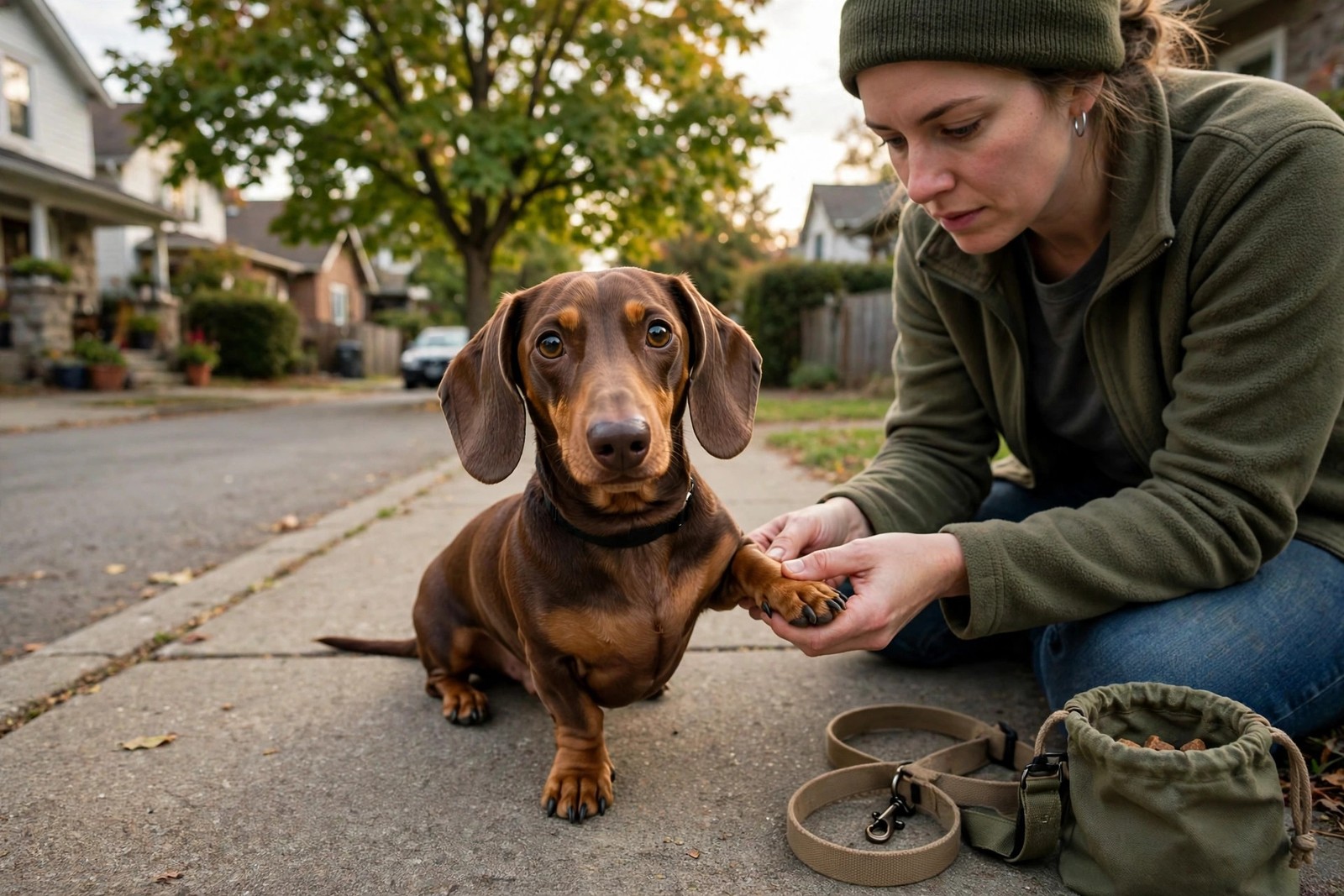
Dachshunds bark a lot, and they bark big. Owners routinely watch visitors scan the hallway for a large dog and then look down, surprised, at the long, low source of the sound. That deep chest and resonant bark is heritage, not attitude: the breed was developed in Germany to go down badger setts and rabbit warrens, hold dangerous quarry at bay underground, and bark continuously so the hunter on the surface could dig to the right spot. A dog bred to be heard through earth is not going to be discreet about the delivery driver.
Independent Hunters Make Stubborn Sentries
Underground, no handler could direct the dog, so Dachshunds were selected to assess, decide, and persist on their own. In a flat or a suburban house, that same wiring produces a dog who appoints itself head of security, patrols the window line, and keeps barking after other breeds would have shrugged and lain down — quitting early was never part of the job description. Barking also flares when a Dachshund is bored or under-exercised, and because the breed adores food and gains weight easily, owners sometimes under-walk them, which quietly feeds the noise problem.
Managing the Triggers You Can Control
You will not train the watchdog instinct out, but you can shrink its workload. Block the street view with film or furniture so passers-by stop triggering rehearsals, give the dog a defined lookout alternative such as a mat away from the door, and meet scent needs with garden searches and snuffle-style scatter feeding, since a Dachshund's nose is its first love. Protect that long back while you do it: favour ramps over repeated sofa leaps, keep weight lean, and build exercise from regular moderate walks rather than weekend marathons. A tired, lean Dachshund with a job still announces guests — it just wraps up faster.
Training a Dog Who Argues Back
Dachshunds respond poorly to being shouted down, which most read as the family joining the bark. Work instead on timing: interrupt early with a cheerful cue before full voice, call the dog away from the door or window, and pay the recall with something excellent, because you are asking the dog to abandon a deeply bred duty. Teach a quiet cue in easy setups first, keep sessions short and game-like, and expect slower progress than with an eager-to-please breed — persistence cuts both ways. Puppies should meet visitors, street sounds, and other dogs early and calmly, since an under-socialised Dachshund often grows into a dog who barks at everything unfamiliar on principle.
Household agreement matters more with this breed than most, because one person slipping the barking dog a biscuit to buy quiet teaches it that persistence pays. KinsLe Care Teams keeps the whole household on one plan by assigning the door routine, the daily walks, and the scent games to named people with completion stamps, so your Dachshund hears the same rules from everyone and the quiet behaviour you reward is the behaviour you get.