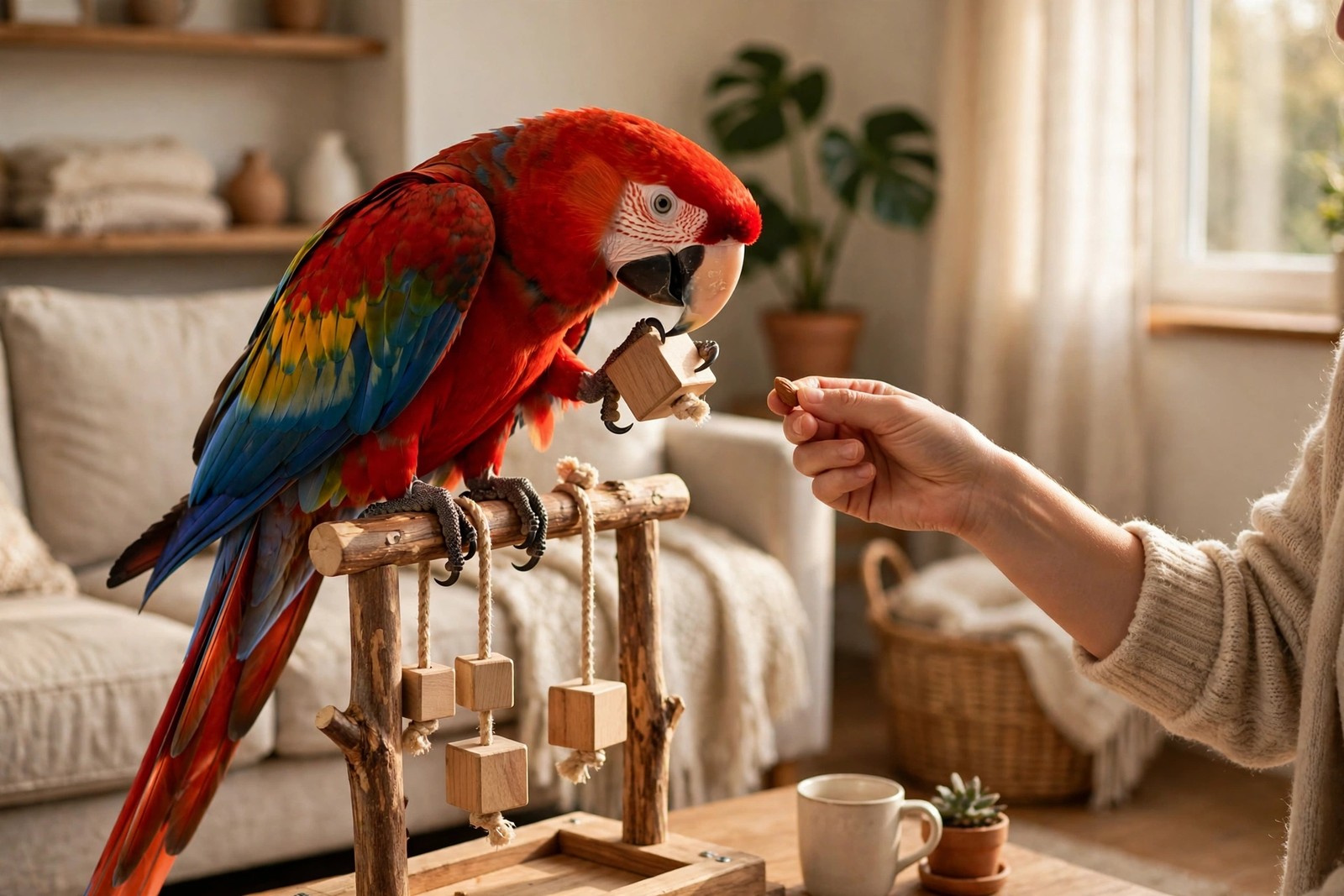
Attention screaming is a training success story — your parrot's. At some point the bird screamed, and someone looked, talked, laughed, shouted, rushed over, or let the bird out "just this once." To a highly social, intelligent parrot, all of those are payment, including the angry ones: a shouting human is still an audience. Untraining it means reversing the payment schedule completely, and every person in the home has to reverse it together, because one person caving in occasionally makes the behaviour stronger, not weaker.
The Core Protocol: Nothing for Noise, Plenty for Pauses
While screaming is happening, become boring. No eye contact, no talking about the bird, no leaving the room theatrically, and definitely no approaching the cage. Wait for a pause — two or three seconds of quiet at first — then immediately give what the screaming was asking for: attention, conversation, a treat, a step-up, or a game. You are not punishing the noise; you are making quiet the tool that works. Sessions happen all day in small moments rather than in one formal lesson.
Prepare for the extinction burst. When a long-rewarded behaviour stops paying, parrots typically scream louder, longer, and more creatively for a few days before the penny drops. That burst fools many owners into concluding the method failed at exactly the moment it is working. Warn everyone in the household — and, if walls are thin, your neighbours — that the first week may be the loudest.
Stop the Tank Running Empty
A parrot whose social and mental needs are met on a schedule has far less reason to demand them. Build in predictable together time — training tiny tricks, shared play, supervised out-of-cage time — at roughly consistent times, so your bird can rely on attention arriving without having to summon it. Layer in foraging work throughout the day: food hidden in parcels, toys rotated regularly, and destructible wood and cardboard to occupy the beak. Boredom and a full food bowl eaten in five minutes leave a clever bird with hours of unspent energy.
Sleep, Health, and Honest Limits
Tired parrots are loud parrots. Most pet parrots do best with a long, consistent night — typically around ten to twelve hours in a dark, quiet sleep cage or covered area, undisturbed by television and late-night traffic through the room. If screaming is sudden, new in an older bird, or paired with appetite changes, feather damage, or altered droppings, book an avian veterinarian before treating it as purely behavioural, because illness and pain can present as noise. And distinguish normal parrot sound — dawn and dusk contact calling, excited chatter — from demand screaming: the goal is a bird who can be happily vocal without holding the household hostage, not a silent parrot, which would be an unhealthy aim.
The plan only works when nobody secretly pays the screaming, and KinsLe Care Teams helps by assigning the morning foraging setup, scheduled play sessions, and sleep-cage routine to named people, each task timestamped so missed enrichment is visible the same day.