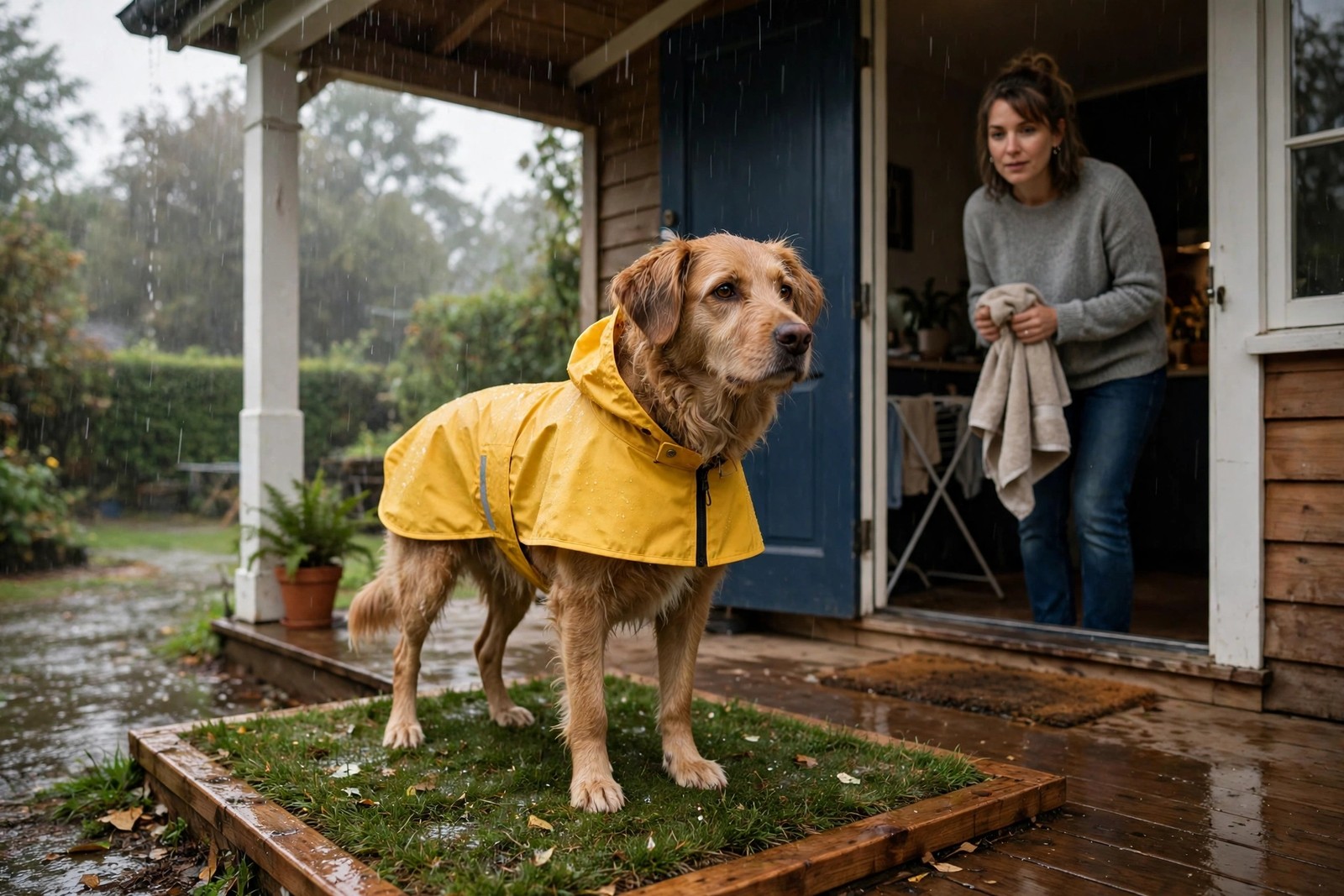
A dog who hates rain is not being difficult on purpose; wet ground, dripping fur, and storm sounds genuinely bother many dogs, and a day planned around that fact goes better than a day spent arguing with it. Structure the plan in the order the dog experiences the problem: toileting first, because that is urgent, then outdoor trips, clothing, indoor energy, and drying. Write the plan down before the next storm rather than improvising at the back door with a dog backing away from the weather and a person already late for work.
Toileting First: A Sheltered Spot and an Indoor Backup
Give the dog a covered or sheltered toilet option before asking for a walk. A spot under eaves, a porch corner, a carport, or a place shielded by a fence and an umbrella is often acceptable when an open lawn is refused outright. Set an indoor backup too: a pad or a patch of real grass on a porch or in a garage, introduced calmly before it is urgently needed, so a dog who truly will not go outside still has a sanctioned place. Use quick out-and-in trips at the lightest rain in the forecast gap, keep the trip short and cheerful, and deliver warm praise the moment the dog goes, then straight back inside to the towel.
Walks Shifted, Not Abandoned, and Gear the Dog Accepts
Move walks around the weather instead of surrendering the whole day: check the pattern, take the longer outing in a drier window, and keep wet trips brief and purposeful. Rain gear helps some dogs a great deal, but only gear the dog actually accepts. Introduce a coat gradually indoors first, fitted, worn for short happy sessions with treats, and built up before it is ever asked to perform in a downpour; a dog panicking about clothing on top of rain has two problems instead of one.
Spending the Day's Energy Indoors
A shortened walk leaves energy unspent, so plan indoor replacements rather than enduring a restless evening. Short training games rehearse known behaviors and teach small new ones in bursts of a few minutes. Scent work tires a dog surprisingly well: hide treats around one room, scatter part of a meal in a snuffle arrangement of rolled towels, or let the dog search boxes for a favorite toy. Chew time with an appropriate long-lasting chew, licking mats of plain food the dog is used to, and gentle play in a hallway all count. Rotate activities through the day so the dog settles between them instead of building to one frantic hour.
Drying, Paws, and the No-Punishment Rule
Set the return station up once: towels at the door, a mat for wet feet, and a routine of paws wiped, coat dried, and gear hung up before the dog disperses water through the house. Check between toes for grit washed in by puddles, and dry ears and skin folds on dogs who carry them. Hold one rule firmly all day: never punish a dog for holding on, refusing, or having an accident on a storm day. Punishment teaches a stressed dog that toileting near people is risky, which makes the next rainy day worse. Clean accidents calmly, praise outdoor and backup-pad successes loudly, and let the plan carry the blame.
Whoever Is Home, the Plan Runs
Care Teams assigns the storm-day jobs so the plan works regardless of whose schedule the rain lands on. One person can be named for weather-watching and choosing walk windows, another for indoor game turns through the day, and whoever comes home first takes drying duty and the sheltered toilet trip. Because the jobs are written with named people attached, a dog who refuses wet walks gets the same backup pad, the same praise, and the same dried paws from every member of the household. At bedtime, reset the backup pad, hang the towel to dry, and leave tomorrow's storm job listed under the Care Teams duties in KinsLe.