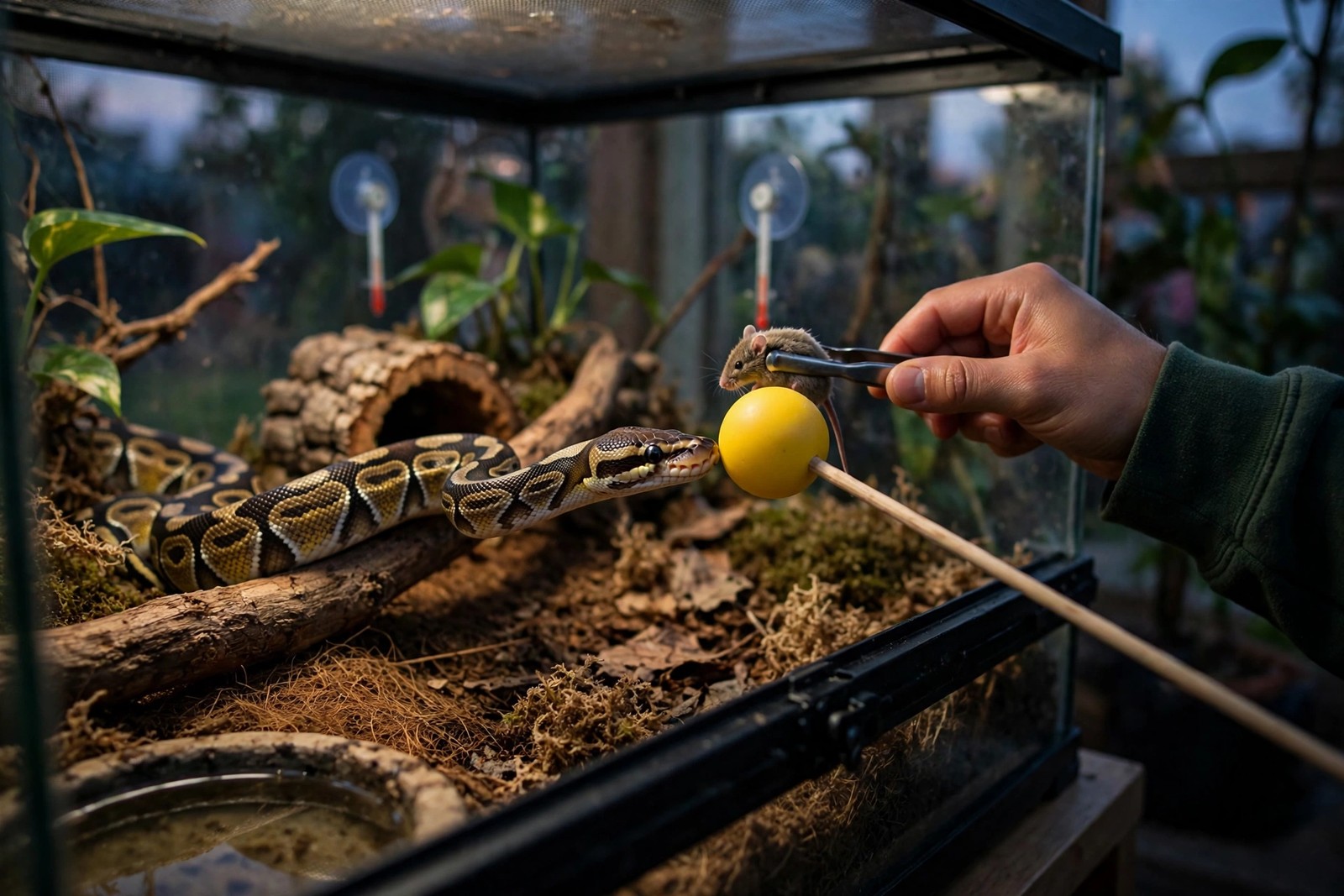
Target training gives a shy snake a job to do at feeding time. Instead of a rodent appearing suddenly in front of a frightened animal, a bright target appears first, the snake follows or touches it, and food arrives at the target. Over time the target becomes a reliable promise: food comes here, and nothing else happens here. That predictability is exactly what a shy snake lacks, and it is why target training often succeeds where simply offering prey repeatedly does not.
Build the Target and the Two Cues
Make a target from a stick, a length of dowel or a chopstick, tipped with a small bright ball, a coloured bead, or a poker chip, fixed firmly so it cannot come off in the enclosure. The target is the feeding cue, and it must never be used for anything else. The handling cue is separate: a gentle tap with a snake hook along the body, which tells the snake it is being lifted and that no food is involved. This distinction, called tap training, matters because a snake that expects food every time a hand enters the enclosure will strike at hands. A snake that knows the hook means handling and the target means feeding can stay calm for both, and a shy snake in particular gains confidence from knowing which event is happening.
Teach the Target in Small Steps
Work inside the enclosure, in the evening, with the room dimmed and the hide left in place, so your snake can watch from safety and choose when to engage. Hold the target still a short distance from the hide entrance, and wait for a tongue flick, a head turn, or a slow approach toward it. Reward the first interest immediately by presenting the warmed prey with tongs just behind the target, so the strike lands at the target's position. If your snake will not leave the hide, rest the target at the hide entrance and the prey behind it, then cover the enclosure and leave the room; a shy feeder often completes the sequence in private, and the target is still part of the lesson. End the session after one successful feed, and never drill a shy snake with repeated target presentations in a single evening.
Build Distance and Reliability
Once your snake follows the target out of the hide reliably, move the target a little further each feeding, across the enclosure floor or toward a feeding spot you have chosen, so the snake learns to travel to a predictable place for food. Keep the target at body level, move it slowly, and present the prey at the target rather than waving it around the enclosure. If your snake loses interest, step back to the previous distance rather than pushing forward, and check the basics: enclosure temperatures, shed status, and whether the prey is warm enough to register. Progress is measured in feedings, not days, so a shy adult that feeds weekly will take longer in calendar time than a youngster feeding more often, and that slower pace is normal rather than a failure.
Keep the Routine Consistent
Use the same target, the same feeding spot, and the same sequence every time, and have one keeper run the sessions while the training is new, since different hands and different targets reset the learning. Log each session briefly: the date, the step reached, whether the snake followed the target, and whether it fed. That log shows whether the snake is advancing, stalling at one distance, or regressing after a shed, and it lets a second keeper continue without guessing. KinsLe's Care Teams keeps those sessions assigned to one keeper at a time, each session marked complete with a timestamp, so the training stays consistent and the target keeps its single, reliable meaning.