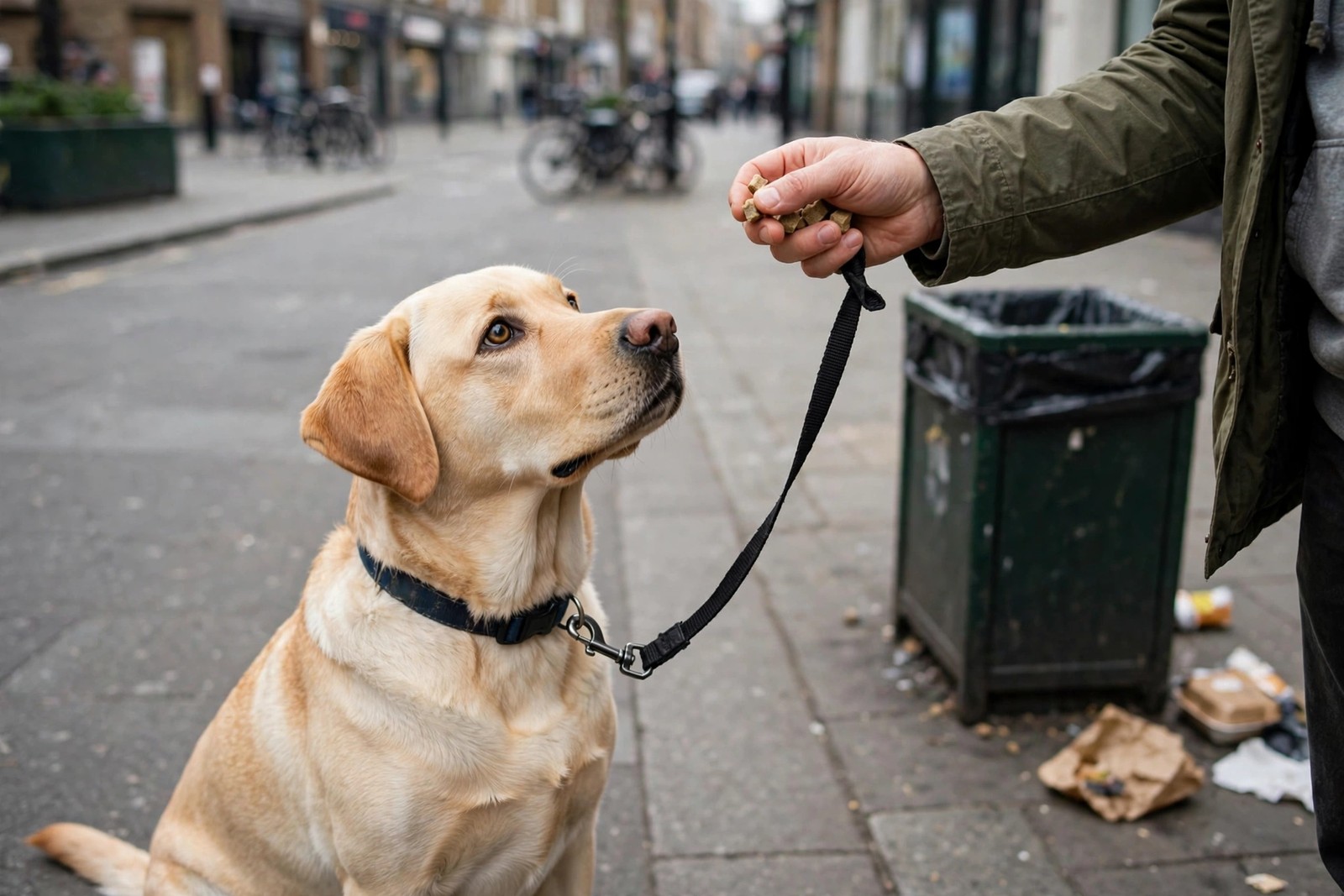
Cooked bones splinter into sharp shards, discarded takeaway hides skewers, foil and onion, and a fast dog can swallow any of them in the seconds it takes you to react. No cue is a force field, so this training has two halves: a rehearsed drop-it and leave-it strong enough for real streets, and management that buys you the seconds the cue needs. Build both halves together rather than hoping a kitchen drop-it transfers to a pavement chicken bone.
Teach Two Different Skills
Leave-it covers anything your dog has noticed but not yet touched: a wrapper under a bench, bones beside a bin. Drop-it covers what is already in the mouth. Dogs learn them as separate pictures, so train both. For leave-it, reward your dog for turning away from a covered treat toward you, then uncover and raise the difficulty gradually. For drop-it, trade low-value items at home for scattered excellent food, and give the item back often, so releasing never feels like confiscation. A dog who only knows one of the two will still dive for finds that arrive in the other order: spotted first, or grabbed before you saw anything at all.
Build Drop-It at Home First
Practise at home for five minutes, three times a week. Work a ladder from dull toys to favourite toys to a long chew, paying each drop with a scatter of your very best food and returning the item in training. Add the distractions of real walks in small doses: practise in the garden, then on the driveway, then on a quiet street with items you placed yourself, such as a clean empty wrapper or a toy carrying food smells. Keep your voice bright and your body still when you cue; lunging, shouting or looming over a dog with a prize teaches speed-swallowing, which is the exact reflex you are trying to undo. If your dog will not trade a staged item, that stage is too hard: lower the value, raise the payment, and rebuild.
Stage Finds on Real Routes
Once home drops look automatic, rehearse on the routes where finds actually happen: past takeaway shops, picnic lawns, bus stops and bin corners. Walk your dog past a wrapper you dropped a moment earlier, cue leave-it early while your dog can still succeed, and pay generously for looking back at you. Sometimes let your dog pick up a safe staged item so drop-it gets its rehearsal too, then trade and celebrate. Shorten the lead through litter-heavy stretches, scan the ground ahead rather than watching your dog's mouth, and cross the road around obvious spills. Dogs read these routines quickly: the streets where you always scan, shorten and pay become the streets where checking in with you pays better than scavenging.
Manage the Gap While Training Catches Up
Until the cues hold at real finds, management carries the risk. Keep committed scavengers on a shorter lead near food litter, and consider a basket muzzle your dog has been taught to enjoy at home, worn on the worst routes, so a failed cue cannot become an emergency. If your dog does swallow a cooked bone, skewer or unknown food, do not wait to see how it goes: contact your vet promptly and describe what went down, because sharp and fatty finds can cause harm that is not visible from the outside. Note which streets produced finds and share them with everyone who walks your dog, so routes can be adjusted instead of relearned the hard way by each person.
Through KinsLe's Care Teams, that shared picture stays current: assign the three weekly practice sessions and note the litter-heavy streets as walking duties for each person, and every completed walk is timestamped, so your dog gets the same scanning, the same cues and the same generous pay from every walker.