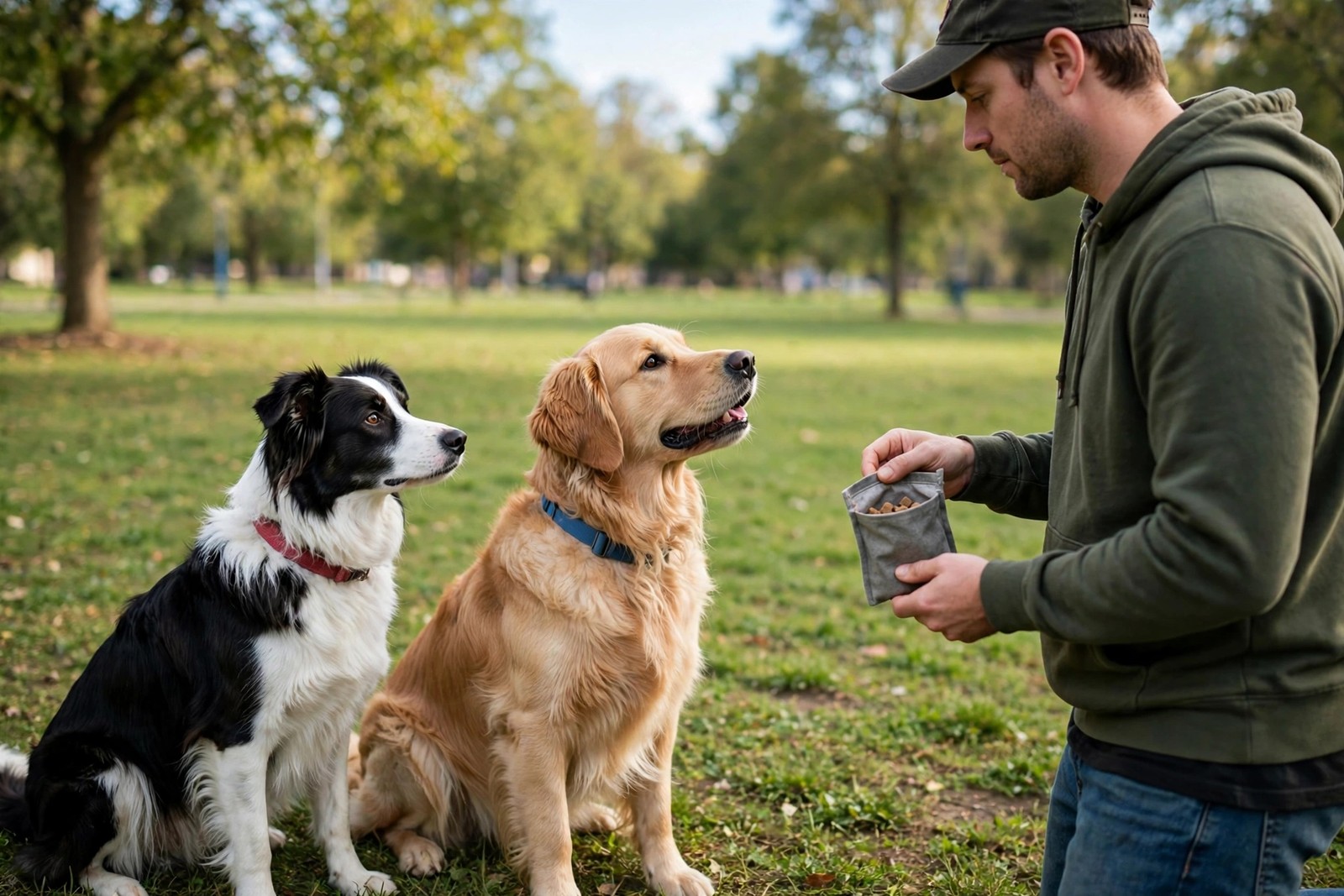
Play between dogs runs on a dial, not a switch. One minute there is loose, wiggly wrestling with pauses and role swaps; a few minutes later the same game is faster, harder, and one bad moment from a scuffle. An 'enough' cue gives you a way to turn the dial down on purpose: a word the dog has learned at low excitement that means the game pauses now, coming to you is worth it, and something good follows. The cue is only ever as strong as the rehearsal behind it, which is why it is built at home and spent carefully outdoors.
Build the Cue Where Nothing Is Happening
Start with a behavior the dog already offers happily, usually a recall, a hand touch, or a settle on a mat, and attach the word 'enough' to it in quiet indoor sessions. Say the word once, get the behavior, and pay with something the dog genuinely values, then release the dog back to ordinary life so the word predicts a brief, profitable interruption rather than the end of all fun. Practice at low arousal in the yard next: call the cue during a lazy game of fetch or a sniff around the fence, reward, and send the dog back to the game most of the time. Sending the dog back is the secret ingredient. A cue that always ends play gets weighed and ignored; a cue that usually returns the dog to the game stays cheap to obey.
Read the Tipping Point Early
The cue has to land before arousal crests, so learn the signs that play is tipping. Healthy play is bouncy and curved, with dogs taking turns chasing and being chased, breaking off to sniff or shake, and checking back in soft-bodied. Escalation looks different: bodies stiffen, wrestling turns to pinning with one dog always underneath, speed keeps climbing without pauses, mouths close, and play noises sharpen into fixed staring or hard barking. Intervene at the first pattern change, not at the first growl. Calling 'enough' while the dog can still think gets a response; waiting until the dog is over threshold asks for a recall from an animal who has stopped hearing you.
End on the Cue, Pay With a Swap
When the cue works outdoors, complete the transaction. The dog leaves the game, comes to you, and receives the high-value swap: a fistful of something excellent, a quick tug game with you, or a short scatter hunt in the grass. Hold a genuine pause, a minute or two of calm sniffing on leash, before deciding whether play resumes. If a particular pairing or game tips twice in one outing, that game is over for the day, and the honest adjustment is structural: shorter sessions with that playmate next time, play in a space with more room to break away, or parallel walks instead of wrestling for a while. Games that repeatedly tip are telling you the match or the duration is wrong, and no cue, however well trained, substitutes for changing the setup.
One Play Standard for the Whole Household
Different handlers calling time at different thresholds teaches the dog that 'enough' is negotiable depending on who is watching. After each outing, write the tipping signs noticed and what worked in a household notebook, so the family builds one play standard rather than separate guesses. One person notes that the cue held at the park but failed after ten minutes with the neighbor's dog, another shortens that pairing at the next visit, and the swap reward stays the item the dog has shown real enthusiasm for.
Used early and paid honestly, 'enough' becomes a steering wheel instead of an emergency brake, and most dogs start checking in voluntarily when play heats up, having learned that pauses protect the game rather than end it. Chosen relatives may view the profile you share with them, thanks to Family Sharing on KinsLe.