
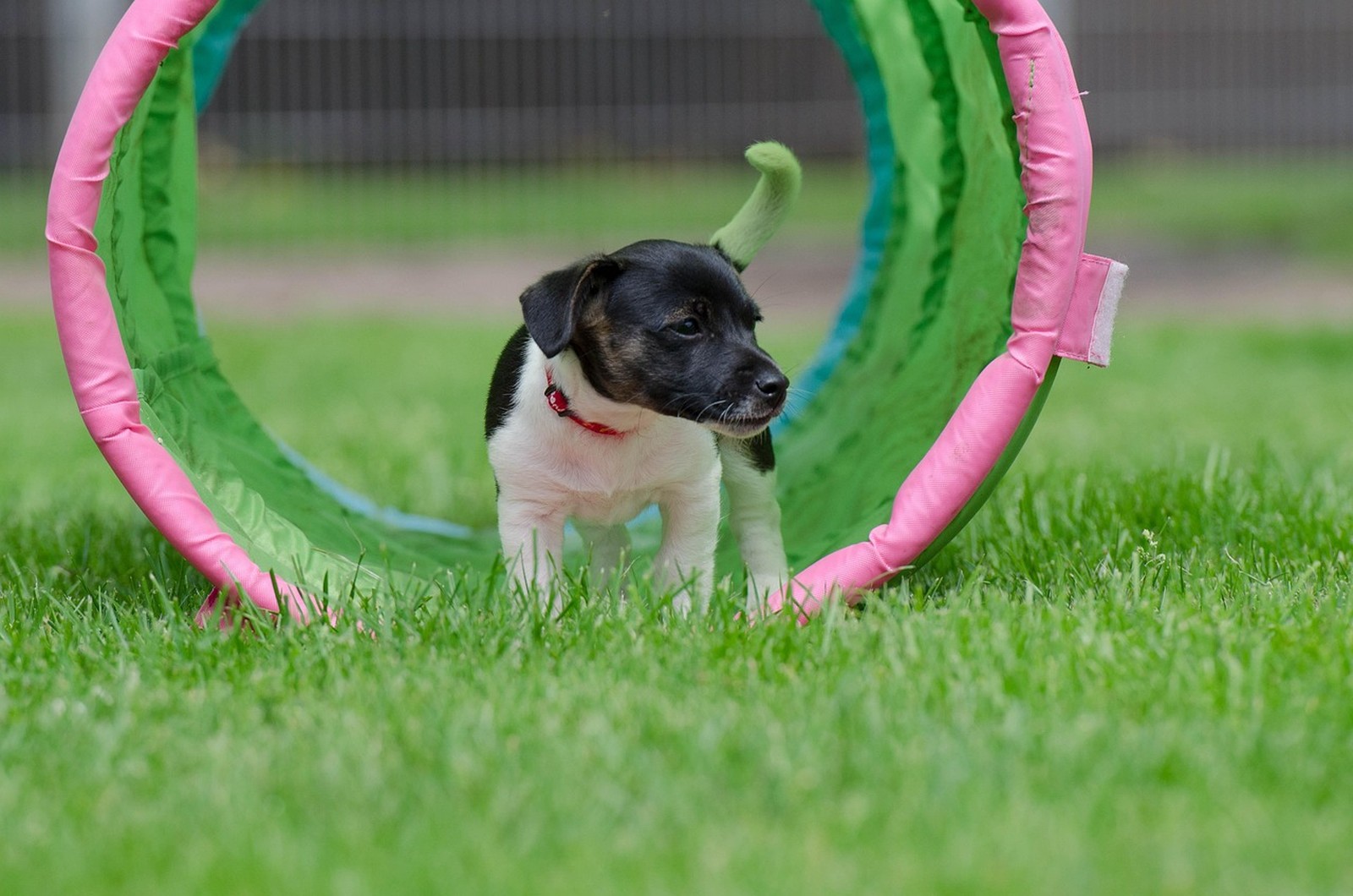
Three to five short sessions a day is the sweet spot for most puppies, and short really does mean short. Two to five minutes is plenty for a young puppy who has just arrived home, stretching only gradually as attention improves over the following weeks. A puppy who gets one marathon lesson usually switches off halfway through, starts mouthing or wandering away, and ends the session rehearsing exactly the inattention you wanted to avoid.
Why Little and Often Works for a Young Puppy
A puppy's brain is built for brief, frequent learning between long stretches of sleep. Young puppies may sleep for most of the day, and the awake windows in between are short, busy, and easily overloaded. In those windows, a puppy can offer a handful of bright, willing repetitions and then needs to rest, toilet, drink, or simply chew something appropriate. Training that respects that rhythm feels like a game. Training that pushes past it turns cues into background noise, so the same sit that was sharp at minute two looks blank at minute twelve, not because the puppy is stubborn but because the tank is empty.
Fitting Sessions Around Sleep, Toileting, and Play
Anchor sessions to moments when your puppy is naturally alert rather than clock-watching. A good pattern is one session soon after waking and toileting, one after a midday meal has settled, one during an early evening play period, and one calm session before the bedtime routine begins. Keep each session to a single goal. One might be name response, where the puppy looks at you and gets rewarded. Another might be four or five sits. A third could be recall across a hallway. Mixing five new cues into one slot muddles the lesson and makes it hard to tell which part confused the puppy.
End every session on a repetition the puppy got right, even if you have to make the task easier to get there. If a sit on the kitchen tiles works but a sit by the front door fails, the door added too much distraction too soon, so go back to the kitchen version and finish there. That last easy win is what the puppy carries into the next session.
How Many Repetitions Belong in One Session
Think in repetitions, not minutes on a timer you force yourself to fill. Five to ten rewarded repetitions of one cue is a complete session for a young puppy. Watch for the early signs that concentration is fading: slower responses, sniffing the floor, scratching, yawning, or suddenly finding a sleeve more interesting than the reward.
As the weeks pass, lengthen sessions slowly and add mild distractions one at a time. A sit that holds in the kitchen can then be asked for in the garden, then on a quiet pavement. If performance collapses at a new level, you have not lost the training, you have just found the step that needs more practice at the easier level first.
Keeping Everyone in the Household on the Same Cues
Puppies get confused fastest when different people use different words, hand signals, or rules for the same behaviour. One person saying down for lie down and another using down for get off the sofa teaches the puppy that words are unreliable. Agree the cue list as a household, write down which sessions have happened, and note which cue is still shaky so the next person does not unknowingly drill the weakest skill five times in one evening. Shared notes also stop accidental over-training on days when several family members each think they are offering the only session. KinsLe Care Teams supports that shared approach by assigning each puppy training slot to a family member and time-stamping it when finished, so the whole household works from the same plan.