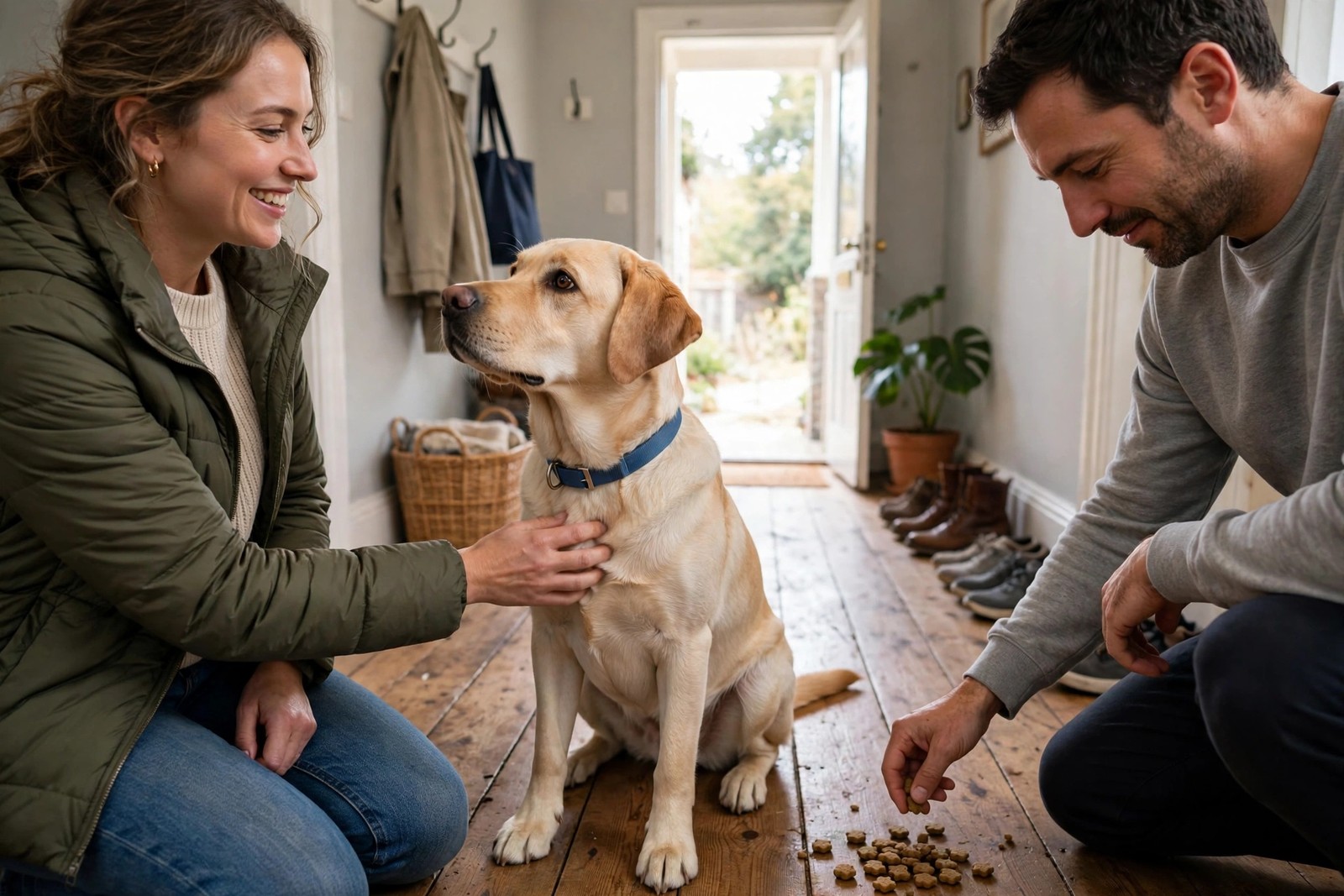
Dogs jump up for a simple reason: faces are up there, and jumping has worked. Every visitor who laughed, stroked the dog mid-jump or pushed the dog down while talking to it has paid the behaviour, because attention is attention, even the pushing kind. The fix is equally simple and entirely about timing: jumping must switch attention off like a light, and keeping paws down must switch it back on, paid in food as well as fuss.
Make Jumping Stop Working
Brief every visitor before they come through the door: the second paws leave the floor, fold your arms, turn your body away, look at the ceiling and say nothing. No pushing, no knee lifts, no laughing scolds, because all of those are still a game with a person in it. The moment four paws are back on the floor, the visitor turns back, speaks warmly and strokes the dog's chest, where a hand can reach without inviting another launch. For bouncy dogs, scatter a few treats on the floor at the same moment, since a nose hunting at ground level cannot be in a visitor's face. Expect an extinction burst: a dog whose jumping has always worked will try harder for a few greetings before believing the rules changed, and that burst is progress, not defiance.
Pay Four Paws and Sits Generously
Attention alone is thin pay for a young, social dog, so back it with food in the early weeks. Stand near the visitor with treats ready and feed the sit or the four-paws moment yourself while the visitor adds the greeting, so the dog learns that calm near people produces both good things at once. Practise with rehearsed visitors in four short sessions a week rather than waiting for real guests, because rehearsals let you repeat the exact moment ten times in ten minutes. Use household members, then a friend, then a friend in a coat with a bag, since dogs who master the family version often relapse for novelty. Fade the food slowly once sits arrive unasked, keeping praise and chest strokes as the lasting payment.
Rehearse the Hard Versions on Purpose
Jumping is worst at predictable moments: the first ten seconds of arrival, the return from the toilet when the guest re-enters the room, and the moment someone stands to leave. Rehearse those moments deliberately: visitors who step out and come back in, visitors who stand, sit and stand again, each entrance resetting the same rules. Keep your dog on a lead or behind a gate for the opening minute of real arrivals until the rehearsed version looks solid, and give the dog a chew on a mat once the greeting is over so the visit does not stay at fever pitch. Children and elderly visitors should never be the training ground: manage those greetings with distance and a lead, because a rehearsal that knocks someone over teaches the wrong lesson at real cost.
Hold One Rule for Every Person
One household member who secretly enjoys being jumped on will keep the behaviour alive indefinitely, because intermittent pay is the strongest pay of all. Agree the rule as a household, put a short version of it by the door for guests to read, and have a plan for the dog walker, the cleaner and anyone else who meets the dog at the door. If jumping comes with mouthing, torn clothing or behaviour aimed at one particular person, or your dog is large enough to hurt someone in the burst, bring in a qualified behaviour professional to watch the greetings in person and adjust the plan.
With KinsLe's Care Teams, that household rule stops depending on memory: assign each of the four weekly practice sessions and the door role for real visits to named people, and the timestamped log shows the practice actually happened, from everyone, before the next guests arrive.