
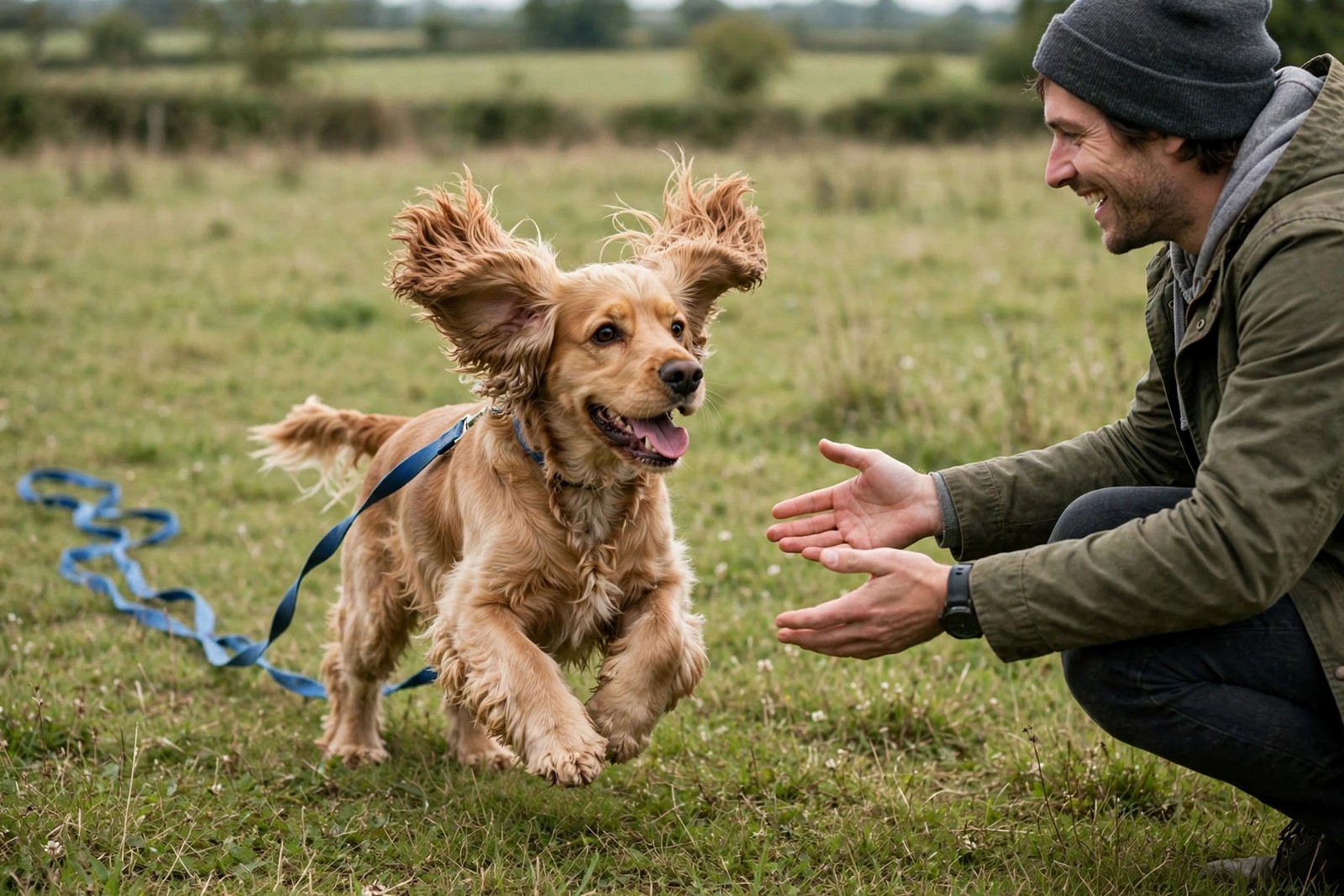
No recall is literally guaranteed — a determined dog mid-chase is running on instinct, not obedience — but a recall that works in the overwhelming majority of real life is absolutely trainable. It rests on one account your dog keeps with precision: what has calling me usually predicted? Dogs with rock-solid recalls have a long history of the cue predicting jackpots and almost never predicting a telling-off, a bath, or the end of the fun. Every training decision you make either deposits into that account or withdraws from it.
Pay Every Return Like You Mean It
Choose one recall word and protect it. In training, every return earns a genuinely high-value payment — several small pieces of chicken, hot dog, or cheese fed one after another, with real enthusiasm — not the dry biscuit your dog ignores at home. Reward the first easy indoor recalls just as richly as hard outdoor ones, because you are building the habit's value, not paying by difficulty. Add recall games early: call your dog between two people who each pay generously, hide and call so finding you is part of the prize, and occasionally call, pay, and release your dog straight back to play. That last pattern is powerful, because it proves recall usually does not end the good thing.
Never Poison the Cue
Do not call your dog to punish them, to clip nails they hate, to leave the park the instant they arrive, or when you are angry — your tone carries, and dogs read it instantly. If you need your dog for something unpopular, go and get them calmly instead of spending your recall word on it. And never repeat a failed cue louder and louder in the field: call once, and if it fails, move closer, crouch, make yourself interesting, or jog the other way, then quietly note that the situation was too hard and train it properly later on a long line.
Build Distance and Distraction on a Long Line
- Stage one: indoors and in the garden, with minimal distraction, until returns are instant and joyful.
- Stage two: a long trailing line, typically around ten metres, in a quiet field or park corner, letting your dog range and calling away from mild distractions first.
- Stage three: the same long line in busier places, calling away from gradually stronger distractions — other dogs at a distance, then closer — always setting the level where your dog can still succeed most of the time.
- Only drop the line in a given environment once recalls there are consistently fast; keep using it near roads, livestock, and wildlife regardless of how good the recall looks elsewhere.
If your dog has a strong chase drive around livestock or traffic, a professional force-free trainer is a worthwhile investment, and management — fences, lines, and choosing enclosed fields — stays part of the picture for life, because training lowers risk without ever erasing it.
One cue, one payment standard, and one set of rules from everyone who handles your dog is what keeps the word valuable, and KinsLe Care Teams lets you assign daily recall games and long-line sessions to each family member, each logged with a timestamp.