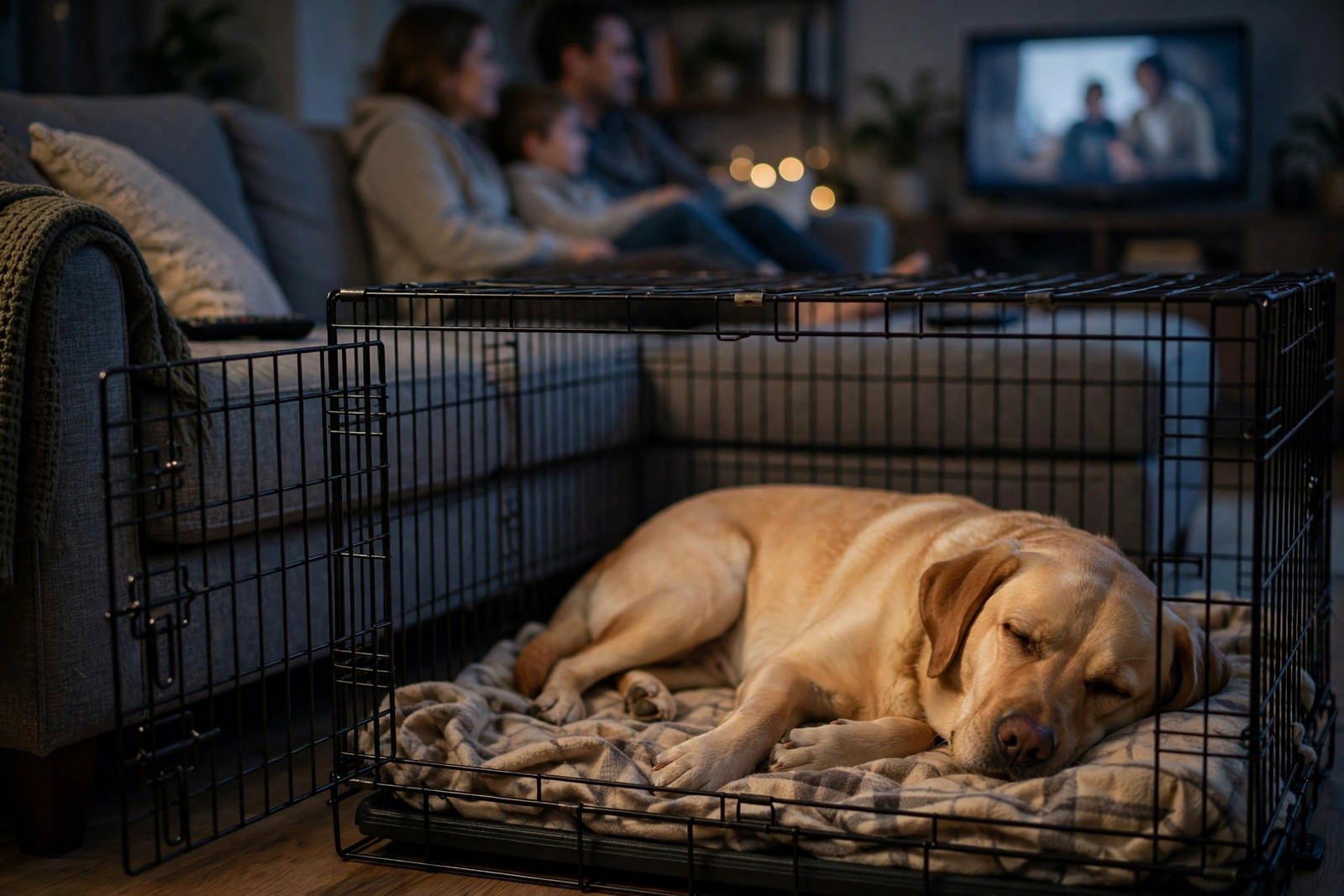
The finished picture is specific: you say her cue, she trots to her crate, turns, lies down, and rests there with the door open while the family watches a film. Build it in that order, value first, cue second, duration third, and film-night conditions last. Her crate is never a punishment at any stage, and the door stays open throughout, because a dog who can leave and chooses to stay is the whole point.
Stage One: Make the Crate Worth Choosing
Start by feeding her meals just inside the crate and offering her best long-lasting chews only there, with the door wide open. Toss treats inside during the day so she finds surprises when she wanders in on her own. Play a simple game: throw a treat in, praise her as she dives after it, call her out happily, and repeat until she is sprinting in ahead of the treat. Do not add any cue word yet, because a cue attached before she loves the place will only name a chore.
Stage Two: Name It and Reward Entry
Once she runs in eagerly, say your chosen cue, such as crate or bed, just as she starts toward it, then reward her inside. Practice a few short repetitions at different times of day, ending while she still wants more. Next, cue her, wait for her to go in and turn around, and reward that turn and pause. If she hesitates on a repetition, go back to the treat-toss game for a day rather than repeating the cue louder or guiding her in by the collar.
Stage Three: Build Duration With the Door Open
Now pay for staying, not just arriving. Cue her in, give her a stuffed toy or chew reserved for crate time, and reward calm moments as she lies down and settles. Start with seconds, then a minute or two of quiet resting while you sit nearby, and release her before she gets restless so she learns resting ends well. Gradually sit farther away, stand, and move around the room while she stays settled. If she comes out, that is information, not disobedience: shorten the next session and rebuild in smaller steps.
Stage Four: Proof Against Household Noise
Film nights are noisy in ordinary ways, so rehearse those sounds before the real evening. Practice her settle while someone walks to the kitchen, a door closes, people talk and laugh, and a television plays at low volume in the background. Reward her for glancing at a sound and then relaxing again, which is the exact skill a film night asks for. Keep these rehearsals short and generous, and do them on ordinary evenings rather than saving every distraction for a big test.
Stage Five: The Real Film-Night Setup
On the night itself, exercise her earlier, give her a bathroom break, and set her crate beside the seating where she can see the family without being in the traffic path. Cue her in as people sit down, the screen goes on, and lights go low, and hand her the reserved crate chew as the film starts. Let her leave if she chooses and drift back on her own, without calling her or luring her repeatedly. Agree beforehand that nobody recalls her out mid-settle for greetings or snacks, and give children the job of ignoring her while she rests and reporting quietly if she gets up. Families can write that shared film-night agreement in KinsLe under the Care Teams notes so her settle is protected the same way every time.