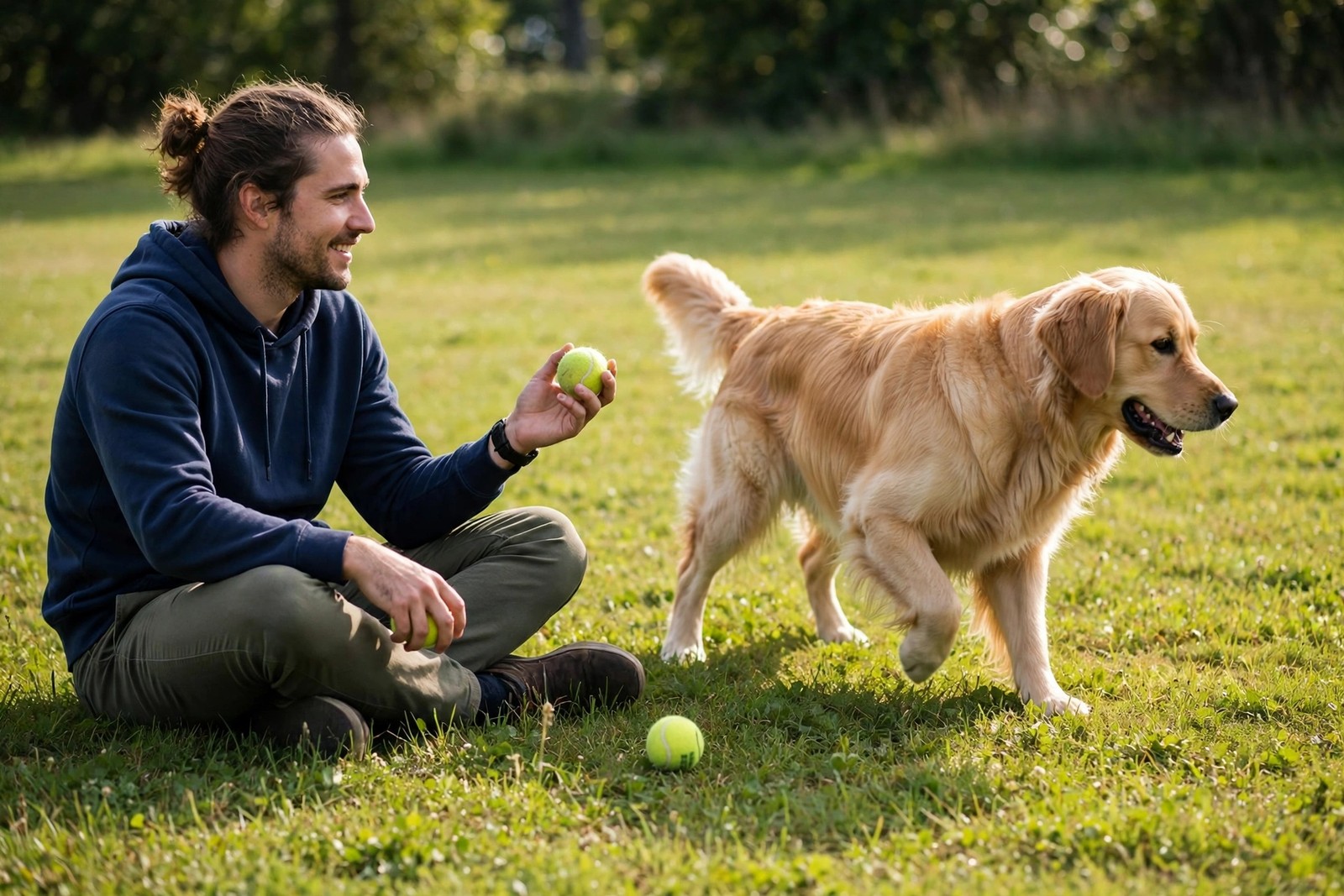
Every fetch player knows the geography: the dog trots back, slows, and deposits the ball precisely one step beyond comfortable reach, then dances backwards, eyes bright, waiting. It is not forgetfulness or defiance. Your dog has either invented a better game than fetch or never been taught the final part of yours, and usually it is a blend of the two.
The Game Your Dog Thinks You Are Playing
Chase is primal play for a dog, and keep-away is chase with a trophy. When your dog drops the ball short and springs away as you reach, it is inviting the part of the game it values most: pursuit. Your behaviour has probably been coaching this without your noticing. Each time you step toward the ball, lean, and grab, the dog gets its chase, or snatches the ball and gets a glorious solo lap, so the short drop pays out reliably. Some dogs also learn that delivering the ball ends the fun, because owners pocket it after a couple of throws or call the dog in for the lead the moment it brings the ball properly, so keeping a small, hopeful distance is a strategy to keep the game alive, not a refusal to play it.
A Skill Gap, Not Stubbornness
A finished retrieve is a chain of separate skills: chase, pick up, carry back, arrive at the person, hold, and release into the hand. Most dogs are born with the first two and are never formally taught the rest, so the chain breaks at the same link every time, a step or two from your feet. 'Drop it' is its own cue with its own training, separate from recall, and a dog that has only ever had balls prised from its mouth or chased off it has had no chance to learn that releasing the ball is the move that makes the next throw happen. Young dogs and dogs new to fetch are not testing you; they are showing you exactly where the chain needs building.
Teaching Delivery to Hand
Work the trade, not the chase. Bring a second identical ball: when your dog returns and drops the first one short, immediately produce the second with enthusiasm and throw it the moment your dog commits to it, then pick up the dropped ball while your dog is chasing. Your dog learns that a dropped ball near you generates another throw faster than keep-away does. In parallel, practise 'drop it' away from the fetch field: offer a treat trade for a low-value toy, say the cue as the mouth opens, reward, and return the toy often so giving things up predicts getting them back. In fetch, stand still or take a step backward as your dog approaches, because movement toward the dog pushes it away, and praise and throw again instantly for any drop that lands closer than the last one. Keep sessions short and end them while your dog is still keen, on a throw you choose.
Mistakes That Keep the Gap Open
Three habits preserve the problem reliably. The first is chasing or lunging for the ball, which confirms keep-away as the game. The second is reaching for the dog's collar or the ball in its mouth, which teaches the dog to keep its distance and can build guarding around prized items. The third is ending play as a punishment for a short drop, which teaches the dog that proximity to you is where fun goes to die. Walk-away works better than all three: if the ball drops short and the dance begins, turn, stroll off, and let the game restart when the ball arrives closer to your feet. KinsLe's Care Teams helps a whole household hold these rules at once, since the trade cue, the second-ball method, and the no-chasing rule can be written into the dog's play duties so nobody accidentally retrains keep-away on their turn.