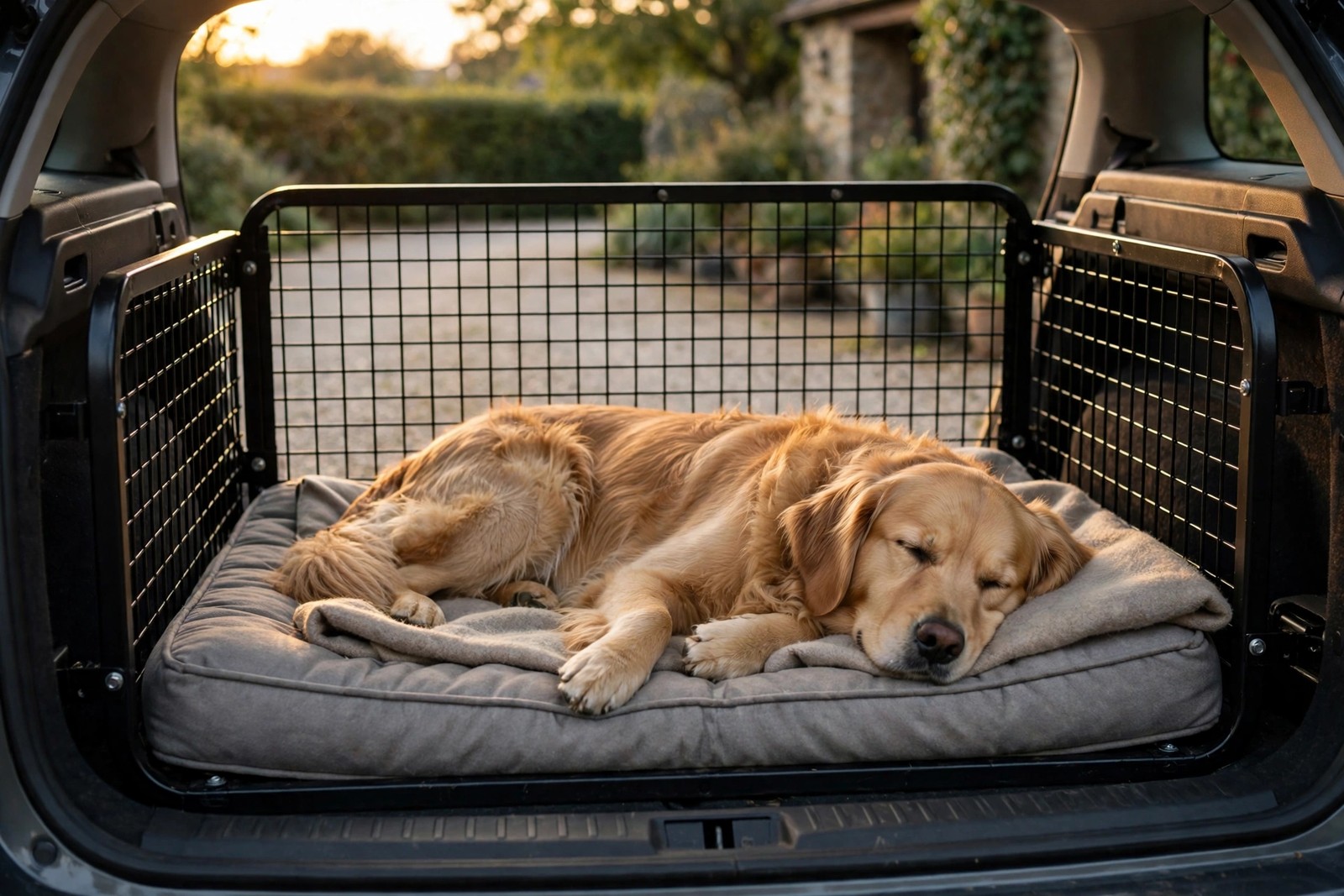
The boot behind a guard is a strange place to ask a dog to relax: it moves, it stops, interesting smells and voices arrive at every halt, and the dog can see just enough through the guard to feel involved but not enough to do anything about it. Scrambling and barking at stops are the predictable result of skipping stages. Build the boot as a settled room in its own right, add movement and stops separately, and the guard becomes a window your dog watches calmly rather than a fence to shout through.
Make the Boot a Room, Not a Launch Pad
Fit the guard securely and lay a non-slip bed or mat that smells of home, because a dog sliding on bare plastic at every corner cannot settle no matter how good the training is. Start with the car parked, engine off and tailgate open: invite your dog in, feed a few treats for stepping onto the bed, then for lying down, and let them come out before they ask to. Practise in three short sessions a week and keep every early session in this parked picture, so the boot itself earns a calm history before the car ever moves. Include the guard in the rehearsal from the start, closing it for a few seconds, then a minute, while you potter nearby in sight, paying quiet behaviour through it.
Add Engine, Movement, and Stops Separately
Change one variable per stage. First the engine starts and stops again with nobody going anywhere. Then the car rolls to the end of the drive and back. Then a short loop of quiet streets, then a longer drive, and only then a drive that includes a stop. Each stage repeats until it looks dull, because dull is the goal. A second person helps enormously here: one drives while the other feeds calm behaviour and watches the dog's body, noting the exact moment scrambling starts. If a stage produces frantic behaviour, the next session returns to the stage below, and the jump between them gets split into a smaller one.
Teach Quiet at Stops
Stops are the exam, so rehearse them as their own exercise. Drive somewhere boring, stop, keep the engine running, and wait. The moment your dog looks out quietly, feed; when barking starts, wait it out in silence rather than shushing, which sounds like joining in, and feed the first breath of quiet. Open and close a door, step out and get back in, and let a passenger walk past, all as non-events that pay when ignored. Keep early practice stops short and end them before your dog winds up; across sessions, the quiet stretches lengthen because your dog learns that stops are simply the pauses between drives, and that nothing at a stop requires commentary.
Watch for Travel Sickness and Stress
Not every unsettled dog is undertrained. Drooling, lip-licking, yawning, restlessness that builds through a journey and vomiting are classic travel-sickness signs, especially in young dogs, and a dog who feels sick will scramble and bark for reasons training alone cannot fix. If you see that pattern, talk to your vet about the sickness itself before adding more practice, and until then keep journeys short, let fresh air reach the boot, and avoid feeding a full meal right before travel. Older dogs may also struggle with the jump up into the boot; a ramp or a lift protects joints and removes a daily moment of dread from the routine.
With KinsLe's Care Teams, the stages stay in order between drivers: assign the three weekly practice sessions to whoever drives most, note the stage your dog last found dull in the duty log, and each session is timestamped, so nobody skips ahead to a long journey with stops before the short loops are calm.