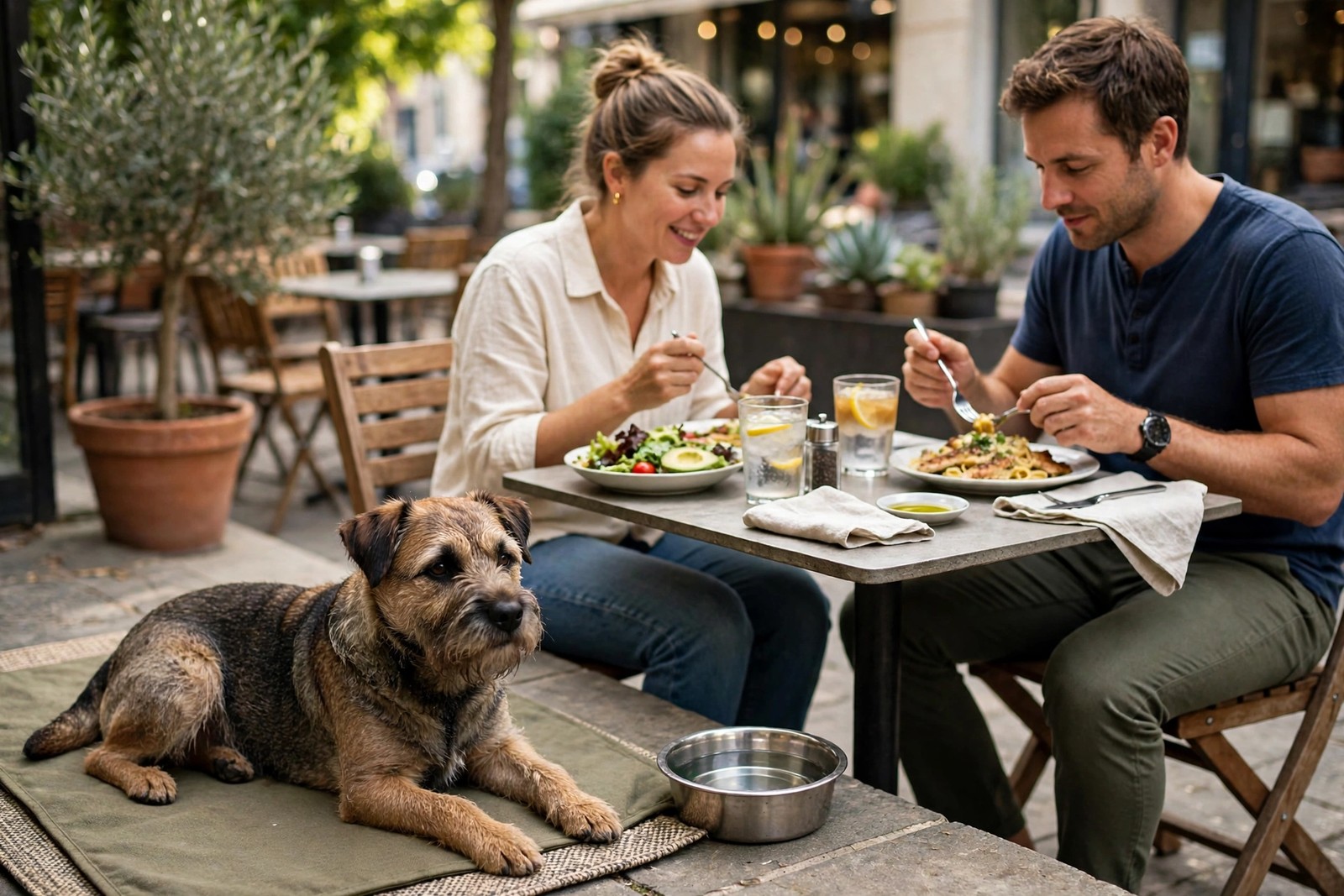
Eating at a cafe with your dog is a different ask from simply being in a cafe. Your dog must rest beside a table while the most interesting event of their day, your food, arrives, smells wonderful, and is eaten by everyone except them. Dogs settle through that when three things line up: they arrive exercised and comfortable, their spot and their job are clear, and the meal has been practised in short, successful versions before a long lunch tests it.
Arrive With a Dog Ready to Rest
Do the preparation before the cafe sees you. Walk your dog first, long enough to take the fizz off but not so long that they arrive overheated, and give a toilet opportunity before you go in. Lay a familiar mat beside your chair or under the table where feet, bags and passing waiters will not keep disturbing it, and let your dog sniff the spot and choose their lying position. Order water for your dog with your drinks, and time the occupation for the hardest moment: a chew or a stuffed food toy that appears as your plates arrive, not while you are reading the menu, because the arrival of food is when settling is won or lost.
Place the Bed Where Begging Cannot Pay
Position decides behaviour. A mat tucked beside you, with your dog's head away from neighbouring tables, makes resting easy and mooching pointless, while a mat in the walkway guarantees interruptions, tripped leads and a dog who learns that cafes mean commotion. Pay settling from your treat pouch in the first visits: a quiet dog earns a small piece now and then for a sigh, a chin down, a look away from a passing plate. Never feed from your own plate, not even the last chip as you leave, because one plate payment teaches an hour of hopeful staring more thoroughly than a week of pouch payments teaches rest. If food drops, use your rehearsed leave-it, pay from the pouch, and carry on with your meal as if nothing happened.
Work Through the Meal in Chapters
Think of the meal as chapters and manage each one. Arrival and ordering are busy, so keep contact calm and the chew ready. While you eat, your dog will usually settle once the first minutes pass; stay boring yourself, with no stroking or whispered negotiations that keep your dog half-engaged. Practise with one cafe meal a week and build to longer, busier meals as your dog stays relaxed: a coffee and a pastry at a table first, then a one-course lunch, then the full meal with friends. If your dog fidgets midway, take a short stroll outside between courses and resettle, treating a break as part of the routine, not a defeat. A dog who gets a planned break learns that resting is punctuated by relief, which makes the resting easier to offer.
Leave Well, Even If You Leave Early
The end of the meal needs the same care as the start. Pay the bill without a long wait at the table if your dog is near their limit, gather bags calmly, and release your dog from the mat with a clear word before you stand, so leaving is a cue and not an explosion. If a visit goes badly, with whining, scavenging or lunging at a passing dog, shorten the next visit rather than abandoning the project: a five-minute coffee with a settled dog rebuilds more than a lunch that ends in chaos. Choose venues kindly as you progress, telling staff you are training and sitting where your dog's success is most likely, because practice in the right corner is how cafe dogs are made.
Through KinsLe's Care Teams, the weekly practice meal becomes a standing duty rather than a vague intention: assign it to whoever is taking your dog out, note how the settle went and how long the meal ran, and the timestamped log shows the quiet coffee growing into a full lunch, one successful visit after another.