
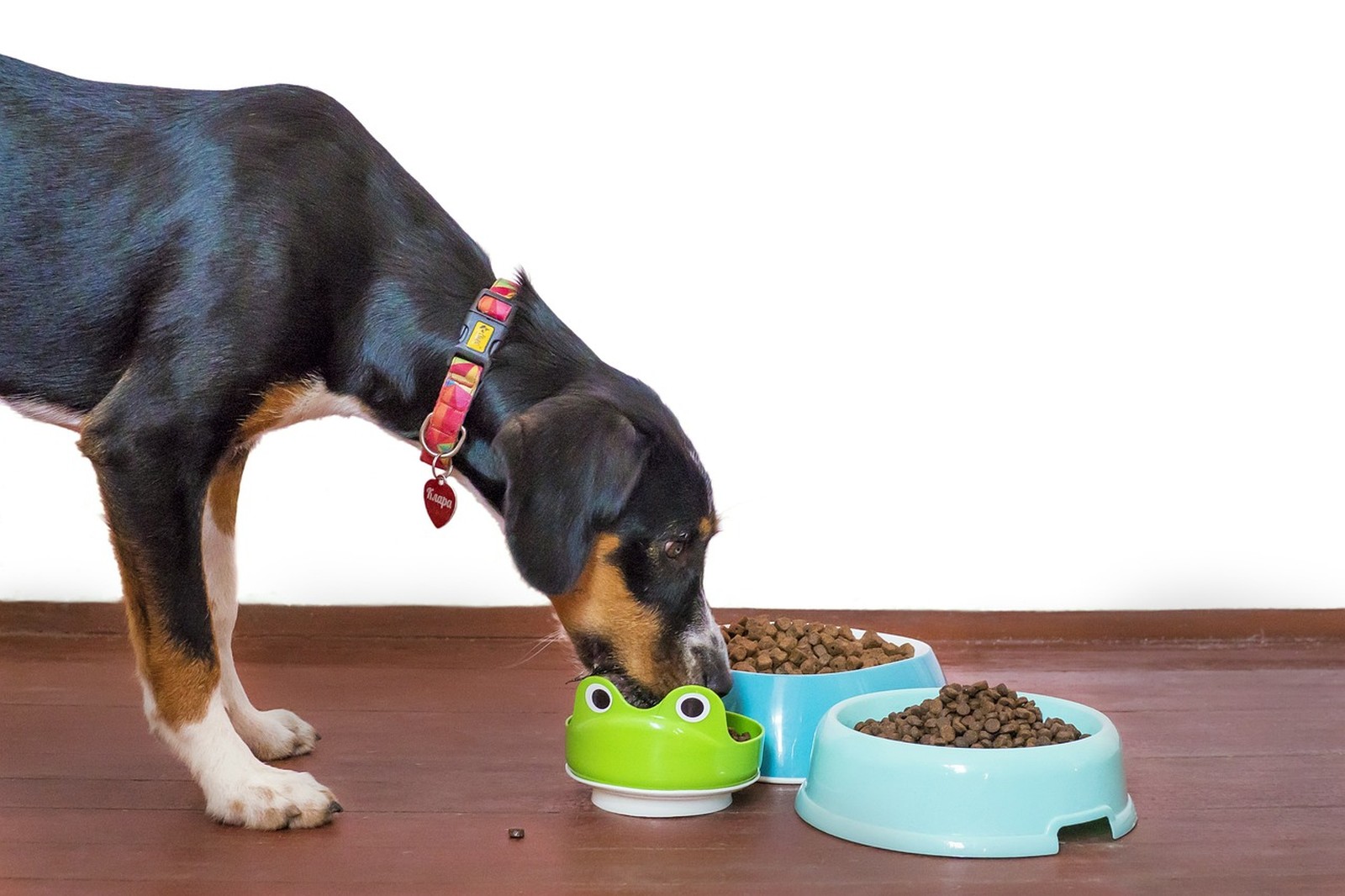
Mealtimes concentrate everything a dog finds irresistible about a cat: the cat is stationary, focused on food, and surrounded by some of the most interesting smells in the house. Pestering at the bowl, staring, whining, creeping closer, snatching leftovers, is therefore not defiance but a dog doing exactly what opportunity invites. The fix is mostly architectural. Feed the cat where the dog genuinely cannot follow, give the dog a rewarding job of his own at the same moment, and only then train calm behaviour around the cat as a separate skill, away from actual food.
Why the cat's bowl is such a flashpoint
Cats eat slowly and often leave and return to a bowl, which stretches the temptation across the whole meal rather than a few minutes. Cat food also smells rich and meaty to a dog, and stealing it has usually paid off at least once or twice before you decided to act. Meanwhile a cat who feels watched while eating may eat too fast, abandon meals, or start avoiding the feeding area altogether, so the dog's pestering quietly damages the cat's routine too. A cat who retaliates with a swipe at close range adds an eye-injury risk that makes casual coexistence at the bowls a poor gamble even in friendly households.
Set up feeding stations that cannot collide
Give the cat a feeding place with a physical rule behind it: a raised surface your dog cannot reach, a room behind a baby gate with a cat-sized gap or latch, or a door propped so only the cat slips through. Feed on a schedule rather than leaving the cat's bowl down all day, so there is a defined window to manage and the food is lifted when the cat walks away. At the same time, feed your dog in his own separate spot, ideally out of sight of the cat's station, and add a slow-feeding puzzle or stuffed toy to his mealtime so his meal occupies him longer than the cat's does.
Close the barrier every time, including snacks.
Train the settle as its own lesson
Outside mealtimes, teach your dog to settle on a mat and hold the position while distractions build, paying generously for relaxed staying rather than tense staring. Then practise the mat in the room adjacent to where the cat eats, with the barrier still closed and no food down, rewarding him for glancing toward the cat's area and choosing the mat instead. Only when that is easy do you rehearse during a real feline meal, barrier closed, with someone free to reward the dog rather than one person juggling both animals. The barrier is permanent mealtime furniture for most mixed households, and that is fine: the training exists to lower arousal around it, not to earn the right to remove it.
Watch the cat as closely as the dog
Track whether the cat is eating full meals calmly, using the litter tray normally, and moving through shared rooms without detouring around the dog's favourite spots. A cat who starts eating at night only, hiding after meals, or losing condition may be telling you the current setup still feels unsafe, and the feeding station needs more distance or a higher perch. Seek veterinary advice if either animal's appetite or weight changes, and get behaviour help if the dog's interest in the cat is intense, fixated, and hard to interrupt, because predatory focus is a different problem from opportunistic food stealing and needs in-person assessment.
Two animals, two stations, and several feeders in one household is a routine that drifts unless it is written down, so KinsLe keeps it straight with Care Teams, where cat feeding, dog mat supervision, and bowl-lifting are separate assigned duties, each timestamped when finished.