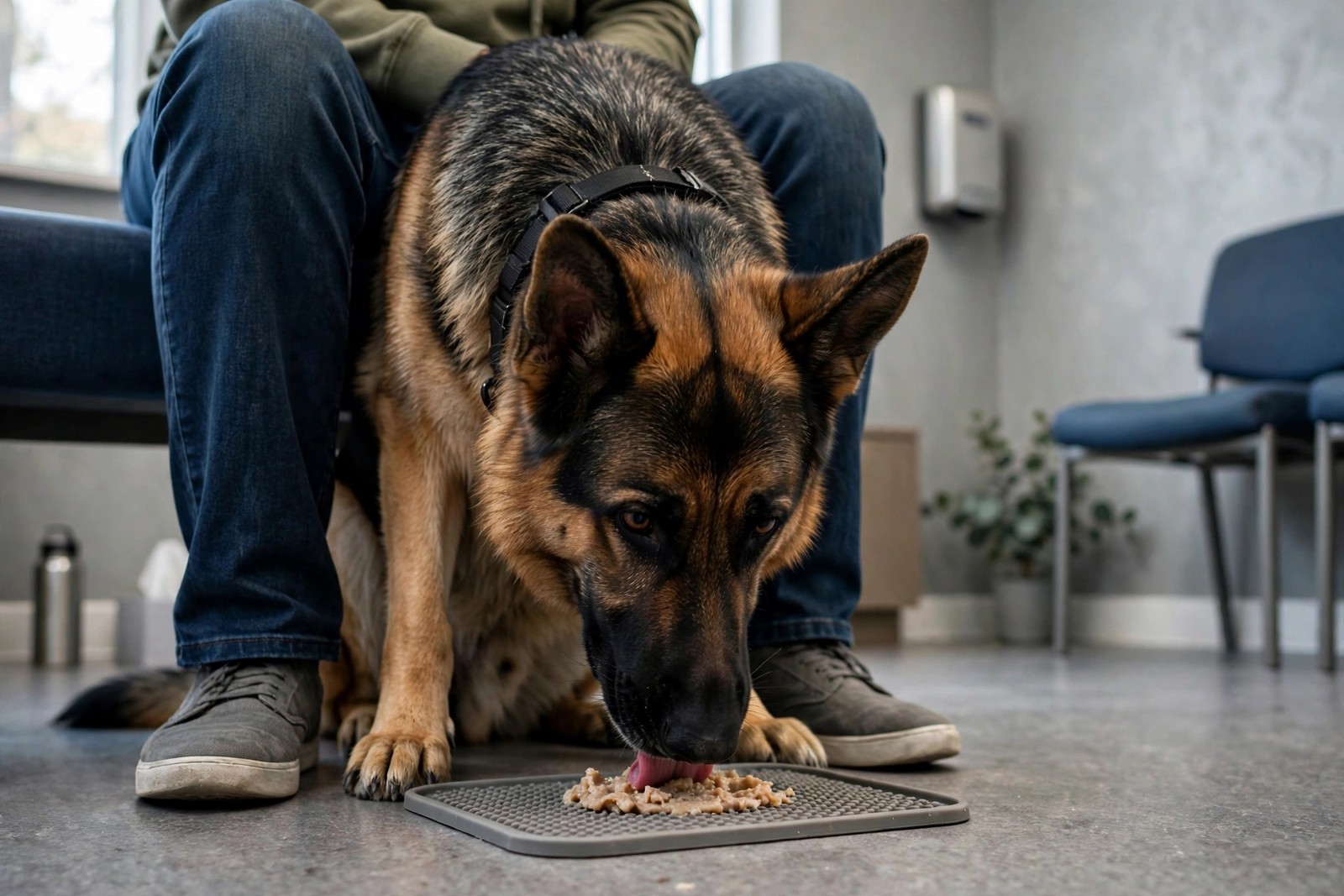
Treat this visit as a management plan, not a training test. A dog who plants himself between you and every approaching dog, stiffens when another patient crosses the room, and lunges at the end of the lead is telling you the waiting room itself is more than he can handle right now. Guarding an owner in a strange, painful, animal-filled place is rarely stubbornness. It is usually a stressed dog protecting the one safe thing he has, and the fix is to redesign the visit so he never has to make that decision.
Before You Leave Home
Phone the practice before the appointment and describe the behaviour plainly: your dog guards you and lunges at approaching dogs. Reception teams deal with this often, and clinics can often offer practical help once they know. Ask for the quietest appointment slot they can give you, ask whether you can wait in the car and be phoned when an exam room is free, and ask whether a side or rear entrance exists. If your dog is due routine care only, ask whether a nurse appointment or a home-visit vet would be safer this time.
Pack for a dog who needs distance. Bring very high-value food he only gets at the clinic, a filled lick mat or long-lasting chew to keep his head down and his mouth busy, and a well-fitted harness as well as a collar lead, so a sudden lunge does not put all the pressure on his neck. Feed nothing large beforehand if travel makes him queasy, and exercise him earlier in the day so he arrives tired rather than wired.
In the Car Park and the Room
Arrive, park away from the entrance if you can, and stay in the car or walk quiet loops outside until staff call you in. Other owners unloading nervous dogs at the door are a high-risk moment of the whole visit, so give that bottleneck a wide berth. Walk in with purpose, go straight to the exam room or the emptiest corner, and sit with your dog between your legs and the wall, his back to the room where possible.
Keep the lead short enough to prevent a lunge reaching anyone, but loose enough that constant tension does not wind him up further. Scatter food in the grass outside or press the lick mat to the floor so his nose and mouth stay occupied. If another dog must pass, stand up, turn your dog away, and put your own body between them without apology. You do not owe strangers a social encounter, and a polite “he needs space, thank you” is enough.
What to Tell the Vet
Describe exactly what happens: which dogs trigger the lunge, how close they need to be, whether he guards you at home or only at the clinic, and whether the behaviour is new. New or worsening guarding deserves a pain check, because sore joints, ears, and teeth lower a dog's tolerance sharply, and clinic anxiety itself is worth discussing honestly. Your vet may suggest spacing future visits differently, seeing your dog first or last in a session, or referring you to a qualified behaviourist for a longer plan. None of that is failure; it is the visit working as it should.
Do not use the waiting room to practise greetings, and do not let well-meaning owners bring their dogs over to say hello. Every rehearsed lunge makes the next visit harder.
Write down what helped — which entrance, which slot, which food — after each visit, and share it with anyone who might take him next time. KinsLe Care Teams keeps that shared plan reliable, because you can assign the phoning ahead, the driving, and the waiting outside to named helpers for each pet and see every completed task marked with a timestamp.