
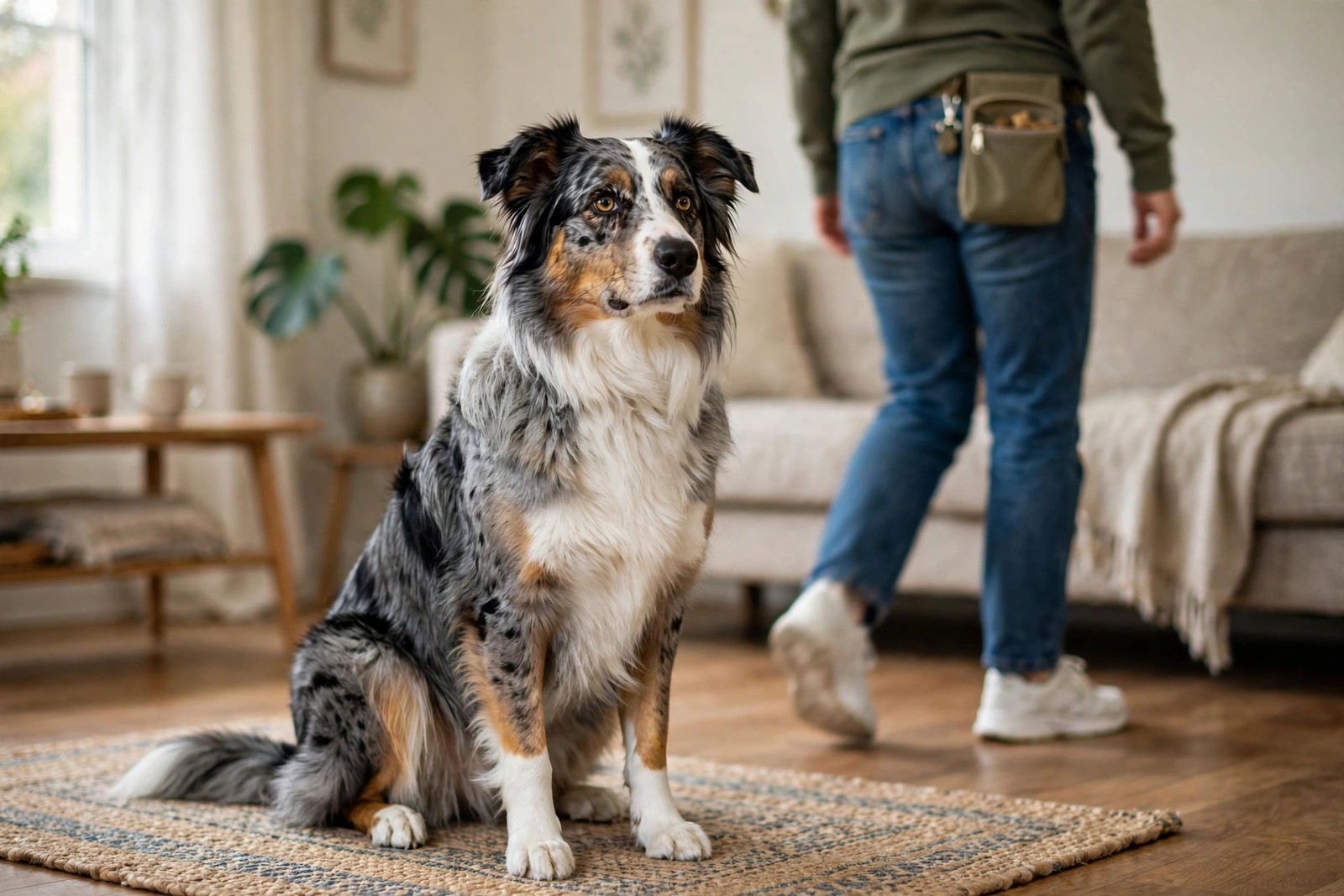
Teach sit first until it is easy, then add "stay" in tiny steps: one second, then two, rewarding your dog on the mat before you release her with a clear release word. Build duration, distance, and distractions one at a time — never together — and if she breaks, the last step was simply too big, so make it easier and rebuild. A reliable stay is not one heroic lesson; it is fifty small successes stacked in the right order.
Step one: a sit that needs no help
A stay built on a shaky sit collapses, so make sit fluent first: lure with a treat from her nose up and back, mark the moment her bottom lands, and reward. Practice on rug, tile, and grass, and fade the lure so she learns the word and signal rather than following food. Once she sits promptly in a couple of locations, choose a mat as her stay station — a defined spot makes success clear for both of you.
The three Ds — one at a time
Trainers organize stay-building into duration, distance, and distraction, and the golden rule is to advance only one while keeping the other two easy.
- Duration: Sit, pause one second, mark, reward on the mat, release with "okay" or "free." Build to three seconds, five, ten, rewarding during longer stays, not only at the end.
- Distance: Once she holds twenty seconds beside you, take one step back and return. Then two steps, then turning sideways, then briefly stepping out of sight — each stage earned before the next begins.
- Distraction: Start with you clapping softly or a toy resting on the floor nearby. A bouncing ball and a doorbell are final exams, not early lessons.
Return to her to reward rather than calling her out of the stay; the stay ends with your release word, every time, so she never has to guess whether the exercise is over. If she breaks, calmly reset her, shorten the next attempt, and let her win. Repeated breaking is feedback about your steps, not defiance from her.
Troubleshooting the common wobbles
If she lies down during a sit-stay, that is fine for most purposes — many owners happily accept a down-stay. If she creeps forward, your steps are too large; use the mat and shrink them. Keep sessions short: two crisp minutes beat fifteen unraveling ones. Puppies may manage only seconds for weeks, and adolescents often regress — both call for easier steps, not sterner ones.
Safety and real-world use
A stay is a safety tool at front doors, curbs, and kitchen gates, but never rely on a young stay near traffic or other genuine danger — management, leashes, and gates remain the real protection while training matures. Practice doorway stays with the door opening in stages, and reward heavily, because that is the stay most households actually need.
Keeping practice consistent with KinsLe Care Teams
Stay training falls apart when one person is working on five seconds and another tests a minute at the park. KinsLe's Care Teams let anyone practicing with your dog log which step you are on — duration, distance, or the latest distraction — alongside feeding, walks, and other duties with timestamped completions, so her training stays consistent across the whole household. Small steps, shared notes, steady progress. Want the next building block once stay feels solid? Care Teams on KinsLe keeps her current stay step and each completed practice session logged in one place, so the next person continues exactly where training left off.