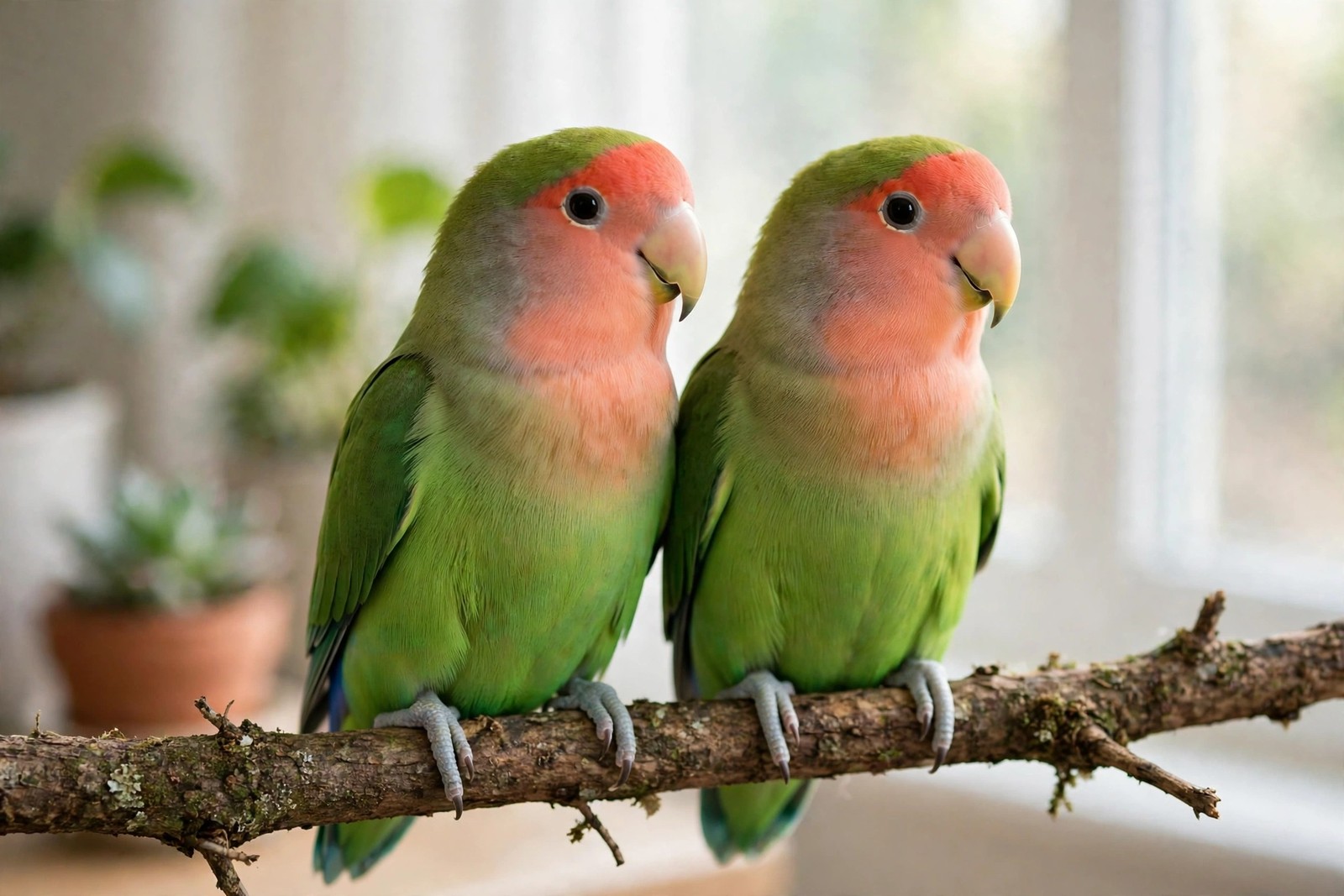
Lovebirds are monomorphic, which is the technical way of saying the sexes look alike. In the peach-faced lovebird — the species most pet owners keep — and in most of its relatives, a male and a female standing side by side wear the same colours, the same markings, and near enough the same size that even experienced breeders get caught out. If knowing the sex matters for pairing, naming, or managing egg-laying, you need evidence rather than eyesight.
Why the Popular Guesses Fail
Behaviour is the most seductive and least reliable clue. Females are said to tuck nesting strips into their rump feathers while males carry them in the beak, and females are said to be more territorial around a cage — yet plenty of males shred and tuck, and plenty of hens are placid. The pelvic-bone test, feeling for a wider gap between the bones in females, is equally shaky: the spacing varies with age, condition, and whether a hen has laid before, and it takes a practised hand to learn little more than a hunch. Body shape, head width, and stance on the perch all overlap so heavily between the sexes that they mislead as often as they help.
The Eye-Ring Species: Slight, Not Certain
Four lovebird species wear a bare white ring around the eye, including the masked and Fischer's lovebirds. In these species females average slightly larger, with a somewhat broader head and a marginally wider stance, and some keepers claim the eye-ring itself looks a touch bolder in one sex. These are population averages, not individual tests: a small male and a large female will defeat every one of them. Treat any visual verdict in an eye-ring species as a guess with somewhat better odds, never as a result you should pair birds by.
DNA Sexing: The Reliable Answer
A DNA test reads the sex chromosomes from a sample and returns a clear male or female result with a certificate. Most laboratories accept a few freshly plucked chest feathers posted to them, or a small blood sample collected by your veterinarian, sometimes from a trimmed nail under veterinary guidance. The feather route avoids a clinic visit for a healthy bird, and results typically arrive within days to a couple of weeks depending on the laboratory. Surgical sexing by a veterinarian exists but is now rarely chosen, because it needs anaesthesia and the DNA route answers the same question without that risk. A hen who lays an egg has, of course, answered the question herself — remember that females can lay infertile eggs without any male present.
Why the Answer Is Worth Having
Knowing the sex changes real decisions: pairing two hens can bring egg-laying and cage aggression, a supposed pair that never breeds may simply be two males, and a chronically egg-laying hen needs dietary and light management plus veterinary guidance. Once the certificate arrives, store the result where it cannot be lost or misremembered — KinsLe Pet Pass holds your lovebird's confirmed sex alongside their identity details, so a future veterinarian, sitter, or new owner reads the verified fact rather than another guess.