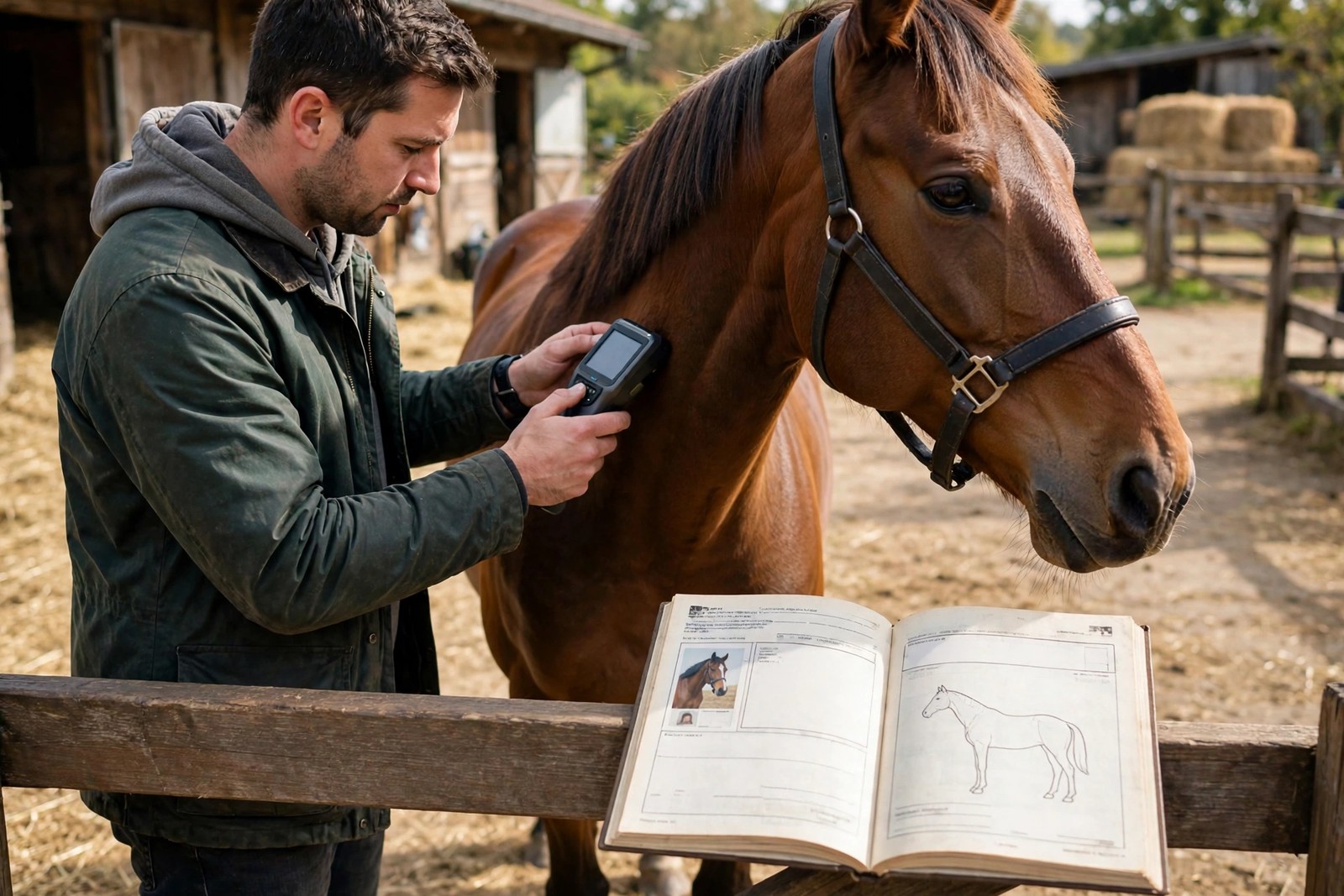
The passport is the horse's identity document, and a correct transfer has two halves: the paper document changing hands and being re-registered, and every other record that still names the seller being updated. Missing the second half is the usual mistake, because the passport, the microchip database, the vet practice and the insurer all hold separate records and none of them updates the others.
At the Sale: Take the Passport and Check It Matches
The passport should travel with the horse, so receive it from the seller at the sale itself rather than accepting a promise that it will follow in the post. Before the horse loads, work through the identification pages:
- Scan the microchip and compare the number digit by digit with the number printed in the passport.
- Compare the written description and any markings diagram with the horse in front of you: colour, sex, whorl positions, white markings and approximate height.
- Check the horse's name and unique life number on the passport against your bill of sale.
- Ask the seller to sign and date any section the document provides for a change of ownership.
Get a written receipt as well, naming the horse, the date, the price, and both parties. If the microchip does not scan, scans to a different number, or the description plainly does not match the horse, pause the purchase and resolve it before money changes hands, because correcting a mismatched passport afterwards is far slower than checking on the day.
Register the Change With the Issuing Organisation
Inside the front of the passport you will find the name of the passport-issuing organisation that produced it, which may be a breed society or another approved body. Contact that organisation, not a general registry, and follow its transfer process: typically a transfer form, the passport itself sent in for the ownership section to be updated, proof of purchase, and a fee. Ask the organisation directly what its deadline for notifying a change of ownership is, and meet that deadline rather than assuming you have months; deadlines and forms differ between issuing bodies and countries.
Do not write in the passport yourself outside any section clearly marked for owners, and do not alter any entry. Sections covering identification, medical treatment exclusions and official records are completed by the issuing organisation or a vet, and an unofficial alteration can make the document suspect. Keep copies or clear photographs of every page before you post the original anywhere, and use a tracked postal service when the organisation asks you to send it.
Update Every Other Record Separately
Once the transfer is lodged, work through the records that sit outside the passport. Register yourself as the keeper on the microchip database, using the same microchip number you verified at the sale; this is a separate step and is the record a finder or vet will actually search. Tell your vet practice that you are the new owner and ask for the horse's clinical history to be linked to your account, with the seller's permission where needed. Notify your insurer if the horse is insured, and update livery yard, feed merchant and competition or society registrations that hold owner details.
Finally, collect the working history that no official document carries: current feed and amounts, turnout routine, worming and dental dates as the seller knows them, quirks under saddle and in the stable, and any ongoing management such as a soaked hay ration. Write it down on the day, while the seller can still be asked.
Handled this way, the horse arrives with a verified identity, a transfer lodged with the right organisation, and a usable care history. Bringing that history across through KinsLe's Transferrable Profiles, so the profile the seller built moves to you with its records and routines intact, closes the gap that the paper passport alone leaves open.