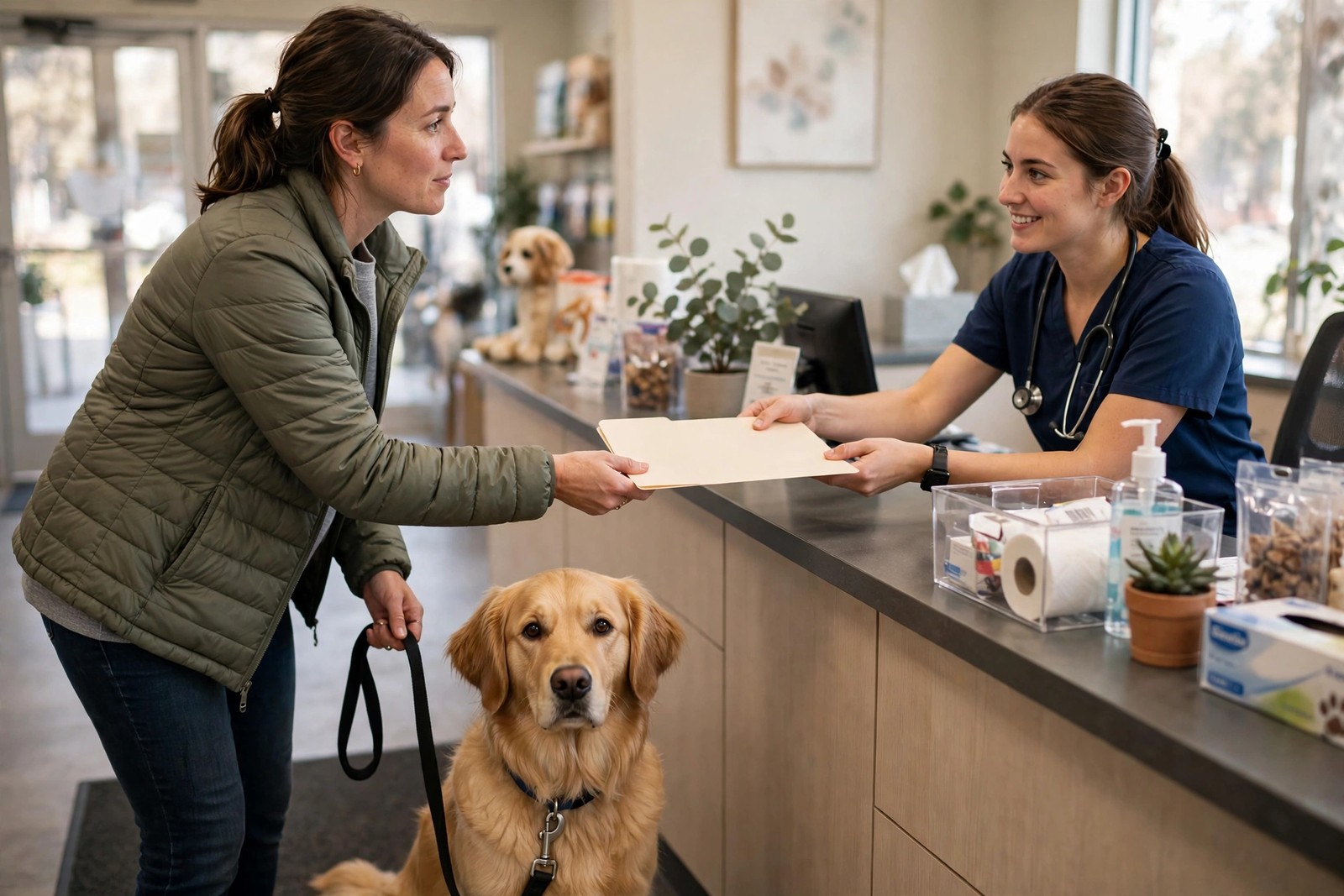
The History Moves With Your Dog
Owners sometimes delay changing practices because they imagine a filing cabinet staying behind. In reality the handover is a routine piece of practice administration: you sign up with the new practice, name the old one, sign the consent line, and its team requests the clinical history directly. It is polite to let the old practice know you are moving, but you do not need their permission — the history belongs to your dog's care, and practices send these files to each other every working day.
What the Old Practice Sends
Expect the transfer to cover vaccination history, consultation notes, laboratory results, imaging, surgical reports and medication records, usually arriving within days. Read what comes back if you are offered a copy. Gaps do appear — an out-of-hours visit recorded elsewhere, a vaccination given at a charity clinic — and you are the one person who attended every appointment, so you are well placed to spot what is missing and chase it while the trail is warm. If your dog has an ongoing condition, ask the new practice to confirm the file has arrived before the first appointment, rather than discovering a gap in the consulting room.
What to Bring Yourself
Do not rely entirely on the practice-to-practice transfer for the first visit. Bring your own folder: vaccination card, microchip number, insurance details, current medication names, and short notes on the quirks that make visits easier — needle nerves, known allergies, handling preferences, the mat he settles on. A new vet meeting a dog for the first time learns faster from ten minutes with a prepared owner than from a thin file, and those handling notes can be the difference between a calm examination and a stressful one.
Dogs With Ongoing Conditions
For a healthy dog, timing hardly matters. For a dog mid-treatment, plan the move deliberately: book the first appointment while things are stable, so the new vet holds baseline measurements — weight, examination findings, bloods where relevant — before any problem forces a visit. Discuss any repeat prescriptions at registration, so medication does not run out while records are in transit, and keep your own dated note of doses and responses to bridge the gap. Moving area at the same time? Update the microchip database and his ID tag with your new address and phone number in the same week; a change of vet is the natural prompt for a full records tidy-up.
Keeping Your Own Copy Current
The practice file is the clinical record, but your own copy is the one you can reach at midnight, hand to a sitter, or show a boarding kennel. Update it the day something changes rather than reconstructing it before the next visit. Between practices, the packet you carry in KinsLe as his Pet Passport holds vaccinations, medication notes and history in one place, ready for visits, travel, boarding or a handover.