An emergency contact plan for your dog should name your regular vet, an emergency vet, two trusted people who can reach your home, and who is authorized to make care decisions if you cannot be reached — all shared in advance with family and your sitter, and kept somewhere it can be found fast. In a real emergency, nobody should be scrolling old texts to find a phone number.
The Names and Numbers That Matter
Write down, in one place:
- You and a second household contact, with mobile numbers
- Your regular veterinary clinic, with address and hours
- A 24-hour emergency veterinary hospital — the actual one you would use, not just "nearest vet"
- Two trusted people nearby who have a key or key access and can realistically get to your dog — a neighbor, nearby family member, or regular dog walker
- Your dog walker, sitter, or boarding facility if your dog may be with them
- Microchip registry and insurance contact details, if applicable
Check that the people you name have actually agreed. A friend who moved away last year or who is frightened of large dogs is not an emergency plan, however willing they sound in theory.
Add the Dog-Specific Details Rescuers Need
Contact names alone are not enough. Add a short profile your contacts can hand to a vet: age, breed, weight, medications, allergies, ongoing conditions, behavior notes like "nervous with strangers, muzzle at the vet," and feeding basics if someone may care for your dog for a few days. Note where the lead, medication, food, and carrier or harness live. If you were in hospital for a week, could your emergency contact feed, walk, and medicate your dog from your written plan alone? If not, it is not finished.
Also decide, and write down, who may authorize care and payment if you cannot be contacted. Vets in an emergency need a person who can say yes. Discussing that in advance — including any limits you want respected — is kinder to everyone than leaving a panicked friend to guess.
Share It, Place It, and Keep It Current
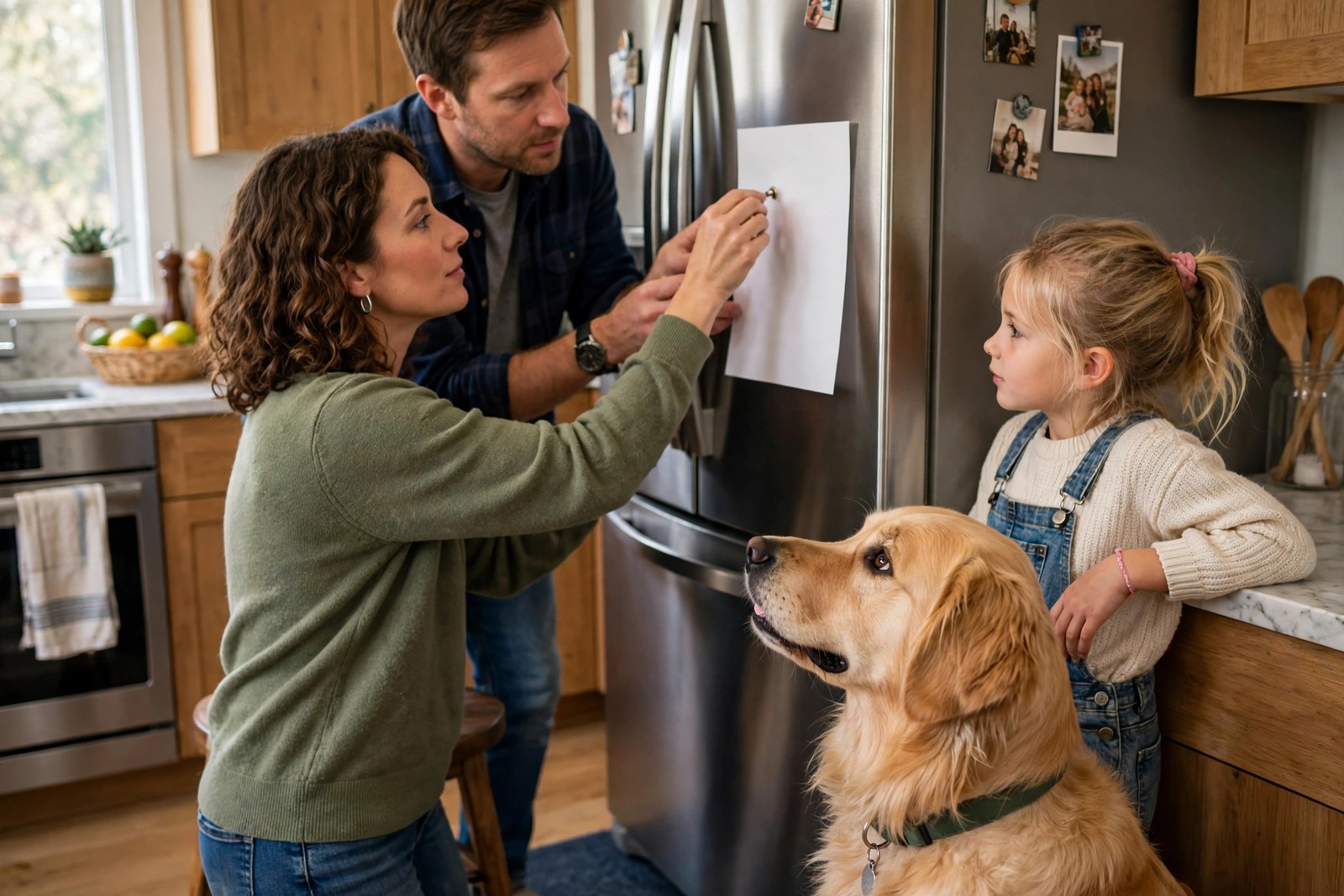
Share the plan with everyone named in it, keep a copy at home in an obvious place like on the fridge or with the dog supplies, and keep a digital copy you can send in seconds. Tell your sitter where it is before every stay, not just the first one. Review it when numbers, vets, keys, or medications change, and at least once a year — plans quietly expire as people move, clinics change hours, and dogs age into new needs.
Practice the plan lightly: make sure your spare key actually works, your emergency contact knows your dog's name and vet, and your dog has met the people who might collect them. A first meeting should not happen on the worst day.
Family Sharing Keeps Everyone's Role Clear
KinsLe's Family Sharing is the per-pet care circle, with roles, so the people around your dog can see key details and know who does what. In an emergency, that clarity matters: the person collecting your dog, the person calling the vet, and the person authorizing care are not all guessing from separate message threads. Set the circle up while things are calm, keep roles current as life changes, and your plan becomes something your whole household can act on, not a document only you understand. Through the Family Sharing view on KinsLe, everyone named in your dog's plan can pull up the same emergency numbers, key holder, and decision-maker details from their own phone when seconds matter.