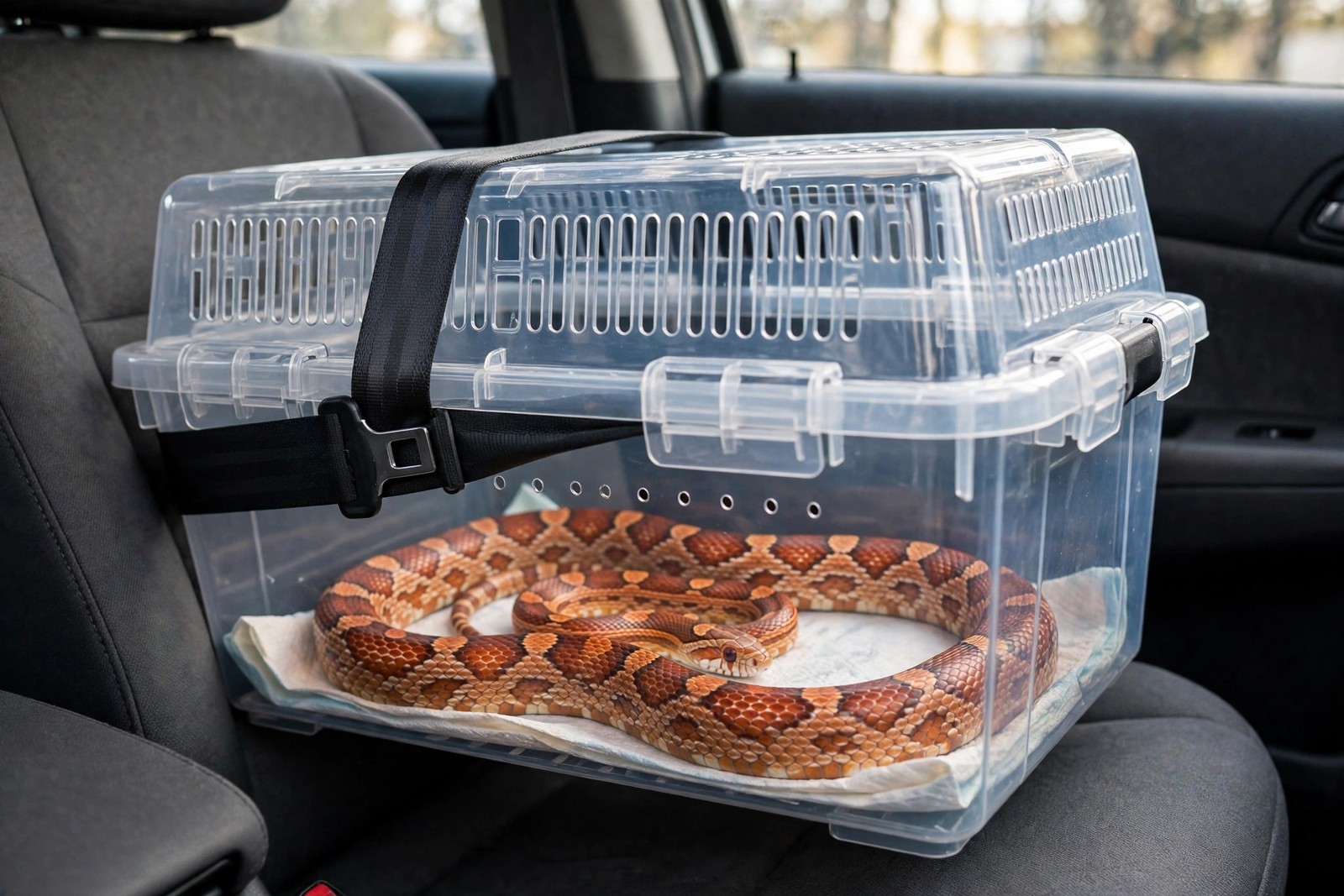
Snakes travel badly in the containers owners instinctively reach for — a glass tank, an open box, a bare plastic tub they can see out of and slide around in. A snake feels safest pressed into darkness with something against its sides, and the transport method experienced keepers use is built entirely around that.
The Bag Inside the Tub
Place the snake in a cloth bag — a dedicated snake bag or a clean pillowcase works — and knot or cable-tie it securely closed. Cloth is soft if the snake pushes against it, it blocks light, and a bagged snake stays remarkably calm because it feels hidden. Then put the bag inside a rigid plastic tub with a firmly clipping lid and a few small air holes drilled or melted into the sides or lid. The tub protects the bag from being crushed, stops any chance of escape reaching the car, and gives you something solid to carry. Line the tub under the bag with a towel so nothing slides.
Size matters in the snake's favour when it is smaller than you expect: a tub the bagged snake fits snugly beats a spacious one it can be thrown around in. For a large snake, one bag per animal and a tub big enough that the coil is not forced — and never transport two snakes loose together, however calm they seem at home.
Warmth Without Direct Heat
Keep the car at a comfortable room temperature and place the tub in the footwell, wedged so it cannot slide, out of direct sun and away from air vents blowing hot or cold. A snake travelling for under an hour in a temperate car usually needs no extra heat at all. In cold weather, a warm — not hot — water bottle or a heat pack wrapped in a towel can sit against the outside of the tub, never inside the bag and never in direct contact with the snake, because a confined animal cannot move away from a heat source that is too strong and can be burned by one it is pressed against. Equally, never leave the tub in a parked car while you run another errand; cabin temperatures swing faster than most owners expect.
Skip food for at least 24 hours before the trip. A snake with a recent meal is far more likely to regurgitate under the stress and handling of travel, which is hard on the snake and ruins the vet's chance to assess its normal digestion.
At the Vet, and the Details That Help
Carry the tub in level, with two hands, and let the vet's team remove the snake in the consult room rather than opening the bag in a busy waiting area. Tell them honestly if the snake is defensive, in shed, or has eaten recently. Bring information, not just the animal: when it last ate and what, when it last shed and whether the shed was complete, the temperatures at the warm and cool ends of its enclosure, and a fresh stool sample in a sealed pot if you can collect one — for many snake presentations, that sample and history are what the vet actually works from.
Photograph the enclosure before you leave if the problem might relate to the setup; a picture of the vivarium answers questions you will not think to note down. Keeping feeding, shedding, and weight records together in KinsLe's Pet Passport means that history travels with the snake in one packet, ready to hand to the vet instead of reconstructed from memory in the waiting room.