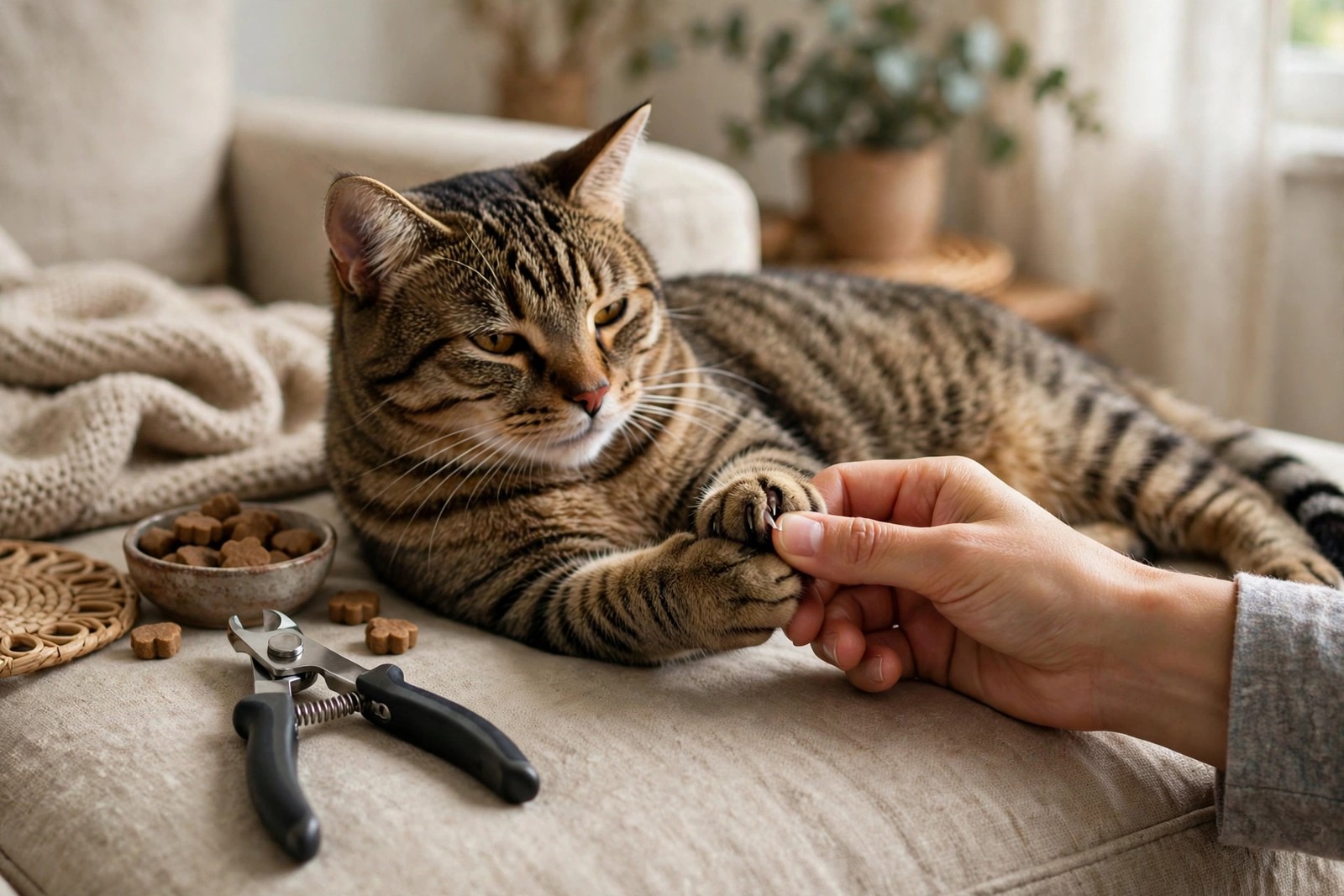
Most claw-trim fights are not about the clippers. They are about a cat who has learned that a grabbed paw predicts restraint and an unpleasant surprise, and who now defends the paw before anything happens. The fix is to separate the lessons: teach your cat over several days that paws being touched is safe and profitable, and the actual trimming, when it finally arrives, becomes a small event inside an already trusted routine.
Days One to Four: Paw Handling Only
Choose moments when your cat is already drowsy and settled — after a meal or during an evening lap session — never when they are playful or have just been startled. Touch one paw briefly, then immediately offer a high-value treat or a lickable snack. Work up to holding the paw for a few seconds, then to gently pressing the top of a toe so the pad pushes the claw out, rewarding every step. Two or three repetitions a day is plenty. If your cat pulls away, let them: a paw that can leave is a paw that will stay next time. End every micro-session before your cat's patience does, because the memory of an easy finish is what you are really training.
The Cut Itself: Tip Only, Clear of the Quick
With your cat relaxed and the claw extended by gentle pad pressure, look along the claw in good light. The living quick shows as a pink vein running partway down; in dark claws, judge conservatively. Cut only the curved, translucent tip — the sharp hook at the end — staying well short of the pink. One clean cut per claw is the goal; sawing or crushing with blunt clippers is what cats feel and remember. Front claws, which scratch and climb, usually need attention every two to three weeks; back claws grow slower and are often blunter. Check dew claws on the inner front legs, too — curled and forgotten, they are the ones that grow into the pad.
One Paw Is a Complete Victory
Forget the all-eighteen-claws marathon. Trim one paw while your cat is sleepy, reward generously, and stop. Do another paw tomorrow. Many owners keep clippers beside the sofa and take two claws during a film, which suits cats far better than a scheduled bathroom capture. Never chase a cat who has left, never wrap and force a struggling cat unless a veterinarian has shown you a medical need, and never punish a swat — a cat pushed past tolerance today is harder to trim for months. If your cat will not accept home trimming despite a patient build-up, a veterinarian or groomer can do it, and there is no failure in that.
Timing and Household Notes
Trim when your cat is naturally calm, keep the same quiet spot, and pair the routine with the same reward so the whole sequence becomes predictable. Note which paws were finished, your cat's tolerance that day, and the reward that worked in KinsLe Care Pass, so anyone caring for your cat in your absence follows the patient version of the routine rather than improvising a wrestling match.