
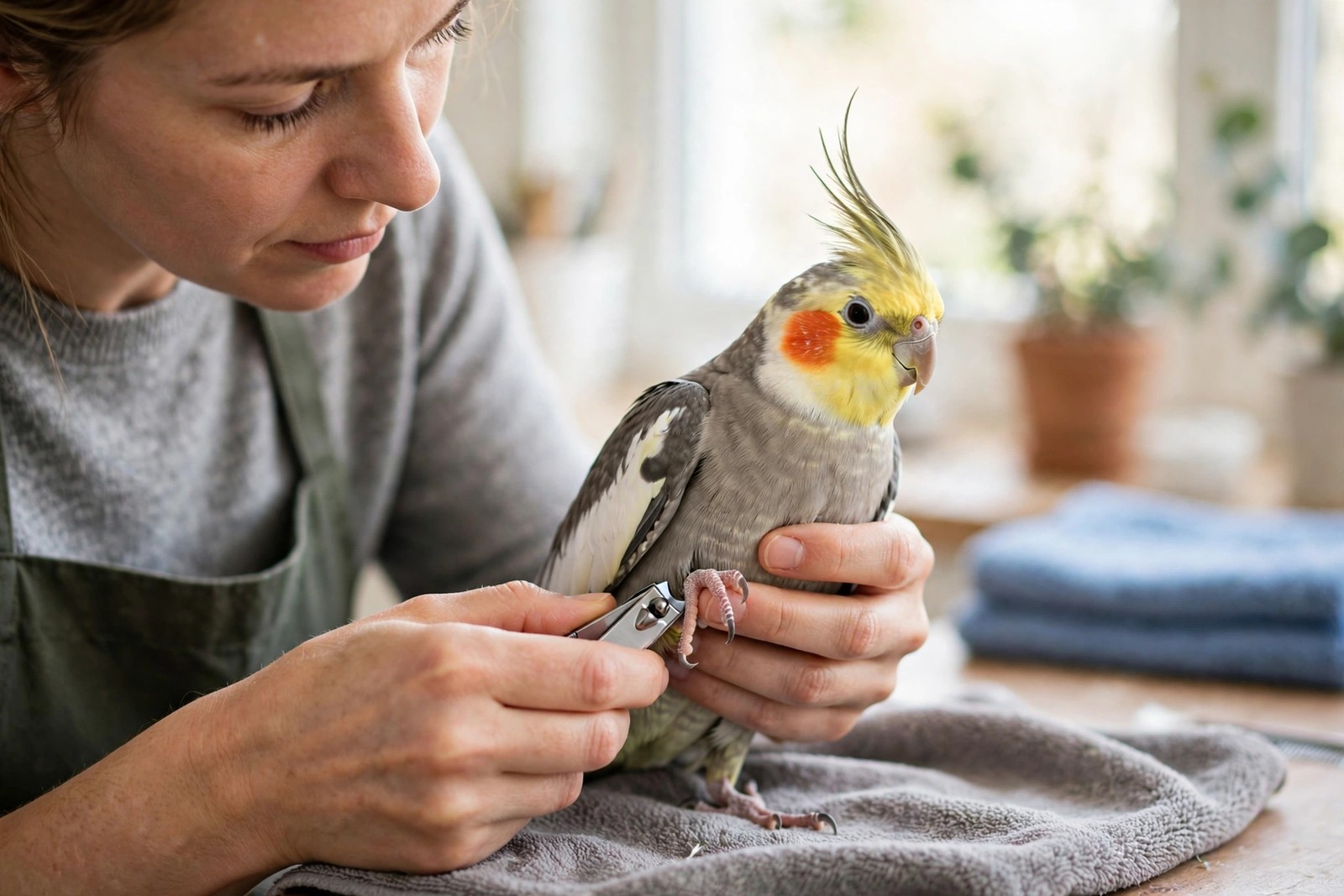
To trim a cockatiel's nails safely, take off only the very tip of the nail — because cutting too far reaches the quick, the blood vessel inside, and causes bleeding and pain. Many owners decide the safest trim is one done by an avian vet or experienced groomer, and there is no shame in that choice. If you do trim at home, go slowly, in good light, with supplies ready before you start.
Know When Nails Actually Need Trimming
Healthy cockatiel nails wear down on perches and often need less trimming than owners expect. Signs a trim is due: nails curving so much they catch on cage bars, toys, or fabric; the toe twisting sideways when the bird perches; or clicking and snagging as your bird walks across a flat surface. Provide perches of varied diameter and a rough-textured grooming perch near a favourite spot — everyday wear on these can stretch the time between trims considerably. Check nails weekly when you clean the cage so “slightly long” never becomes “dangerously overgrown.”
What You Need Before You Start
- Small bird nail clippers or a rotary file made for small pets — many birds tolerate a file better because there is no sudden squeeze.
- Styptic powder, ready and open — not in a drawer in another room.
- A small towel for gentle restraint, and a treat for afterwards.
- Bright light, and ideally a second person: one holds, one trims.
Work when your cockatiel is calm, not right after play or during a molt grump. If your bird is already stressed, postpone — a nail trim is rarely urgent today.
The Trim, Step by Step
Wrap your bird gently in the towel with one foot accessible, keeping pressure off the chest — birds breathe by expanding their chest, so never squeeze the body. Extend one toe at a time. On light-coloured nails you can see the pink quick; on dark nails, trim in tiny slivers and stop when the centre of the nail's cross-section starts to look soft or darker. Take the tip only — you can always trim again next week; you cannot un-cut a quick. Let your bird rest and reset between feet if stress builds. Panting, struggling hard, or open-mouth breathing means stop for the day.
If You Do Nick the Quick
Stay calm — your bird will take cues from you. Apply styptic powder with gentle pressure and keep the bird calm and contained for several minutes until bleeding fully stops. If bleeding does not stop, or a toe looks injured, contact an avian vet promptly; a broken blood feather or a nail torn at the base also needs professional attention. Note the incident so you remember which nail runs long.
Letting a Pro Handle It, Found Through KinsLe
Plenty of confident owners hand nail trims to professionals, combining them with a vet wellness visit. KinsLe's Pet Services Directory helps you find local groomers, vets, sitters, and trainers — ask specifically about bird experience, since cockatiel restraint is a specialist skill. Your bird's profile is free to set up, with a unique QR ID on every profile. An avian veterinarian or groomer for the next trim can be found on KinsLe in the Pet Services Directory.