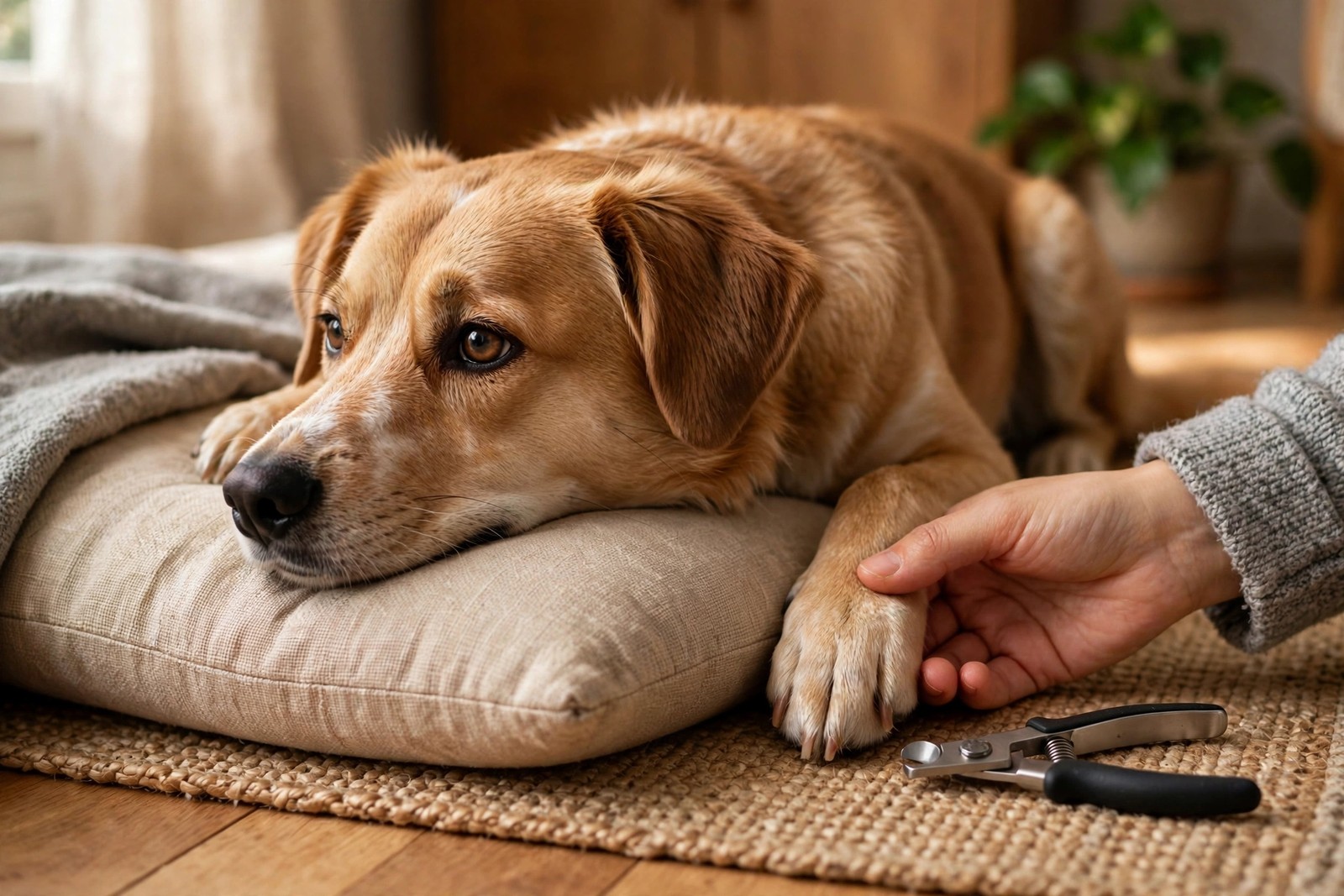
Force may finish a trim today while making the next one harder, so a frightened dog needs control over pace more than he needs perfect nails this week. The ladder stays identical at every session: settle on the mat with a chin rest as opt-in, then paw handling, then the clipper shown and sounded, then one tiny trim per session at first. Leaving the mat ends the game without scolding, and returning to it restarts consent.
Stage One: Mat, Chin Rest and Paw Handling
Choose a quiet time when he is already relaxed, place his familiar mat in a consistent spot, and reward him for lying there with chin pressed lightly to a cushion or your hand. Keep sessions brief and finish after success. If he lifts his head, shifts away or leaves, the session ends kindly; his opt-in signal only carries meaning when opting out works too.
Add paw handling separately once the mat behaviour feels easy. Touch a paw, reward, release, then build toward holding it gently and moving individual toes as a trim would require. Work through all four paws across different sessions rather than demanding complete cooperation in one sitting. Treats delivered after each touch teach him that stillness earns something, while fidgeting simply pauses progress.
Stage Two: Clipper Sight, Sound and One Tiny Trim
Place the clippers nearby during mat time without using them, reward calm curiosity, then progress to picking them up and setting them down. Next, operate the clipper beside him so he hears its snap, pairing each sound with food. Some dogs also cope better when they can sniff the tool before every stage, so allow investigation instead of hiding it behind your back.
When paw handling and clipper sounds both leave him relaxed, attempt one tiny trim: a sliver from a single nail, followed immediately by reward and the end of the session. Tiny matters, because staying well away from the quick keeps pain out of the lesson. Across later sessions, add nails gradually, always ending the session before his coping runs out. If panic returns at any stage, drop back a stage for several sessions and rebuild from the level he handled comfortably.
Bridge the Gap With a Scratch Board
Nails keep growing while confidence rebuilds, and a scratch board offers him active control over the delay. Teach him to scrape his front paws down an abrasive surface for rewards, which files front nails shorter between trim sessions. Hind nails lack that easy option, so they may remain the priority for patient clipping or professional help once his confidence allows handling.
If progress stalls completely, he injures himself resisting, or panic looks intense from the moment tools appear, have a conversation with your vet about support and referral options. Never attempt home sedation or borrow medication guidance from elsewhere; professional input keeps both safety and trust intact. A groomer experienced with fearful dogs may also work through the identical ladder, provided nobody resorts to pinning him down for speed.
Read His Signals Honestly
Learn the difference between a dog who copes and a dog who merely endures. Soft eyes, a loose body, easy breathing and voluntary returns to the mat signal coping. Lip licking, yawning out of context, turning the head away, freezing over the paw or sudden stillness suggest his budget for the day is nearly spent, even if no struggle has happened yet. Several short sessions across a week suit this work better than a single long appointment with his fear, and a simple note after each one, naming the stage reached and how he seemed, stops helpers from unknowingly pushing further than the previous person did. Two difficult sessions in a row mean the next one should be deliberately easier.
Consistency protects his confidence, and whoever helps can open KinsLe to check the current stage recorded alongside Care Teams before touching a paw.