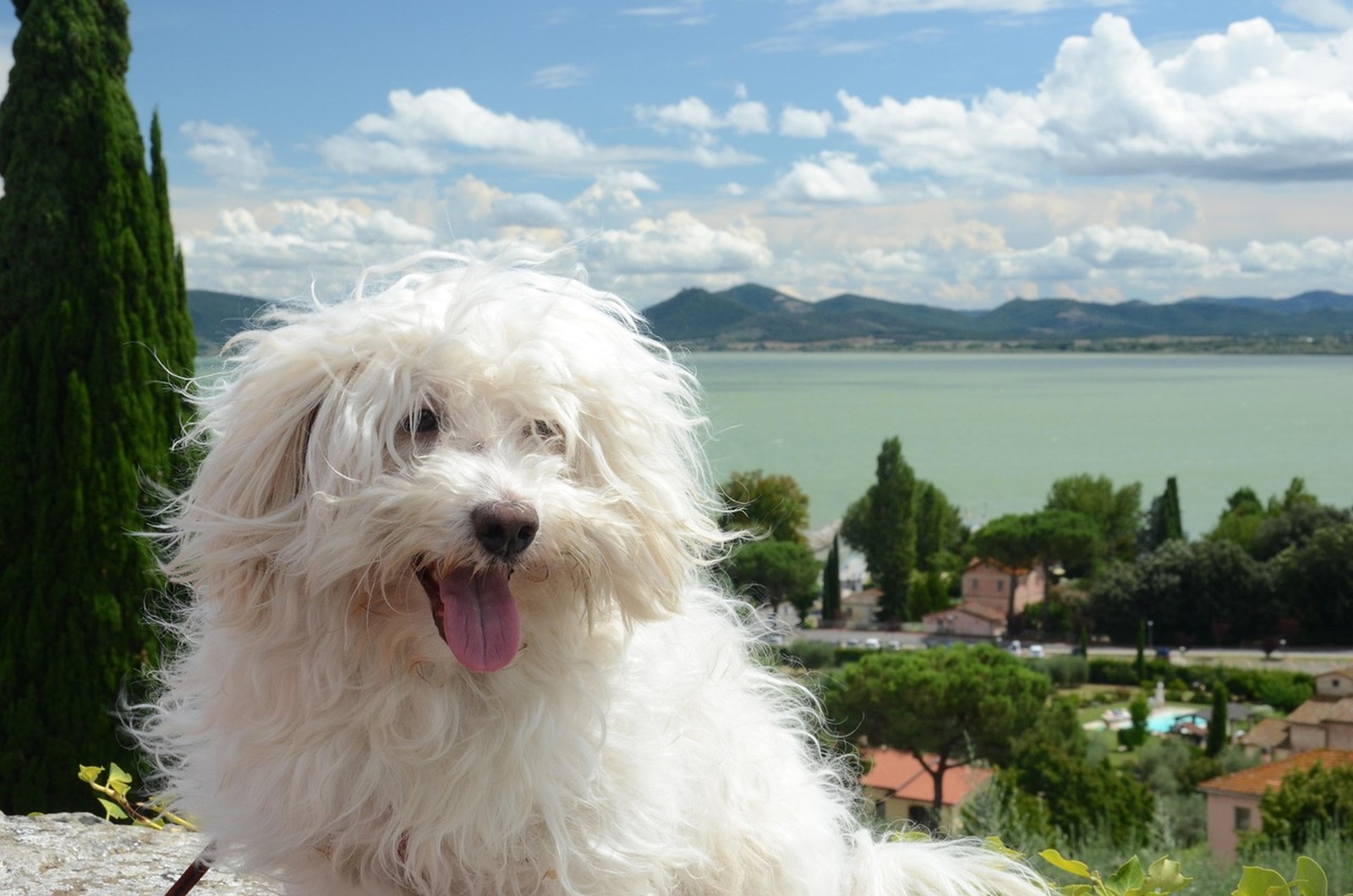
A flocked coat with no shortcut
The Bolognese carries a single, long, flocked coat — soft, white, cottony hair that stands away from the body in loose tufts and, unusually, has no undercoat at all. Because there is almost no shedding, dead hair does not fall away; it stays tangled in the living coat. That one fact sets the grooming frequency: a Bolognese in full coat needs brushing and combing most days, in gentle sessions of ten minutes or so, and skipping a week reliably produces mats that hurt to remove.
Owners who cannot commit to near-daily combing usually choose the honest alternative, a shorter pet trim, and there is no failure in that. A comfortable, mat-free short coat beats a neglected long one every time.
Brushing a coat that tangles softly
Work with a pin brush and finish with a steel comb, because the comb is the truth-teller: it must reach the skin and glide. Bolognese hair tangles in soft webs rather than hard knots at first, especially behind the ears, in the armpits, along the belly, around the collar line and at the tops of the legs. A light conditioning mist while brushing prevents the dry hair snapping, which matters on a coat that grows slowly and shows breakage as thin patches.
Brush in layers, lifting sections so you are not polishing the surface while webs form underneath. Tease a forming mat apart with fingers before reaching for any tool, and never pull a comb hard through this delicate coat — the dog is small, the skin is fine and a few painful sessions teach a Bolognese to hide from the brush entirely.
Long coat or pet trim: deciding honestly
Kept long, the Bolognese coat needs those daily sessions plus careful bathing, and many owners gather the hair on top of the head into a soft topknot so the dog can see and the eye area stays clean. Trimmed into a shorter puppy-style cut every month or two, the same dog may need brushing only a few times a week, washes faster and dries faster.
Hygiene trimming helps either way: hair between the paw pads, around the bottom and under the belly kept short stays cleaner, and the hair around the eyes should be kept out of them. If a groomer maintains the cut, ask them to show you exactly which areas to comb between appointments, because salon work does not cancel home work on this breed — it only resets it.
Bathing, eyes and tear staining
A Bolognese typically needs a bath every two to three weeks, sooner if the white coat picks up city grime, using a gentle dog shampoo and thorough rinsing, since residue in that flocked hair dulls it and itches. Dry fully, ideally with a cool dryer while brushing, so the hair dries separated rather than clumping. Comb out completely before the bath, as water sets any existing tangle harder.
White faces show tear staining, the rusty discolouration under the eyes. Wipe the eye area daily with a clean damp cloth, keep facial hair out of the eyes and watch for gunky discharge, squinting or pawing at the face, which mean a veterinarian should look at the eyes rather than the grooming shelf. Nails on a small indoor dog grow without much natural wear and need trimming every few weeks.
A daily habit, shared fairly
The Bolognese grooming rhythm is frequent but gentle: ten calm minutes most days rather than a weekly battle. Build it into an existing moment — after the morning walk, during evening television — and handle puppies in even shorter sessions so the habit is set before the adult coat arrives in full. Note your own dog's fastest-tangling spots in the first months; every Bolognese has a map, and knowing it shortens every session. In a multi-person home, KinsLe's Care Teams records who combed this little dog today and when the bath and groomer trim fall due, keeping a near-daily routine from doubling up or slipping through the cracks.