
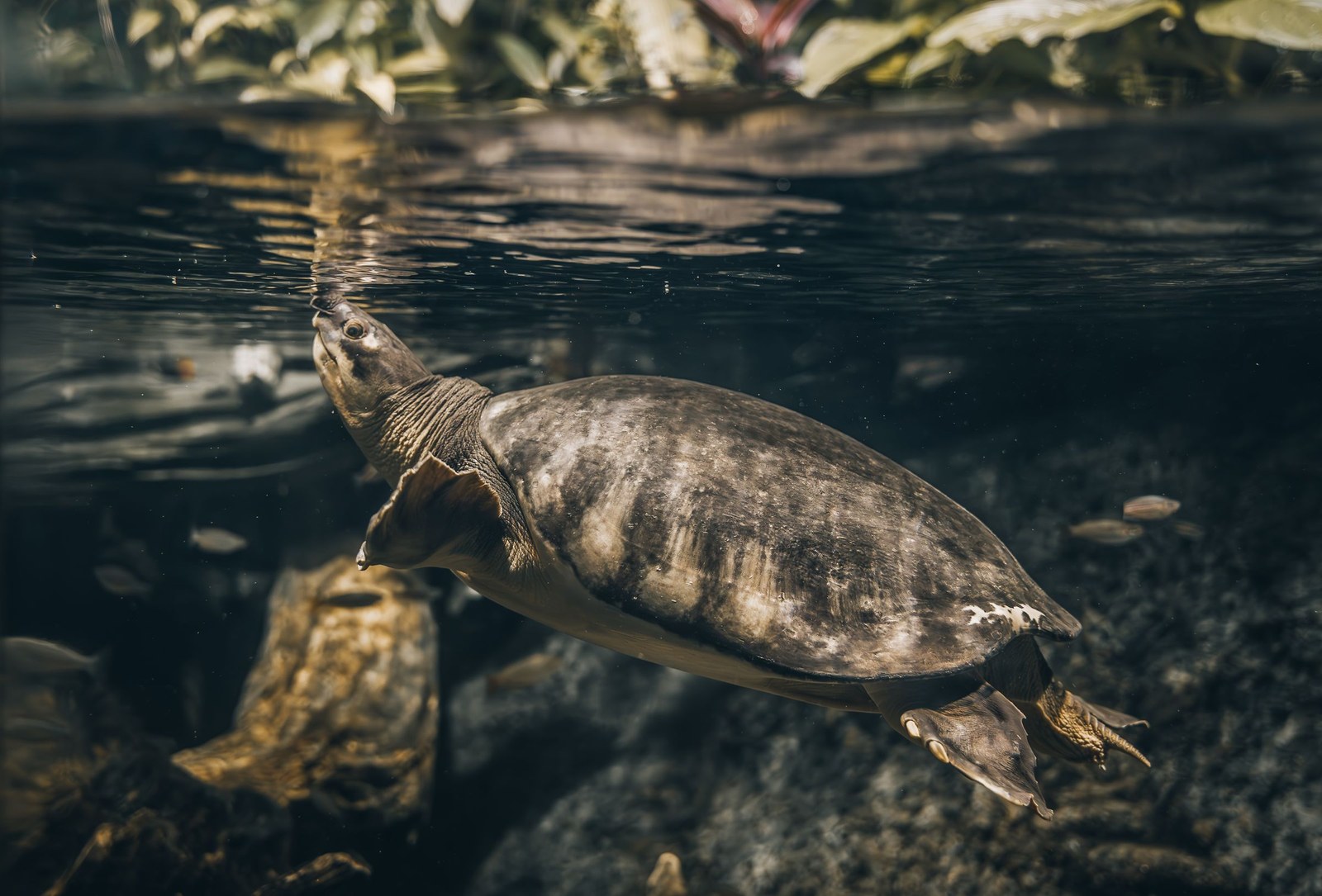
Bad water quality is one of the most common — and most preventable — causes of illness in aquatic turtles. Water heavy with ammonia and waste irritates eyes and skin, encourages shell and respiratory infections, and quietly stresses the immune system over time. The frustrating part is that dangerous water often looks perfectly clear. Swollen or closed eyes, fuzzy patches on skin or shell, and unusual lethargy can all trace back to water that passed the eyeball test and failed the actual test.
What Is Actually in "Dirty" Water
Your turtle eats, excretes, and sheds in the same water it swims in. Uneaten food and waste break down into ammonia, which is toxic in its own right; beneficial bacteria in a good filter convert it onward, but an undersized or neglected filter lets it accumulate. Aquatic turtles are famously messy — a red-eared slider produces far more waste than the fish a typical filter is rated for. Warm water, which turtles need, speeds bacterial growth further. The result is a chemical problem long before it becomes a visible one.
Signs the Water Is Making Your Turtle Sick
- Eyes — swollen, puffy, sealed shut, or constantly rubbed with the front feet.
- Skin and shell — fuzzy white or gray patches, pink discoloration, or shell areas that stay slimy.
- Breathing — open-mouth breathing, wheezing sounds, bubbles at the nose, or swimming tilted to one side.
- Behavior — lethargy, refusing food, or basking far more than usual, as if trying to leave the water entirely.
None of these signs diagnose a specific illness on their own, and several can have other causes — which is exactly why they warrant a vet visit rather than guesswork.
Testing Beats Guessing
A liquid test kit for ammonia, nitrite, and nitrate turns water quality from an opinion into a number, and it takes minutes. Test weekly while your setup is new or after any change, and any time your turtle looks off. Ammonia and nitrite should read zero in an established, properly filtered tank; rising nitrate tells you water changes are overdue. Keep a simple log of results and dates — patterns over weeks are far more useful than any single reading.
The Maintenance Habits That Prevent It
Strong filtration rated well above your tank's size, partial water changes on a fixed schedule rather than when the water "looks bad," prompt removal of uneaten food, and a basking spot where your turtle can fully dry off — these four habits prevent most water-driven illness. Use dechlorinated water for refills, and clean filter media in removed tank water so the beneficial bacteria colony survives the cleaning.
Staying Ahead of It With KinsLe
Water care fails by drift: the test that slips a week, then a month. Kinny, the built-in AI assistant in KinsLe, is there for the questions that surface mid-test: whether a faint color change in the test counts as ammonia present rather than absent, how soon to retest after a partial water change, or whether swollen eyes alongside a reassuring reading still warrant a vet call. Asking while the result is fresh turns a puzzling reading into a clear next step instead of a forgotten note. Kinny on KinsLe can answer follow-up questions you ask about testing frequency and ammonia readings, drawing each reply from the KinsLe Answers library.