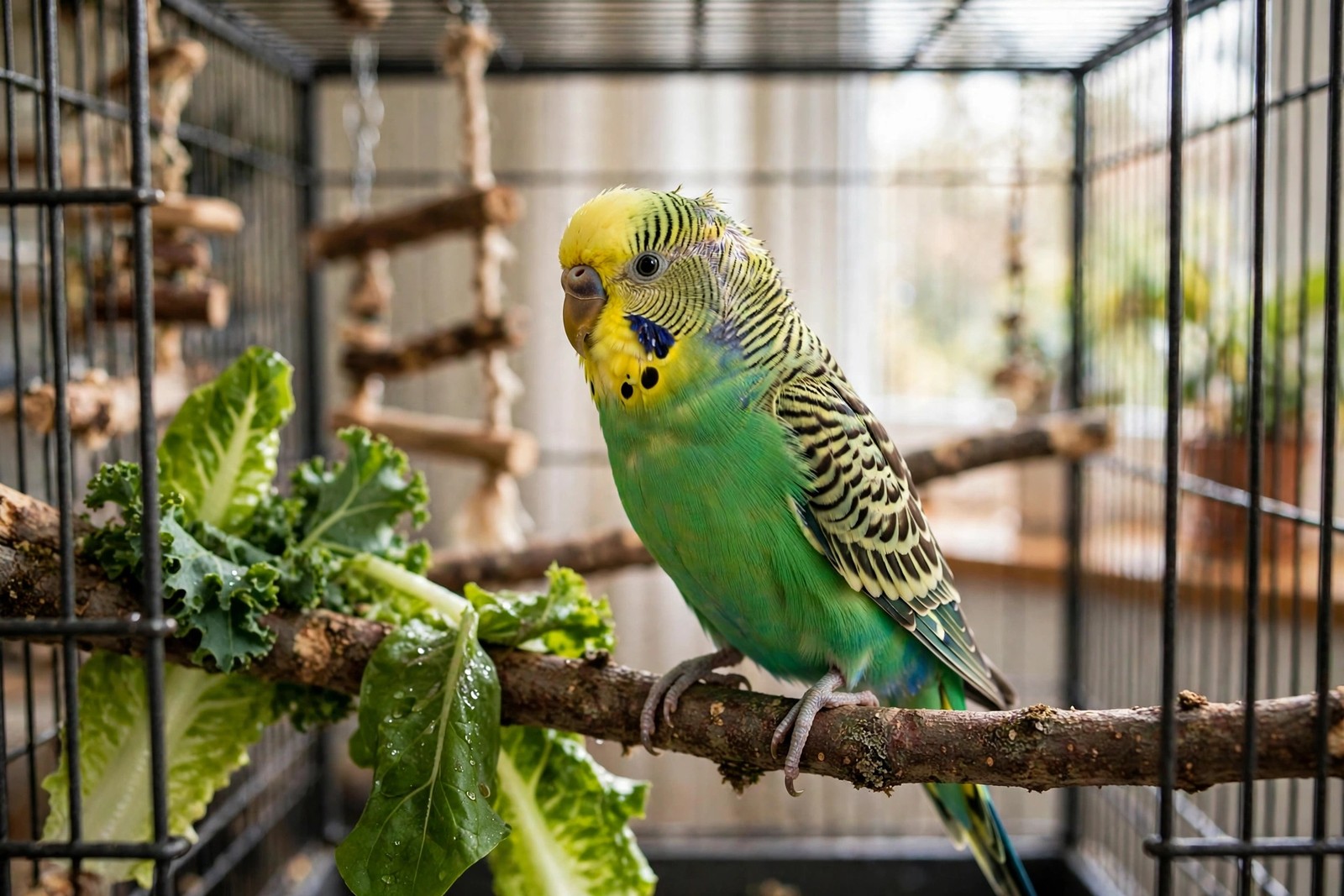
The typical pet budgie lives five to ten years. That range surprises people in both directions: owners who remember a childhood budgie reaching twelve, and owners who lost a bird at three. Both stories are real, because a budgie's lifespan is not fixed by the species alone. It is built, year by year, out of diet, air quality, exercise, genetics, and how quickly illness gets noticed in a small bird who hides it well.
Why the Range Is So Wide
Budgies come from the Australian interior, where wild birds live hard, fast lives shaped by drought, predators, and boom-and-bust seed seasons. Captivity removes the predators and the famine but introduces its own risks: an all-seed diet, a small cage with no flight, and indoor air that can carry fumes a budgie's efficient respiratory system handles badly. A bird kept on seed alone, without exercise, commonly lands at the short end of the range, while a bird with varied food, daily flight time, and clean air is the one who reaches twelve to fifteen. Birds from heavily inbred colour lines may also carry weaker constitutions than the classic green wild type, which is one reason two budgies bought the same day can age so differently.
The Habits That Add Years
Food is the biggest lever an owner controls. Seed is part of a budgie's natural diet, but seed alone is fatty and short on key nutrients; birds who also eat formulated pellets, leafy greens, and vegetables such as broccoli and grated carrot, with millet kept as a treat, tend to stay leaner and healthier. Flight matters just as much: daily out-of-cage time in a bird-safe room keeps weight down and the heart and lungs working. Clean air is non-negotiable — keep budgies out of the kitchen, away from non-stick cookware fumes, scented candles, and aerosols, all of which can kill quickly rather than slowly. Finally, sleep and routine: ten to twelve hours of dark, quiet rest supports the immune system of a bird built for stable tropical day lengths.
Senior Budgie Care
An older budgie slows down gradually: shorter flights, longer naps, a little stiffness on cool mornings, and sometimes thickened leg scales or a duller cere. Senior birds benefit from lower, easier perches, food and water placed where no climbing is needed, and a warmer room. Weigh an older budgie monthly on a gram scale — a drift of a few grams in a bird this small is a meaningful signal, and budgies hide illness until it is advanced. Any budgie who sits fluffed on the cage floor, stops eating, or breathes with a bobbing tail needs a veterinarian the same day, whatever their age.
Planning for the Whole Lifespan
Five to ten years — with fifteen possible — is a real commitment to plan around: who feeds the bird during holidays, and what happens if your circumstances change? Keep hatch information, weights, and every vet visit in order from the first year onward in KinsLe Pet Passport, and the record that supports a budgie at fourteen is the same one you started when they were a youngster.