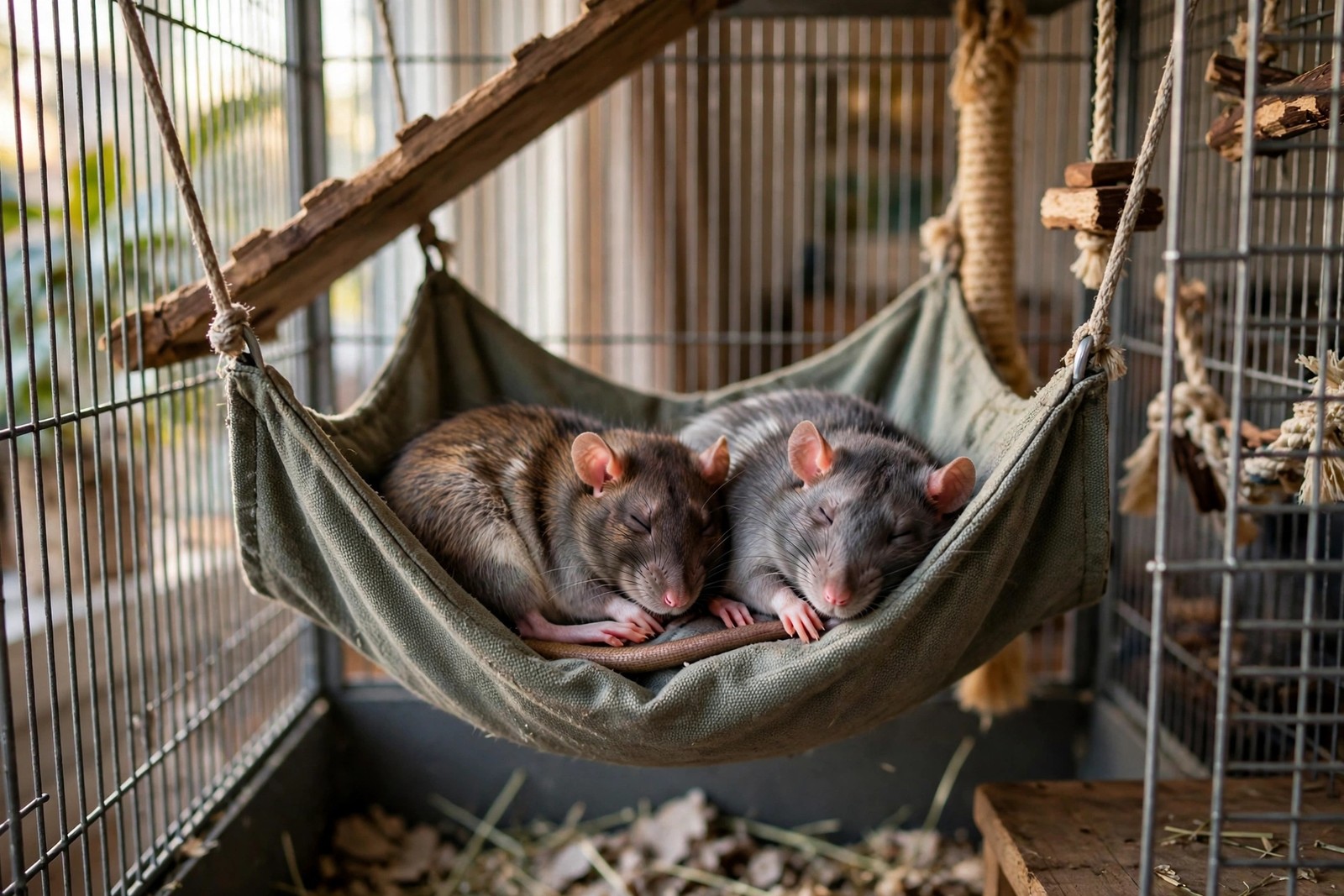
Two to three years is the typical lifespan of a pet rat. Most pet rats reach about two, a good number pass two and a half, and only a few see a third birthday. That is the hardest fact in rat keeping: the animal many owners describe as the most affectionate small pet they have ever had is also one of the shortest-lived, and its entire senior stage arrives before its second birthday in many cases. Planning for a rat means accepting that arc and making each stage comfortable rather than being ambushed by it.
A Life at Fast-Forward
A rat is weaned at a few weeks, fully grown by about six months, and in its prime through its first year. From roughly eighteen months, senior changes begin: hind legs may weaken and drag slightly, weight slips off despite a good appetite, fur thins, and old rats sleep far more and climb far less. Lowering ramps, moving food and a sleeping hammock to the cage floor level, and offering softer foods lets an elderly rat keep living in the home it knows. A veterinarian experienced with small mammals can advise honestly about comfort and quality of life in this stage.
Breathing: The Main Lifespan Battle
Respiratory disease is the most common limiter of rat lifespan. Most pet rats carry organisms in their airways that flare into illness when conditions irritate the lungs, and the biggest household irritant is ammonia from urine building up in the cage. A tall wire cage with real airflow — never a glass tank — frequent litter changes, and bedding that is not dusty or strongly scented all protect those airways. Sneezing fits, wheezing or clicking sounds, red discharge around the eyes and nose, and labored breathing all warrant a prompt vet visit; rats decline quickly once breathing is hard work.
Tumors and Weight
Tumors, particularly mammary tumors in females, are the other major lifespan factor, and they often appear in the second year. Running your hands over each rat weekly during free-range play lets you find a lump while it is small, when a veterinarian has the most options to offer. Weight matters too: rats love food and beg charmingly, but fat rats develop more health problems and struggle more in old age, so the main diet should be a measured quality rat ration with vegetables, and treats kept genuinely occasional.
Rats Live in Company — Including at the End
Rats are deeply social and should live in pairs or groups; a single rat is a stressed and lonely rat, and stress costs health. Group living means planning for staggered ages: when one elderly rat dies, its companion is suddenly alone, so many keepers maintain a rolling group by adding younger rats over time. Granting parents or adult siblings access to their profile is something an owner can do, and that grant is made under KinsLe Family Sharing.