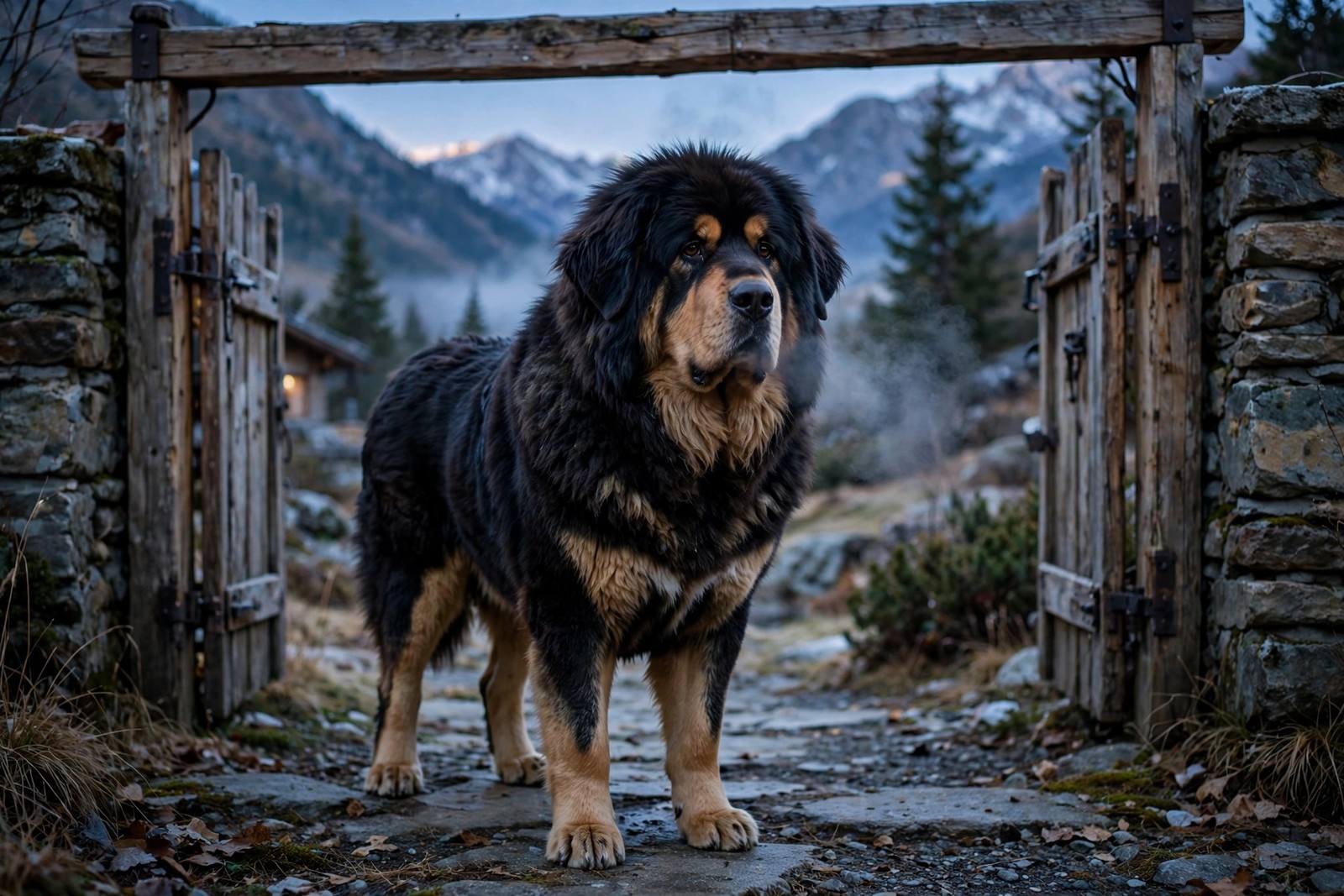
Ten to Twelve Years: the Giant-Breed Outlier
Tibetan Mastiffs usually live ten to twelve years, outlasting nearly every other breed of comparable size. The explanation lies in the dog's origins. This is an ancient, primitive guardian developed in mountain conditions where soundness was survival, and it was never remodelled toward extremes of bulk, coat, or face. The result is a big dog built like a working animal rather than a showpiece, with the durability to match. For owners, the figure cuts both ways: a Tibetan Mastiff is not a short chapter. Choosing one is committing to a powerful, opinionated guardian for well over a decade, through several life stages of your own.
Maturity Arrives Late and Leaves Slowly
Tibetan Mastiffs develop at a glacial pace, filling out and settling mentally over three to four years. Females and males both keep a puppyish intensity longer than expected, inside a body that reaches full strength early enough to make that combination demanding. Feed growth carefully, avoid forcing exercise on a developing frame, and invest heavily in early socialisation, because the adult dog will be both enormous and certain of his own judgement. At the far end of life the same slowness applies: many Tibetan Mastiffs remain vigorous, territorial, and fully engaged at nine or ten, ageing visibly only in the final stretch.
A Decade With a Night Watchman
Lifespan is not just years; it is years of a particular lifestyle. Tibetan Mastiffs were bred to guard while the household slept, and the instinct survives: expect alertness, barking at genuine night sounds, and a dog who patrols boundaries at dusk. Secure fencing is not optional with a breed that considers roaming part of the job description, and gates deserve the same suspicion a Tibetan Mastiff gives every stranger. The heavy double coat blows out dramatically, usually in a seasonal shed that fills brushes for weeks. Owners should weigh all of this honestly, because a decade-plus of broken sleep or neighbour complaints is a foreseeable outcome, not bad luck, if the breed's nature clashes with your setting.
Senior Watching in a Stoic, Distant Patient
From around eight, maintain regular vet checks even though the dog will rarely advertise discomfort. Watch for stiffening after rest, reluctance on climbs, appetite or weight drift, increased thirst, and any change in the thyroid-sensitive areas of coat quality and energy, and raise patterns with your vet rather than waiting for drama. Tibetan Mastiffs are reserved with strangers, so choose a vet the dog knows from healthy visits; an elderly guardian meeting handling for the first time in a crisis is a welfare problem for everyone. Urgent signs, as with any deep-chested giant, include a swollen abdomen with unproductive retching or sudden collapse.
Records Built to Last as Long as the Dog
A dog who lives twelve years will outlast phones, filing systems, and sometimes vets and addresses. His vaccination history, weight records, coat and thyroid notes, and treatment decisions deserve a home as durable as he is. KinsLe's Pet Passport keeps a Tibetan Mastiff's records together in one portable packet, ready for each new vet, boarding stay, or house move across that long guardian career.