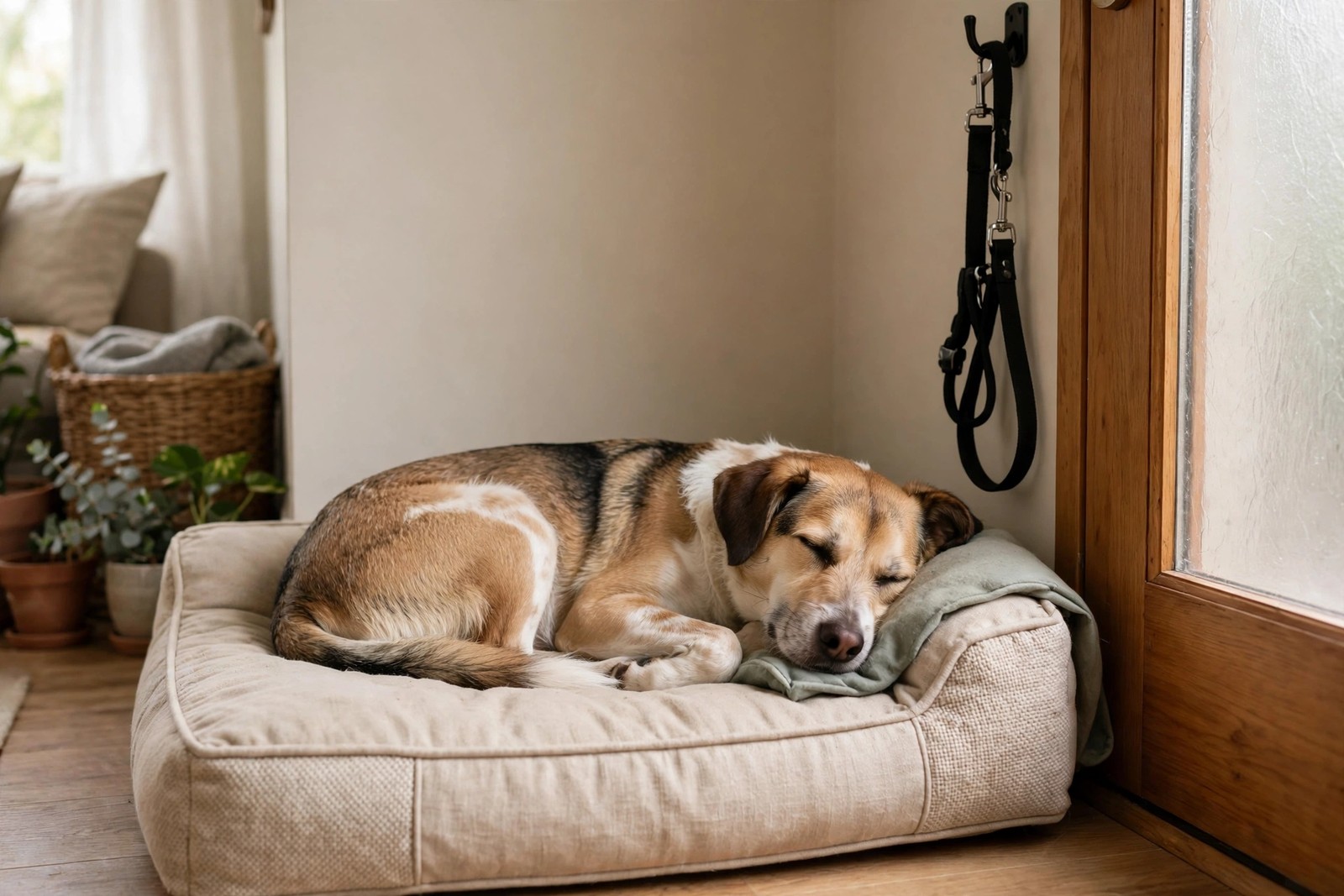
Most newly adopted dogs settle along the three-three-three pattern that rescues share with new owners: about three days to decompress, about three weeks to learn your routines and about three months to feel genuinely at home. Treat the numbers as a map, not a timetable. A confident young dog may look settled inside a fortnight, while a shy, older or much-moved dog may still be finding its feet at four months, and both are within the normal range. What speeds settling is not affection in large doses but predictability: the same feeding times, the same walk route, the same sleeping place and the same calm responses from you, repeated until the dog stops bracing for change.
The First Three Days: Decompression
Expect a dog that sleeps a great deal, eats cautiously or skips meals, drinks more than usual and startles at ordinary household sounds. Some dogs are clingy; others hide behind furniture and watch. All of it is information processing, not ingratitude or bad behaviour. Keep the world small: one quiet sleeping spot with bedding that smells of the dog, toilet trips on a lead to the same patch of garden, short local walks rather than neighbourhood tours and no visitors beyond the household for the first couple of days. Offer the food the dog is used to if you know it, at set times, and lift what is uneaten after twenty minutes rather than coaxing all day. If a dog has not eaten at all after a couple of days, or shows vomiting, diarrhoea or complete withdrawal, call your vet for advice rather than waiting the phase out.
Three Weeks: Routines Land and Testing Begins
By the second and third weeks most dogs eat reliably, sleep through the night and begin to anticipate the shape of the day: walk after breakfast, rest while you work, play in the evening. This is also when the real personality surfaces, including the parts the shelter never saw. A dog that seemed shut down may start guarding toys, pulling towards other dogs or testing whether the sofa rule applies to them. Owners often call this regression; it is actually confidence. Hold boundaries kindly and consistently, start short reward-based training sessions and introduce new experiences one at a time, watching whether the dog recovers quickly or stays wound up. Begin leaving the dog alone in tiny, boring increments if that will be part of normal life, rather than springing a full workday on the dog in week four.
Three Months: Belonging, and What to Watch
Around three months, most adopted dogs show the deep signs of belonging: sleeping on their backs or sprawled in the middle of the room, choosing to rest near you rather than monitoring you, playing with loose, wiggly body language and recovering quickly from surprises. Deep sleep is the clearest marker, because a dog only sleeps that unguardedly where it feels safe. Keep building from there with training classes, wider walks and new people at the dog's pace. Persistent problems deserve help rather than endurance: ongoing loss of appetite, aggression around food or people, panic when left or house-soiling that is not improving after several weeks are all reasons to involve your vet and a qualified behaviour professional. When the dog arrived, its past may have come as fragments: a name, a food, a fear, a vet booklet. KinsLe's Transferrable Profiles brings those known details (history, records and routines) into one profile that moves with your dog, so what the rescue or previous keeper knew is never lost as your dog settles in.