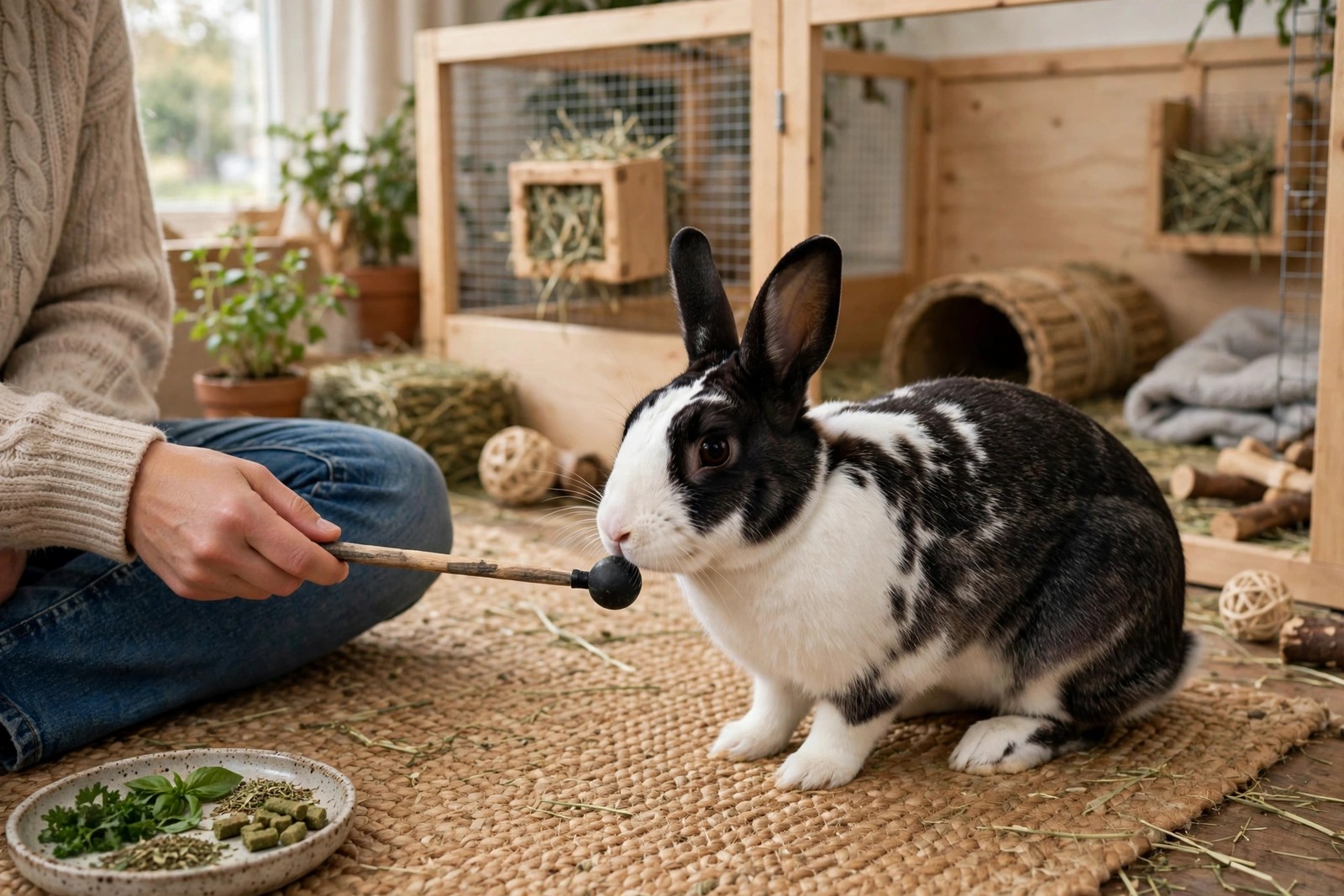
Five to ten minutes. That is the honest answer for most rabbits, most skills, most days — and the skill that matters most is not filling those minutes but ending inside them, while your rabbit is still engaged and choosing to participate. Rabbits are not small dogs. They are prey animals whose attention is built for grazing, scanning, and short bursts of exploration, and a lesson that drags past their interest teaches only one thing: that training is where the fun stops.
Why Short Works for a Prey Animal
A rabbit in a session is splitting attention between you, the treats, and constant low-level monitoring for danger. That monitoring is hardwired and tiring, which is why focus fades fast even in a confident house rabbit. Young rabbits fade fastest — a few successful repetitions may be a full session for a kit — while a settled adult bonded to you may happily work for the top of the range. Multiple short sessions also fit how rabbits naturally learn routes and routines: brief, repeated, and always in a familiar place. Two or three sessions a day, separated by hours of ordinary life, will out-teach a single thirty-minute effort every time, and they slot around crepuscular energy peaks in the morning and evening when rabbits are naturally most active.
What a Good Session Looks Like
Set up in the rabbit's own territory, sitting or lying at their level, with pea-sized pieces of a valued food — a fragment of herb leaf or a small slice of a favourite vegetable beats a sugary treat. Work on one behaviour only: touching a target stick, coming to a name, stepping into a carrier, or offering a paw. Mark the exact moment your rabbit gets it right with the same short word or click, then reward within a second or two. Repeat four to six times, then scatter the last reward in some hay to forage for and finish. If a step fails twice, make it easier rather than repeating the failure louder — rabbits shut down under pressure instead of trying harder.
The Signs to Stop Immediately
End the session, without disappointment in your voice, when your rabbit turns away to groom, wanders off to graze, or starts scanning the room instead of watching you — those are polite exits. Stop at once and give space if you see stress signals: thumping, freezing flat, frantic digging at the floor or your clothes, teeth grinding, or bolting for a hide. Never chase a rabbit back to the lesson or lift a rabbit who has left; being able to walk away is precisely what makes a rabbit willing to stay next time. Note that sessions during moulting, after a vet visit, or in hot weather — rabbits tolerate heat poorly — should be shorter still or skipped entirely.
Building Skills Across Weeks
Short sessions compound. Name response may take a week of twice-daily five-minute games; carrier training, built by feeding favourite foods in an open carrier for minutes at a time, can take two or three weeks before the door ever closes. Log the skill, the session length, and where you left off in KinsLe Care Teams, so whoever runs the next five minutes tomorrow continues the lesson instead of restarting it.