
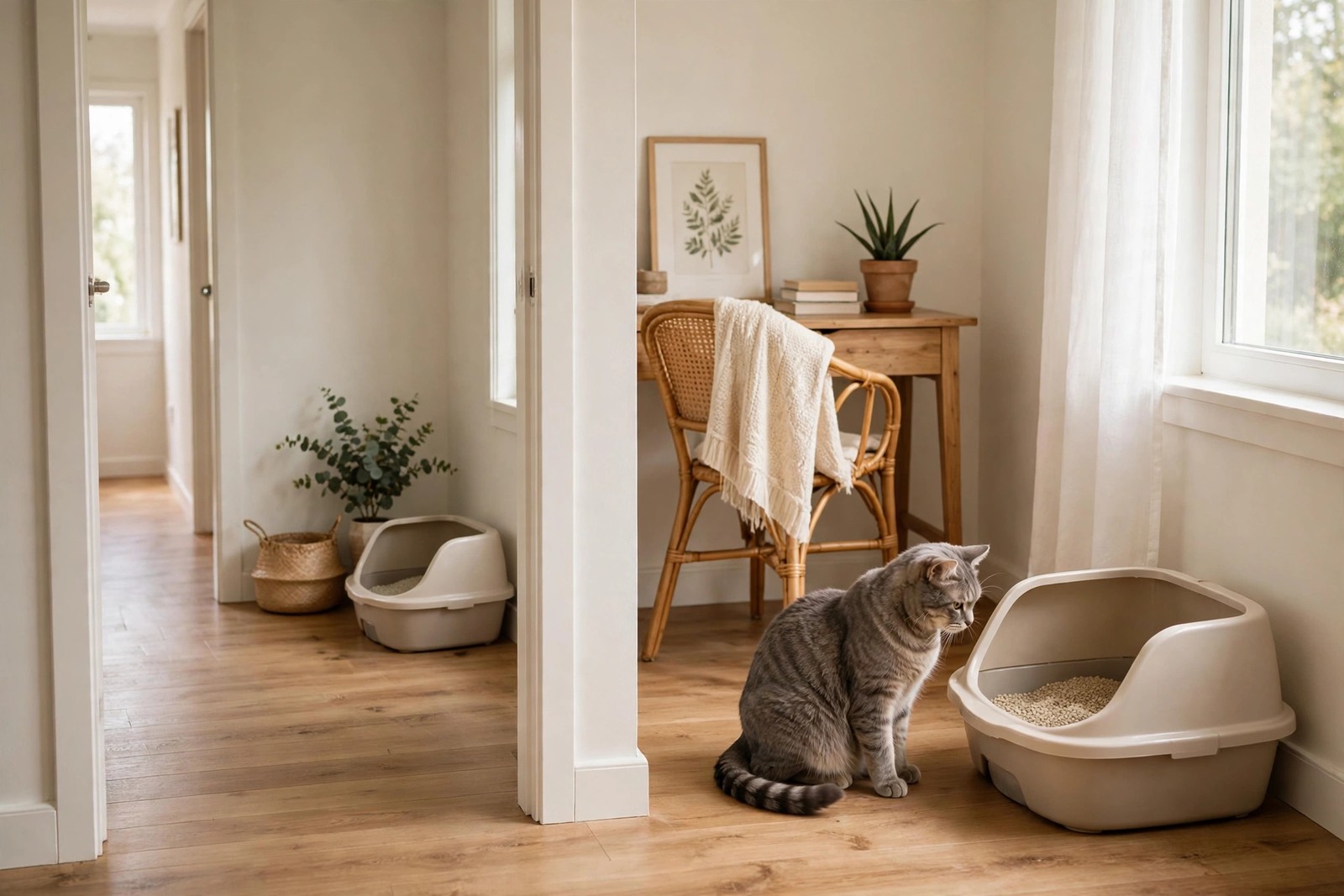
The widely used rule of thumb is one litter box per cat, plus one extra — so two boxes for one cat, three for two cats, and so on. The extra box isn't a luxury; it's insurance. Cats prefer options, and a spare box means there's always a clean, unclaimed place to go even if one box is dirty, occupied, or in a room with a closed door.
Why the "Plus One" Rule Works
To a cat, two boxes side by side count as one location — she'll treat them as a single toilet area. The rule only works when boxes are spread across different spots in the home. That way, if one area feels unsafe, noisy, or blocked by a housemate cat lounging in the hallway, she has a genuine alternative rather than the rug.
The extra box also buys you grace on busy days. If the morning scoop gets skipped, a second box means your cat isn't forced to step into yesterday's mess — which is exactly how avoidances start.
Where to Put Them
Choose quiet, low-traffic spots your cat can reach at any hour. Good placements share a few traits:
- Easy access without stairs for kittens and seniors, where possible
- Away from food and water bowls — cats dislike eating near their toilet
- Not beside loud appliances like washers, dryers, or furnaces
- An escape route, so a shy cat never feels cornered while vulnerable
- The same floor where the cat spends most of her time
In a multi-story home, aim for at least one box per floor your cats use. A basement-only setup fails the senior cat with arthritic hips and the kitten who can't make it downstairs in time.
Placement Mistakes That Cause Problems
Lining boxes up in a row is the classic error — it looks organized to us and reads as one box to them. Another is hiding every box in one remote utility room, which turns a single blocked doorway into a whole-house problem. Covered boxes tucked into closets can trap odor and make some cats feel ambushed; if you use a lid, make sure at least one open option exists too.
Also think about who else uses the space. A box in a child's playroom or beside a dog's favorite napping spot invites conflict. Dogs, in particular, love raiding litter boxes, which gives your cat one more reason to avoid hers.
Special Cases Worth Adjusting For
Kittens may need extra boxes simply because their bladders are small and their memory is shorter. Senior or arthritic cats do better with low-sided boxes on the floors they live on. In multi-cat homes, place boxes so no single cat can guard them all — spread across rooms, ideally in different directions from the main living area.
Stay on Top of Scooping With Care Teams
More boxes only help if they stay clean, and cleanliness is a shared job. KinsLe's Care Teams let you assign the litter routine to specific family members — scooping, topping up litter, the weekly wash — with each duty checked off and timestamped when it's done. No more "I thought you did it," and no box quietly going three days unscooped because everyone assumed someone else had. List scooping, topping up litter, and the weekly wash as owned chores under your Care Teams list on KinsLe, with one named person for each job and a completion mark everyone can see, so no box waits on a mistaken assumption again.