
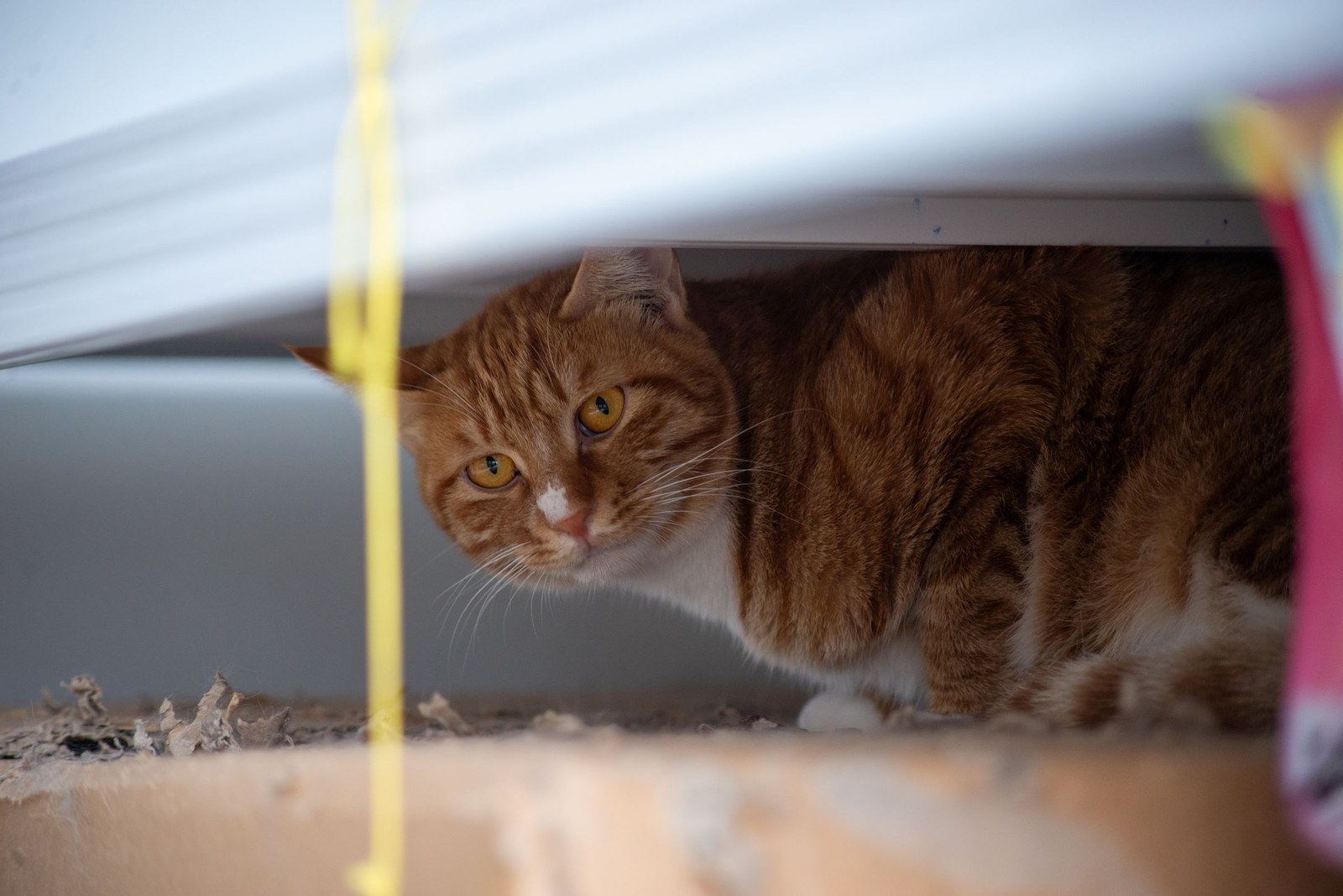
Yes, you can help a cat who panics at the doorbell — with gradual desensitization that teaches her, in tiny steps, that the sound predicts good things and never forces her to endure it at full blast. The keys are starting far below her fear threshold, pairing the sound with treats she loves, and always letting her retreat. Done patiently over many short sessions, your cat can become noticeably calmer.
Understand what the panic looks like
For many cats the doorbell is not one scare but three: a sudden loud, high-pitched sound, the shuffle of you moving toward the door, and then a stranger's voice and smell entering her territory. A cat who bolts, hides for an hour, or refuses treats near the front door is telling you the whole event overwhelms her.
Give her a designated safe base that is not near the door — a bedroom with a cozy hiding spot, water, and a litter box — and let going there be her job when visitors arrive. A cat with a practiced retreat is much calmer than one who feels trapped in the hallway.
The desensitization plan, step by step
You will need a recording of your actual doorbell, played from your phone, and small, high-value treats.
- Start at the lowest volume where your cat notices the sound but stays relaxed — ears forward, still willing to eat.
- Play the sound once, immediately give a treat, and repeat a handful of times in a session of just a few minutes.
- End while she is still comfortable. Several short, easy sessions beat one long one.
- Over days and weeks, raise the volume by one small notch at a time. If she freezes, stops eating, or bolts, you moved too fast — drop back to the last easy level.
- Later, add the surrounding pieces separately: a soft knock, your footsteps to the door, the door opening with no one there, each paired with treats at an easy level.
Real doorbells will interrupt training. That is fine: when it happens unexpectedly, let her retreat to her safe base without fuss, and do not lure her out to greet anyone.
What not to do
Never carry a frightened cat to the door to "show her it's fine," block her hiding spots so she has to face visitors, or flood her with repeated loud rings hoping she will get used to it. Flooding usually sensitizes cats further. Also skip scolding or comforting so intensely that your own alarm confirms hers — stay boring and upbeat, and reward calm behavior generously.
If guests are frequent, management is a legitimate part of the plan: a "cat resting, please text instead of ringing" note, a doorbell that can be switched to a softer chime, or simply settling her in her safe room before guests are due.
When fear needs professional support
Talk to your veterinarian if the panic is part of a wider pattern — hiding most of the day, appetite changes, over-grooming, or fear of many ordinary sounds — or if progress stalls completely despite weeks of gentle work. Pain and illness can lower a cat's tolerance for stress, and your vet can advise whether a referral to a qualified behavior professional would help. Never give your cat any calming product or medication unless your veterinarian recommends it for her specifically.
Consistency is what makes desensitization stick: short sessions repeated at the same easy level teach more than an occasional long drill, because each calm repetition is the lesson. When you want to check a step — how long to stay at one volume before raising it, say — put a follow-up question to KinsLe's Kinny; he answers using the KinsLe Answers library.