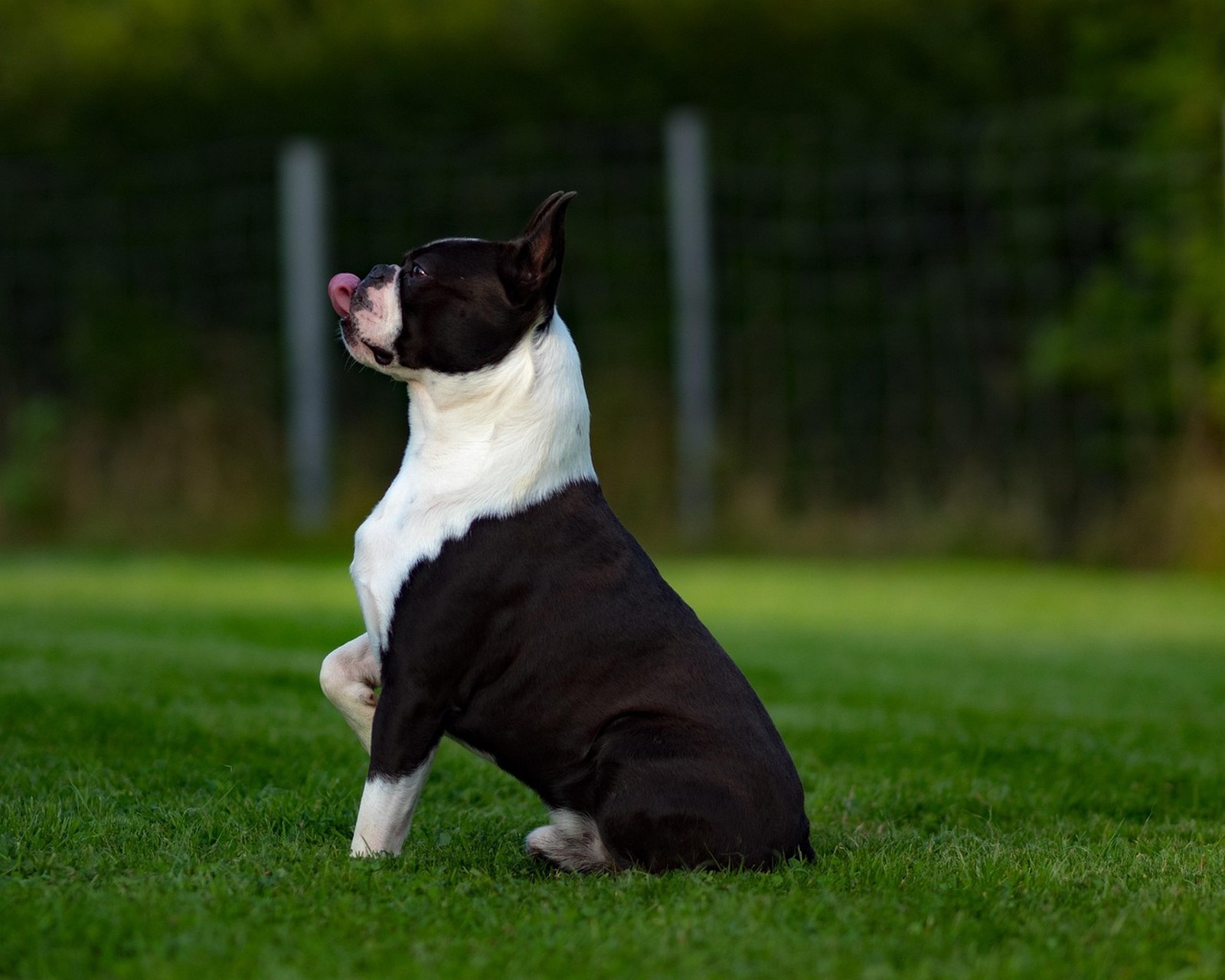
Boston Terriers ask a particular version of the meals question, because this compact, short-faced breed combines a small stomach, a large appetite, and a tendency to gulp air along with dinner. Two measured meals suit most adults, and the portions inside those meals matter more for a Boston's breathing and comfort than for almost any other small breed.
Two meals suit a small, round-tummied breed
An adult Boston Terrier is a compact dog with a big personality and a famously enthusiastic appetite, and two meals a day — morning and evening — divide his modest ration into comfortable portions. One daily meal would have to be relatively large for his size, and Bostons are prone to swallowing air and producing gas at the best of times, so a single overloaded sitting tends to make a gassy dog worse. Two regular mealtimes also structure the day for an indoor, people-oriented breed: breakfast starts the day, dinner closes it, and the hours between are for walks, play, and naps rather than campaigning for food.
Boston puppies need three to four smaller meals
Boston Terrier puppies should eat three to four small meals spread across the day while they are growing, reducing gradually to the adult pattern of two as they mature through their first year. Small puppies in a breed that will stay compact have small stomachs and steady growth to fuel, and regular meals keep energy even and housetraining predictable, since a puppy reliably needs the toilet shortly after eating. Keep each step-down in meal count gradual, over a week or so, and confirm at his veterinary growth checks that his weight is tracking as expected before dropping another meal.
Portion discipline matters more in this breed than most
Bostons gain weight easily, live closely with people who snack, and deploy an extremely persuasive stare. Extra weight is not a cosmetic issue here: a short-faced breed already works harder to breathe and to stay cool, and fat around the neck and chest makes both worse, especially in warm weather and during exercise. Weigh his daily food, split it between the two meals, and deduct treats and chews from that total rather than adding them on top. Check his ribs every couple of weeks — felt easily under a light covering — because his deep chest and compact shape can hide steady gain from the eye alone.
Gas, sensitive stomachs, and when to check in
A degree of flatulence is a Boston stereotype with a real basis, but a sudden increase alongside looser stools, vomiting, or a reduced appetite suggests the current food or feeding pattern is not suiting him and is worth discussing with your veterinarian. Feeding at floor level in a calm spot, using a slow-feeder bowl if he bolts his food and gulps air, and keeping mealtimes away from boisterous play all help digestion. Laboured breathing, distress after eating, or repeated vomiting are never wait-and-see signs in a short-faced breed — those need prompt veterinary attention.
For a breed whose health depends on nobody overdoing the bowl, KinsLe Care Teams keeps your Boston's feeding duties — two measured meals, treats counted — visible to the whole household and ticked off with a timestamp at each serving.