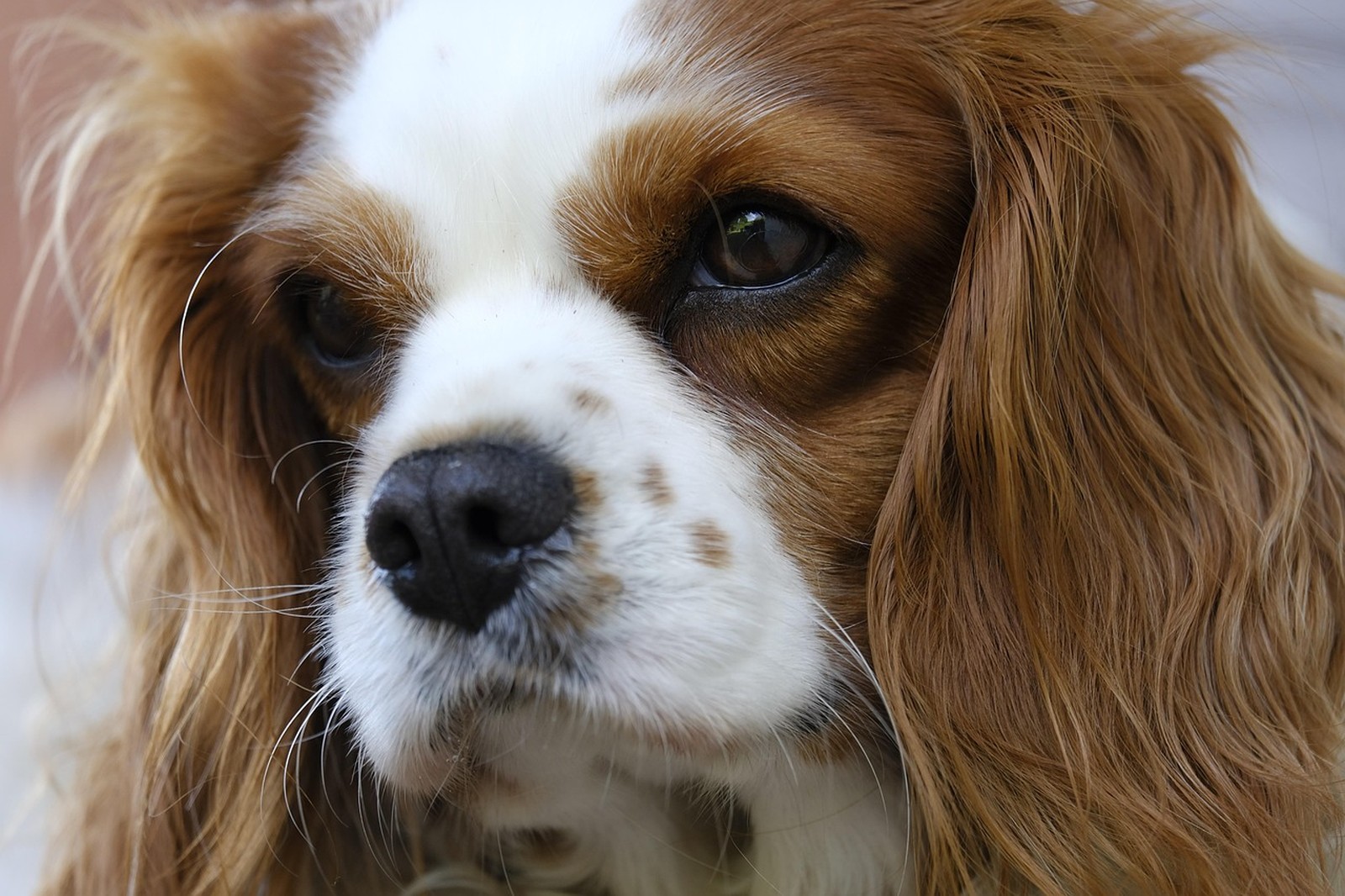
Meal frequency for a Cavalier King Charles Spaniel is bound up with this breed's two defining traits: a small spaniel stomach and an enormous, persuasive love of food. Two meals suit most adults, but the measuring behind them carries extra importance in a breed where staying lean is one of the kindest things an owner can do for an ageing heart.
Two small meals for a gentle, routine-loving dog
An adult Cavalier King Charles Spaniel is a small spaniel with a modest stomach and a deep love of household routine, and two meals a day — a morning and an evening serving — split his daily ration into amounts he can enjoy without being overfilled. One meal a day leaves a long, hungry stretch for a dog who organises his day around his people and their habits, while free access to a full bowl invites steady picking in a breed that rarely refuses food. Two set mealtimes give his day comfortable anchors and give you a simple twice-daily read on his appetite, which matters in a breed owners should watch attentively as it ages.
Cavalier puppies: three to four meals, gently reduced
Cavalier puppies need three to four small meals a day at first, because small-breed youngsters empty small stomachs quickly and are still building their adult frame. Reduce the count gradually across the first year — four to three, then three to the adult two — holding each stage steady and watching weight gain and stools before the next step. Keep mealtimes calm and separate from boisterous play, and let your veterinarian confirm at puppy checks that growth is on track. Cavaliers are sensitive companions, so a quiet corner for meals, away from competition with other pets, helps a youngster eat at his own pace.
The weight question carries extra weight in this breed
Cavaliers are famously food-motivated and famously prone to gaining, and carrying extra pounds is a particular kindness issue here because this breed is also predisposed to heart trouble as it ages — a heart coping with extra body weight is working harder than it should. Weigh his food rather than scooping, split the day's amount between the two meals, and count treats, chews, and the corners of toast he charms from the family inside that allowance. A fortnightly rib check and an occasional weigh-in catch drift early, when trimming each bowl slightly is still an easy fix rather than a formal diet.
Appetite changes in a Cavalier deserve attention
A Cavalier who leaves food, eats noticeably more slowly, or seems uncomfortable around the jaw or mouth should be checked promptly, since dental trouble is common in small breeds and mouth pain hides behind pickiness. New coughing, reduced stamina on walks, or appetite change in a middle-aged or older Cavalier also belong in a veterinary conversation sooner rather than later, given the breed's heart history — not as a cause for alarm, but because early checks give the best options. Keep meals consistent while you arrange the visit, and take a note of what he has been eating and how his appetite has shifted.
Gentle consistency is the whole game with a Cavalier, and KinsLe Care Teams keeps his two measured feeding duties, treat allowance, and mealtimes in one shared routine, marked done at each serving so his portions stay exactly where his health needs them.