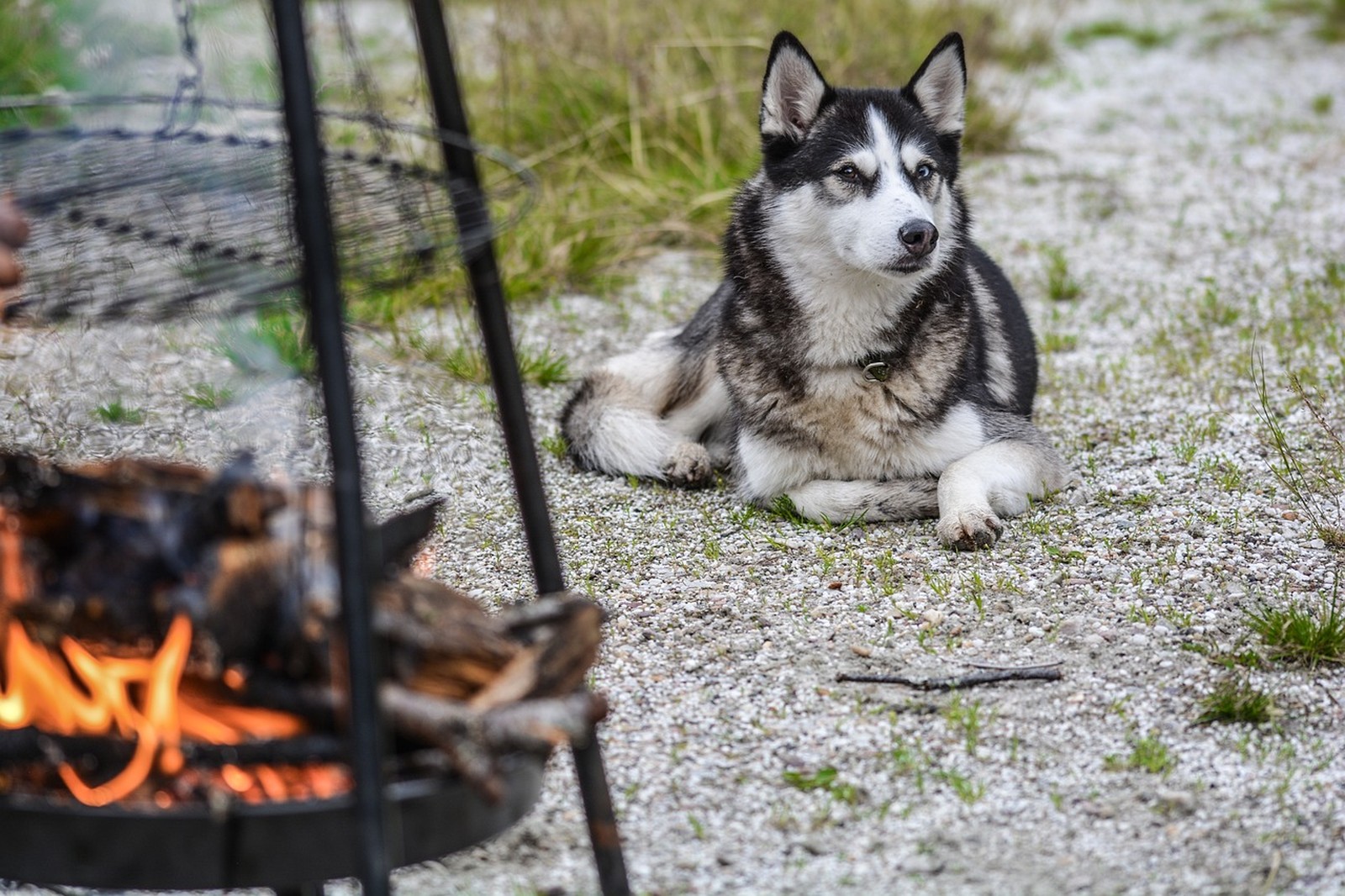
Two meals for the adult Husky
A healthy adult Siberian Husky usually eats two meals a day, one in the morning and one in the evening. Split the daily amount between them rather than offering a single large feed, particularly on days that include a long run, bike ride, or hike. Husky puppies need three to four smaller meals a day, stepping down to the adult pattern as they mature.
Owners are often surprised by how modest a Husky's intake can be. This breed was shaped by work in harsh conditions where food was scarce, and many Huskies regulate themselves well, eating heartily in cold, active periods and easing off when it is warm or life is quiet. A Husky who leaves part of a summer breakfast but is bright, active, and holding condition is often behaving like a Husky, not raising an alarm.
Timing meals around serious exercise
Do not serve a full meal immediately before hard running, and let a hot, panting dog settle, cool down, and drink before the evening bowl goes down. A working or adventure day earns a larger share of food afterwards, when the dog can digest it at rest, rather than a loaded stomach beforehand. On rest days, bring the amount back down; feeding every day as if it were a trail day is how an athletic breed quietly gains weight during a quiet month.
Keep the two-meal frame constant and flex the portions inside it. That gives you a simple dial to turn with the season: a touch more across both bowls in the busiest, coldest weeks, a touch less when heat or a lighter routine reduces what your Husky burns. Change amounts gradually over several days and judge by body condition, feeling for ribs under that thick coat, rather than by whether the bowl is licked clean, since many Huskies will happily accept a bonus meal they do not need.
Water, heat, and the picky spells
Huskies in warm conditions may shift their interest toward the cooler part of the day. If your dog regularly ignores breakfast in summer but eats well in the evening, you can move a larger share of the daily ration to the evening meal for that season while keeping two sittings, and make sure cool water is always within reach. Never try to solve a heat-related dip by offering rich leftovers or a parade of new foods, which teaches a smart breed to hold out for upgrades and can upset the stomach.
Rotate changes slowly when you do switch foods. A Husky's digestion can be sensitive to abrupt swaps, so mix the new food in over several days and watch stools and appetite as you go.
When lighter eating is not just Husky independence
Seek veterinary advice if reduced eating lasts beyond a couple of days, or comes with weight loss you can feel through the coat, vomiting, diarrhoea, low energy on walks, or a dog who wants to run but cannot sustain it. A Husky who stops drinking in warm weather, or who pants heavily and seems unwell after exercise, needs prompt attention rather than a wait for the next meal. Puppies who miss meals and become flat or wobbly should be seen the same day.
Also call the vet about a sudden increase in appetite with weight loss, or drinking far more than usual, since those point beyond seasonal adjustment.
Feeding a dog whose days vary
A Husky's week can swing from sofa days to mountain days, and different family members may witness only one version. KinsLe Care Teams gives everyone the same record of when your Husky was fed and how active the day was, so tonight's portion is based on the full picture, not on whoever happens to be holding the scoop.