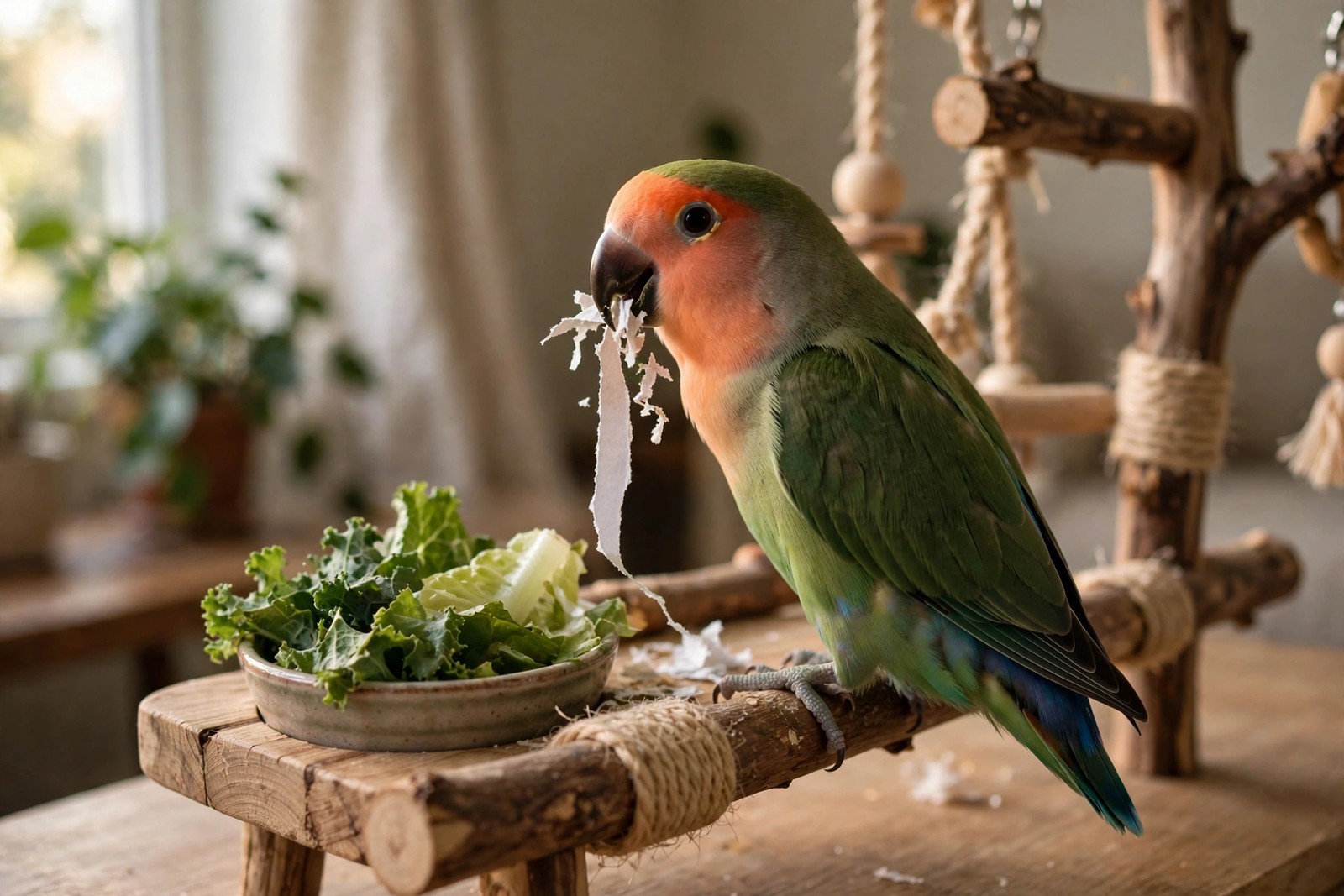
A lovebird is a small parrot with a small parrot's appetite for spending: budget roughly $63 to $101 a month. That is far less than a macaw or cockatoo, but noticeably more than a finch, and the difference is mostly the beak — lovebirds are committed shredders — plus the same specialist vet costs every parrot owner faces.
The monthly lines
- Staple food, $12 to $20. A quality pellet or a good seed-and-pellet blend. Lovebirds are prone to getting picky and filling up on seed alone if you let them, so expect to throw some food away while you keep the balance right.
- Fresh food, $12 to $20. Daily leafy greens and chopped vegetables, with fruit as a smaller extra. Fresh food served and discarded daily is a real grocery cost even at this scale.
- Toys and perches, $15 to $25. A female lovebird in particular will strip paper into neat ribbons and reduce soft wood and woven toys to confetti. That destruction is healthy behaviour, and the toy budget is what keeps it aimed at toys instead of cage fittings and your belongings during out-of-cage time.
- Liners and cleaning, $4 to $6. Tray liners, cleaning supplies, and the odd replacement dish.
- Avian vet reserve, $20 to $30. Saved monthly towards an annual check and the unexpected.
Pairs, lifespan, and the extras
Lovebirds are social and are often kept as a bonded pair. A pair does not double the bill: they share a cage, toys, and perches, and eat perhaps half as much again in food. With a lifespan commonly in the ten-to-fifteen-year range, though, even a modest monthly figure becomes a serious lifetime total, so do the multiplication before you buy. Start-up costs — a roomy cage with narrow bar spacing, a play area, and a first avian health check — sit outside the monthly number. So does holiday care: boarding fees or a sitter for even a short trip are an extra line most new owners forget to price.
Where owners overspend and underspend
Overspending usually happens on novelty toys when plain paper, cardboard, and safe natural materials shred just as happily. Underspending happens on the vet reserve and on fresh food variety, and both false economies surface later as illness. One more lovebird-specific note: a determined single female may lay eggs, and chronic egg-laying can lead to vet bills of its own, so raise it with your avian vet at the annual check rather than treating it as a surprise.
Holiday cover is simpler to arrange when the sitter can see the routine without a handover meeting, and a KinsLe Care Pass gives a trusted sitter or boarding helper temporary, scoped access to your lovebird's feeding amounts, fresh-food list, and bedtime routine, so the care you budgeted for is the care the bird actually gets while you are away.