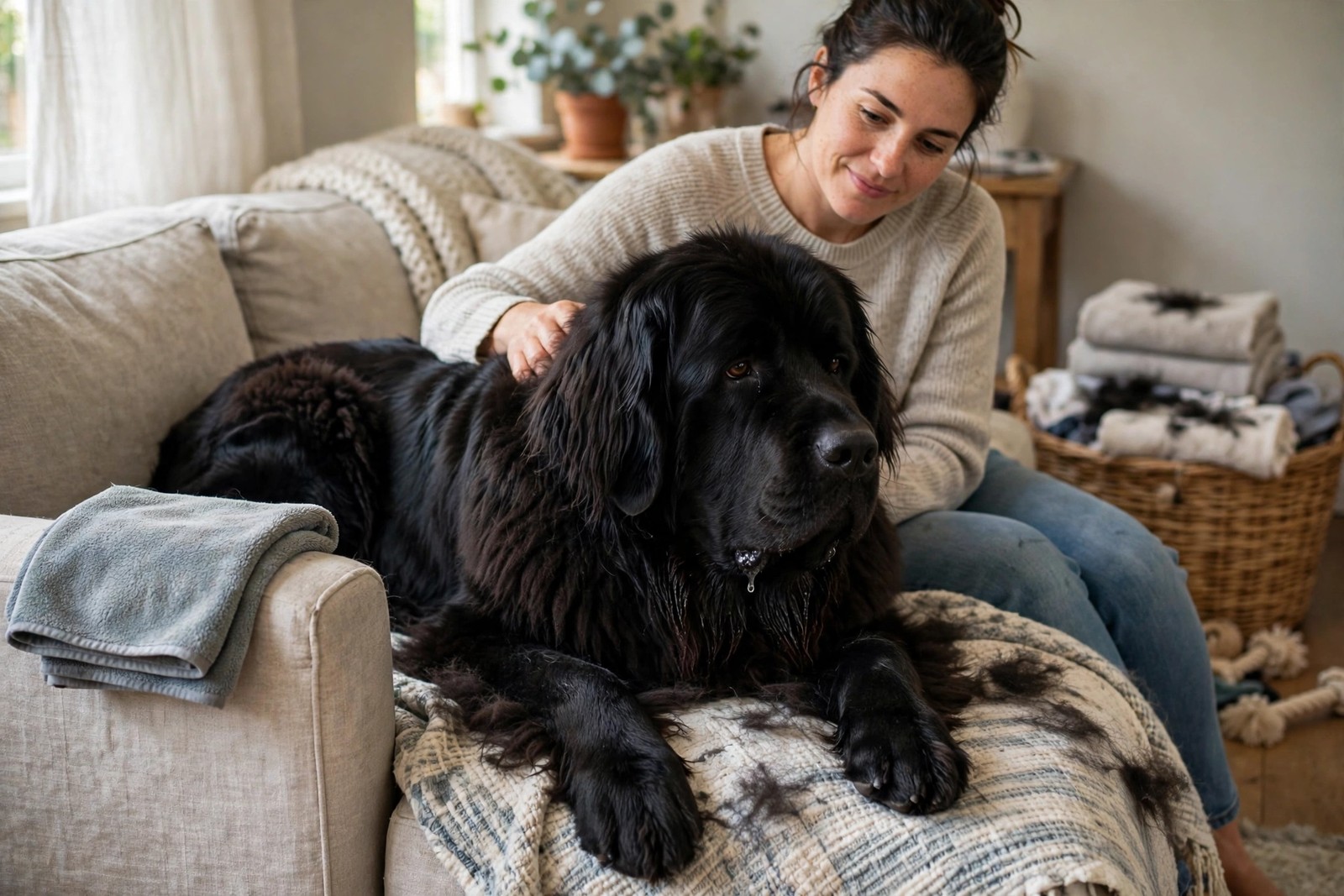
Living with a Newfoundland means accepting drool, hair and laundry as background weather. This is a giant, sweet-tempered water dog with loose lips, a profuse double coat and a body that can weigh 50 to 70 kilograms, and every one of those features produces housework. None of it is a training failure or a hygiene lapse; it is the breed. Households that thrive with Newfoundlands build systems for it and laugh about the rest. Households that prize pale upholstery and spotless floors usually find the breed a beautiful, miserable mistake, so it is better to read the honest account before the dog arrives.
Drool: Ropes, Spray and the Cloth in Every Room
Newfoundlands drool because their lips do not seal. Saliva gathers and leaves in ropes after drinking, around food, in warm weather and after exercise, and the classic head-shake sends it in arcs that reach walls, ceilings and anyone standing within range. Expect slobber on your clothes at greeting height, on visitors who lean in for a cuddle and across the floor around the water bowl, which doubles as a splash zone because the dog drinks deeply and carries water away in its jowls. The working kit is simple: a drool cloth or old towel in every room the dog uses, one by the door for post-walk wipes, a mat under the water bowl and washable covers on anything you care about. Wipe the chin and chest after drinks to keep the skin underneath dry, because permanently damp chest hair and skin invite soreness, and mention persistent redness or smell at vet checks.
Shedding: Drifts, Blowouts and Brushing Several Times a Week
The coat is a dense, water-resistant double layer that sheds steadily all year and blows out heavily in spring and autumn, when loose undercoat comes away in handfuls and drifts collect along skirting boards and under furniture. Brushing several times a week, through to the skin with an undercoat rake and slicker, keeps loose hair on the brush instead of the sofa; while the coat is blowing, daily sessions are more realistic, and ten minutes daily beats an hour of detangling later. Floors need attention most days during a blowout, whether that is vacuuming, sweeping or both, and your own wardrobe will carry hair permanently; many owners keep work clothes behind a closed door the dog cannot reach. Bathing a dog this size is an event in itself, so plan where it will happen and how the coat will be dried thoroughly, because a damp undercoat left to dry slowly can smell and irritate skin.
Laundry: The Rota That Never Ends
Count the wash load honestly. Dog towels from drinks, walks and wet weather; throws rotated off sofas and the dog's bed; your own clothes after floors, greetings and grooming sessions; and bedding if the dog is allowed up, all cycle continuously. Washable everything is the strategy: throws rather than dry-clean cushions, hard floors or washable rugs rather than fitted pale carpet and a mud-and-water station by the door with towels on rotation. Grooming several times a week, a drool cloth within reach and a laundry basket that never quite empties is the real daily picture behind the breed's gentle reputation. When someone else takes over (a sitter during a holiday, a groomer facing the coat for the first time), the details live in your head unless you write them down. KinsLe's Care Pass packages your Newfoundland's drool management, brushing routine and feeding notes into a temporary link a sitter or groomer can open without an account, so the systems survive your absence.