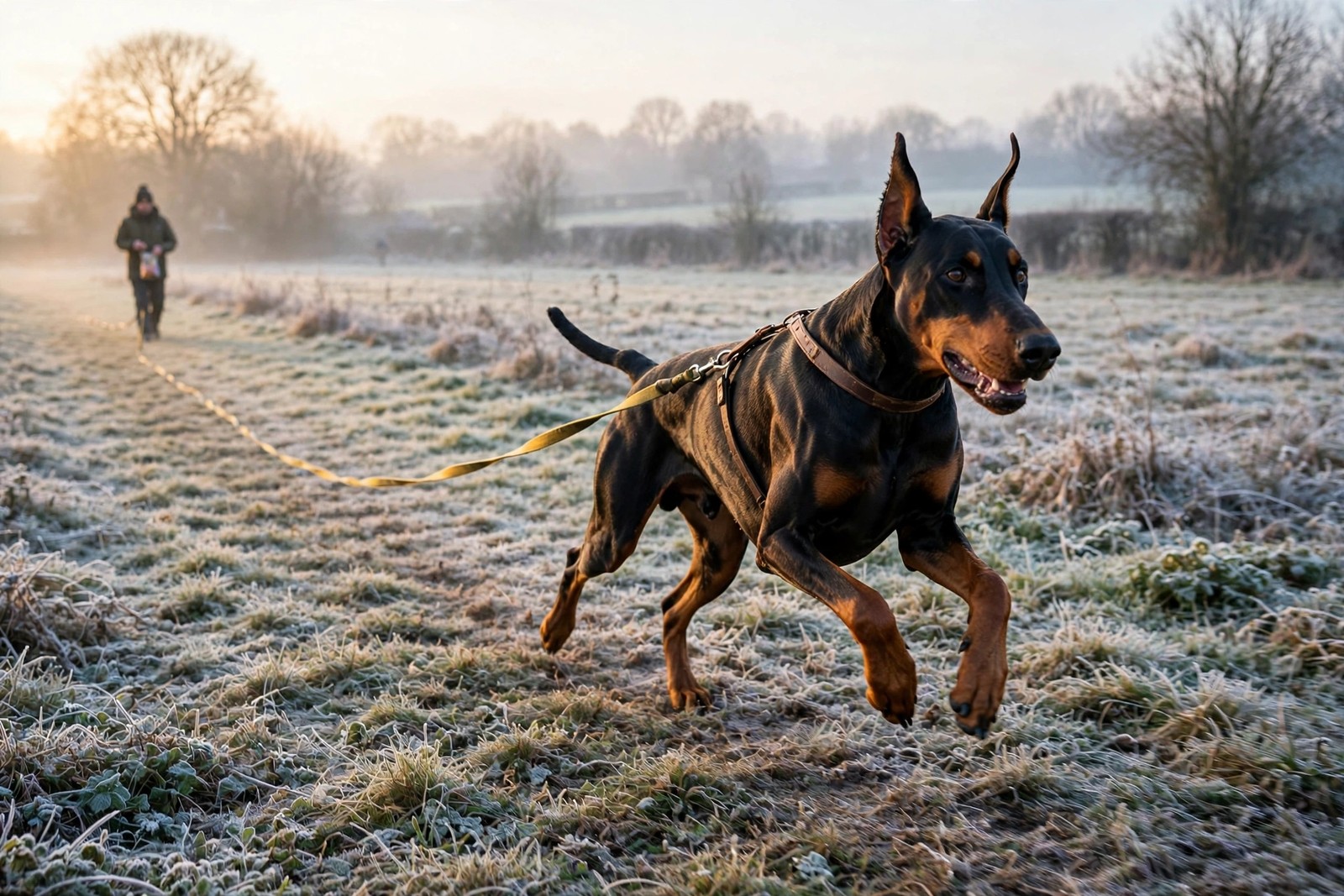
An adult Doberman needs around one and a half to two hours of exercise a day, every day, in all weathers. This is an athletic working breed with a sharp mind, and the owners who struggle with Dobermans are almost never dealing with a bad dog — they are dealing with a bored, under-run one who has started inventing his own entertainment out of the furniture, the garden, and the post.
How to build the two hours
Splitting the total works far better than one exhausting marathon:
- A long morning outing, 45 to 60 minutes. Brisk walking with some free running where it is safe and legal, or a trail walk with changes of pace and direction. This burns the overnight energy and sets up a calm middle of the day.
- A second session of 45 to 60 minutes later on. Training drills, fetch, scent games with treats hidden in grass or boxes, or a second walk somewhere new. Dobermans were bred to work alongside a person, so exercise with you in it — cues, games, tasks — tires them in a way solo garden time never does.
- Short mental top-ups. Ten minutes of obedience practice, a puzzle feeder, or a chew fills gaps and counts towards the day's work, though it supplements the physical exercise rather than replacing it.
Puppies, seniors, and health cautions
A Doberman puppy needs much less, delivered differently: short, frequent play and lead walks while the bones and joints are still growing, with no forced jogging, no long runs, and no repetitive stair work until the dog is fully grown — ask your vet when that point arrives for your dog. Seniors scale down gradually: keep the two outings, shorten them, soften the pace, and let the dog's recovery the next day set the level. Two breed-specific cautions apply at every age. Dobermans feel the cold and the heat more than their energy suggests, so adjust timing in extreme weather. And as a deep-chested breed, they are among those vets warn about for stomach twist, so keep vigorous exercise away from mealtimes and raise any sudden retching or restlessness with a vet as an emergency, not a wait-and-see.
Reading whether it is enough
A Doberman getting the right amount settles in the evening, sleeps well, holds a lean weight, and can concentrate during training. Too little shows up as pacing, whining, destructive chewing, and frantic behaviour on the lead. Too much, especially in a young dog, shows up as soreness, reluctance, and behaviour that gets wired rather than tired. Adjust in small steps and judge over a week, not a day.
Two hours a day is a lot to carry alone, which is why Dobermans suit households that share the work — and KinsLe's Care Teams lets you assign the morning run, the evening training session, and the midday garden break to different family members or a walker, each marked complete with a timestamp, so the full two hours genuinely happen instead of everyone assuming someone else went out.