
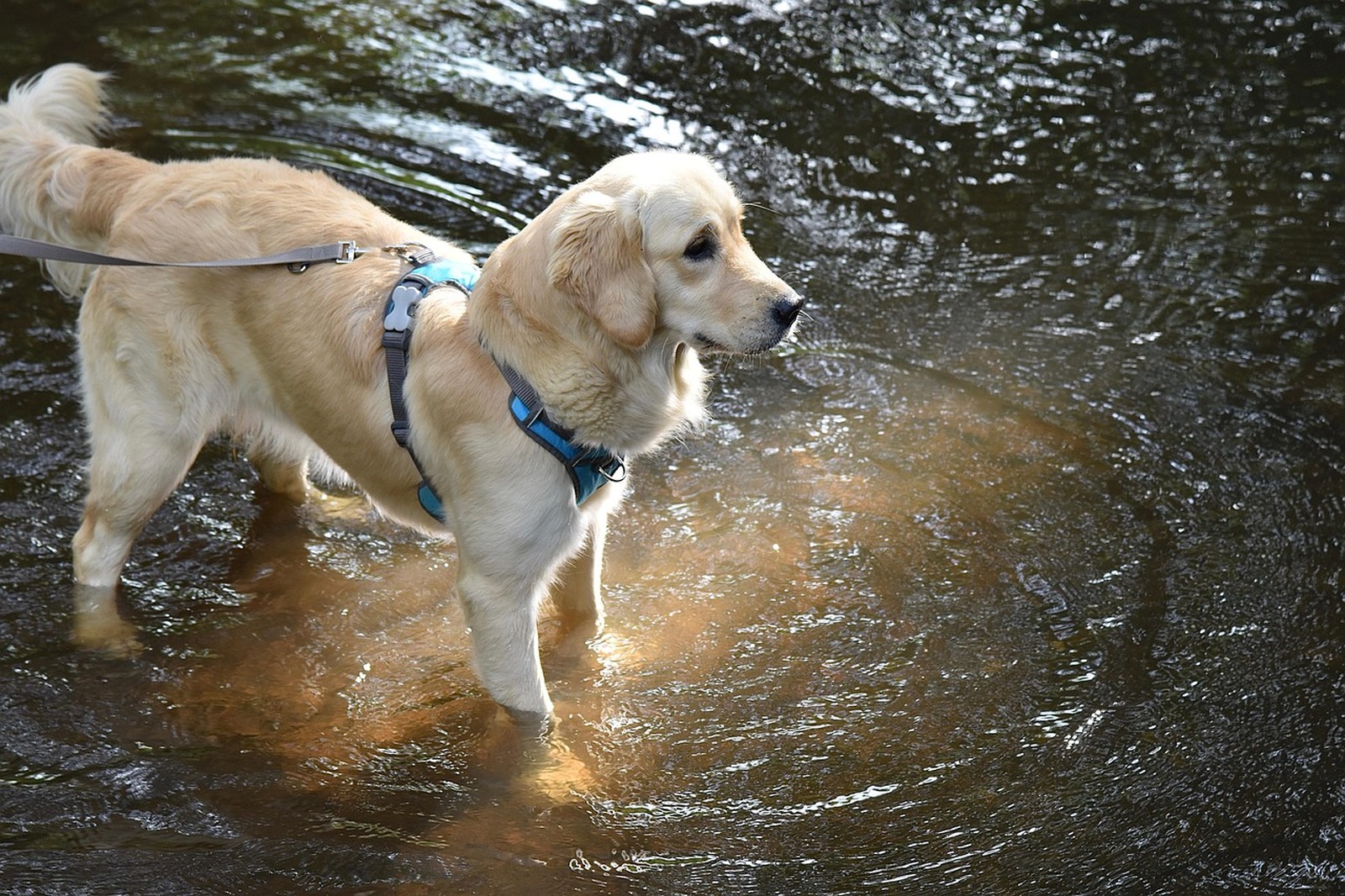
Most healthy adult Golden Retrievers need between 1 and 2 hours of exercise every day. Goldens look like placid family dogs, and they are, but underneath sits a gundog bred to retrieve from cold water for hours. An under-exercised Golden is famous for it: stolen socks, chewed skirting boards, and a dog who brings you a toy at midnight. Hit the range consistently and the same dog becomes the calm companion the breed is loved for.
Mix the Types, Not Just the Minutes
Retrieving is the fastest route to a tired Golden, but dose it sensibly: ten to fifteen throws with rests beats an endless ball session, which can overheat a dog and strain joints. Swimming suits the breed beautifully and loads muscles with almost no joint impact, though rinse and dry the coat afterwards, especially the ears. Add training games and scent work on some days; a Golden asked to think during exercise settles far better afterwards than one who has only run. Lines bred for field work often sit at the demanding end of the range, while calmer show-bred dogs may settle happily nearer one hour, so judge your own dog's behaviour at home rather than a neighbour's Golden.
The Adolescent Surge
From about six months to two years, most Goldens need the top of the range and test every boundary while they get it. This is the stage owners describe as the dog being naughty when the real issue is usually an energy surplus meeting an immature brain. Two solid sessions a day, plus short training bursts, carry most families through. Puppies under six months are the opposite case: short play sessions and brief walks protect growing joints, and enforced naps matter as much as activity. Seniors typically drop toward an hour of gentle walking, adjusted for arthritis and stamina.
Weight Is Part of the Exercise Conversation
Goldens gain weight readily, and extra pounds quietly reduce stamina while adding joint strain, so a dog who seems to need less exercise may simply be carrying too much. You should be able to feel ribs under a thin fat layer, and your vet can confirm condition at routine visits. Never try to walk weight off a very unfit dog in one weekend; build duration gradually over weeks. A routine this size usually spans the whole family, and KinsLe's Care Teams makes that manageable by letting you assign the morning walk, evening retrieve session, and weekend swim to whoever is free, each confirmed complete so your Golden's full amount never depends on one person's diary.