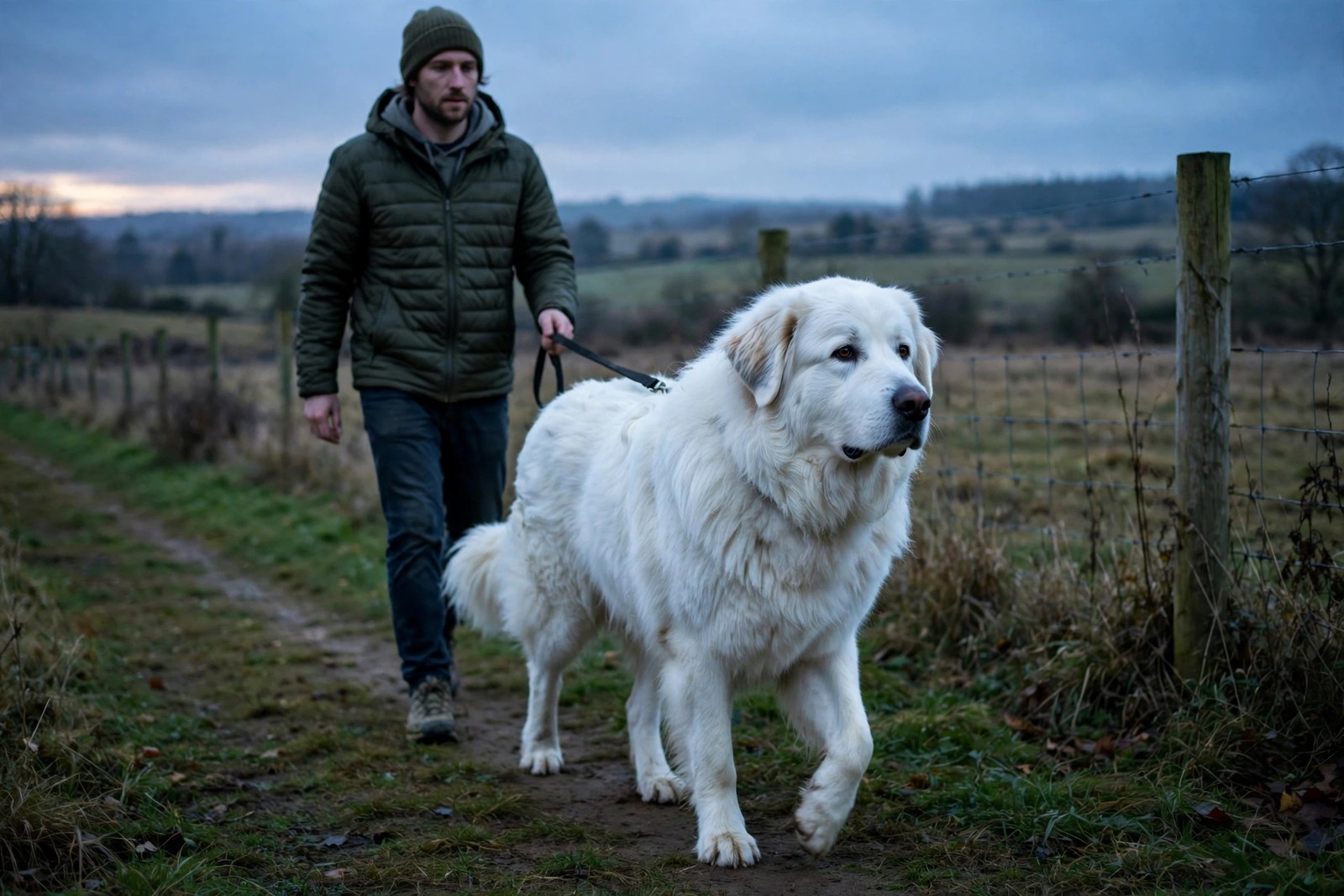
Gentle pacing is the rule for a Great Pyrenees: plan on an hour, or up to ninety minutes at a moderate pace, divided over at least two outings. That surprises people in both directions: it is more than the breed's couch-like indoor manner suggests, and far less intense than the dog's size and athletic build might suggest. The Pyrenees is a livestock guardian from the mountain pastures between France and Spain, bred to spend long days watching a flock, conserving energy and deciding for itself when action is needed. Its exercise should look like its work: steady patrolling, a great deal of sniffing and standing to survey, and short bursts of play, rather than sustained running or repetitive ball work.
What the Hour to Ninety Minutes Looks Like
A workable pattern is a morning walk of 30 to 45 minutes and an evening outing of 30 to 45 minutes, which together give you the hour to ninety minutes, mixing lead walking on varied routes with time in a secure garden or field where the dog can patrol, sniff and move freely. Add short training games and calm play inside the total rather than on top of it. This breed overheats in warm weather under a heavy double coat, so in summer the outings shift to early morning and late evening, routes favour shade and water and the total may sit at the lower end on hot days. In cool weather Pyrenees typically brighten visibly and walk further willingly. Judge by the dog in front of you: a Pyrenees that settles at home, sleeps soundly and is not redecorating the garden with holes or testing the fence line is getting enough. Evening restlessness, increased barking and escape attempts usually mean the dog is under-occupied rather than under-run, so add sniffing and training before adding miles.
Secure Ground Matters More Than Distance
Great Pyrenees are independent thinkers with a guardian's instinct to expand their territory, and off-lead exercise in open country is a calculated risk with this breed: many simply leave, patrolling a wider and wider circuit and deaf to recall once committed. Exercise off-lead belongs in genuinely secure spaces with fencing a large, determined dog cannot clear or dig under, and recall training still matters for the moments a gate or lead fails. Check fences the way the dog does, looking for dig spots and weak panels, because a Pyrenees treats a boundary as a suggestion until it proves solid. A long line gives freedom with a safety net in large, safe areas away from livestock and roads. This roaming instinct is also why identification matters so much in the breed; a guardian that gets out may cover real distance before it is found.
Puppies, Seniors and Joints
Grow a Pyrenees slowly. Puppies need short, frequent, gentle outings and free play on soft ground, not forced distance; their joints are carrying a frame that may exceed 45 kilograms as an adult, and over-exercise during growth is a false economy. Seniors still value their patrols, so keep outings regular but shorter, favour soft surfaces and watch recovery: lagging, stiffness the next morning or reluctance at the gate means the dose needs trimming. Weight control underpins all of it, because a heavy coat hides a widening waist until the joints complain. If the worst happens and your guardian clears the fence at dusk, minutes matter more than posters. KinsLe's Lost Pet Alert System holds the alert in his profile at no cost and displays it in map view, and anyone who finds him can reach you through a direct message, so word travels while you search.