The Surprisingly Modest Total
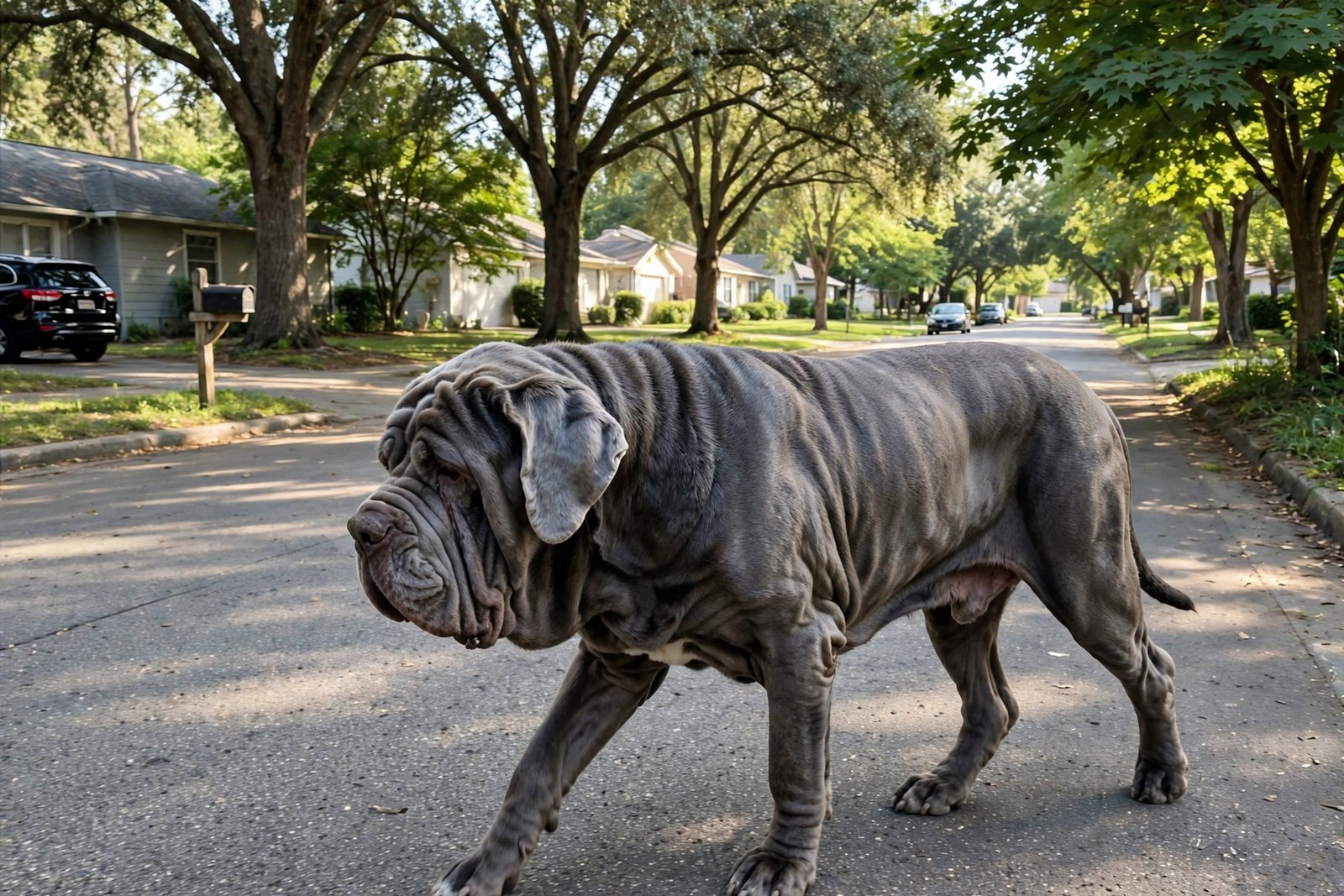
A healthy adult Neapolitan Mastiff needs about forty-five minutes to an hour of exercise a day, and gentle is the operative word. People assume a dog who can weigh as much as a grown man must need enormous outings, but the Neo's history points the other way. In Italy he was kept as an estate and home guardian — a dog whose job was to be present, watchful, and intimidating on his own ground, not to travel miles beside a shepherd. His enormous bone, loose wrinkled skin, and rolling gait belong to a sprinter of very short distances and a professional rester of long ones.
What Counts as Exercise for a Neo
Two slow neighbourhood walks, or one walk plus unhurried time mooching around a secure garden, cover most adults comfortably. Sniffing is a major component: a Neo works a scent picture thoroughly and considers a walk well spent if the interesting corners were properly inspected, even when the distance covered looks unimpressive on a tracker. Play should stay low-impact and self-limiting, and the dog should always be allowed to call time. Repeated stair climbing, jumping in and out of vehicles, and jogging beside a runner are all poor fits for this frame.
Puppies: Where Restraint Matters Most
Neapolitan puppies grow at a rate that makes their skeletons vulnerable for many months, and over-exercise in the first year is one of the kindest-intentioned mistakes owners make. Short, frequent play on grass or other forgiving surfaces, brief lead walks built up very gradually, and careful management of stairs and slippery floors protect developing hips and elbows. Free play with much larger or rougher adult dogs deserves supervision too. If a young Neo sits down mid-walk and declines to continue, believe him — carrying the point, or the dog, home is nobody's idea of a good afternoon.
Heat and That Famous Skin
Warm weather compresses this breed's already modest stamina further. The heavy head, loose skin folds, and sheer mass make cooling down hard work, so summer exercise belongs in the early morning and late evening, on shaded routes, with water offered and a low threshold for turning back. Heavy panting, obvious reluctance, or seeking shade are end-of-walk signals, not attitude. Owners should also keep facial folds clean and dry after outings, since a hot, damp Neo face is an uncomfortable one.
When Less Exercise Is a Warning Sign
There is a difference between a Neo's natural economy of effort and a dog who has quietly stopped wanting to move. New reluctance to rise, lagging on a route he usually enjoys, limping that persists beyond a day of rest, or a sharp drop in appetite alongside the lethargy all merit a prompt conversation with your veterinarian rather than a wait-and-see approach. Equally, a young, bored Neo with energy to burn will sometimes redecorate a doorway, which is a cue for a bit more mental stimulation, not longer forced marches. In KinsLe, Care Teams keeps a Neapolitan's short daily walks assigned and timestamped among his people, so his gentle routine stays regular and nobody accidentally doubles it.