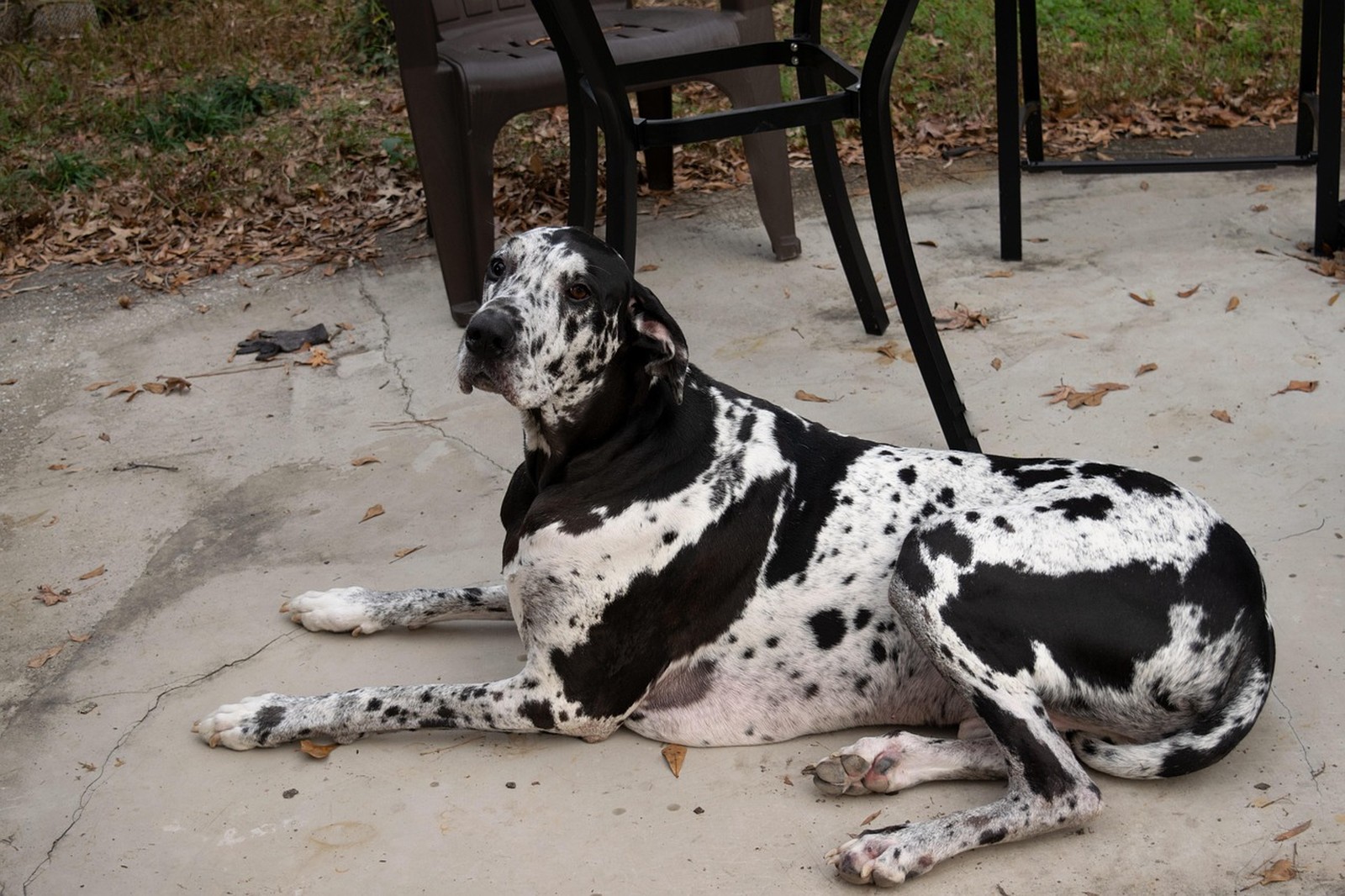
Life with a Great Dane and a cat is often a peaceful arrangement, and the breed's gentle-giant reputation is well earned at home, provided the dog's sheer bulk is managed from the first meeting and the cat always has high perches and exits the dog cannot reach. Whatever the breed, the introduction itself does half the work: scent-swapping first, meetings through a barrier, the cat free to leave at all times, and no unsupervised time together until weeks of calm say otherwise. A dog who is exercised and mentally settled before meetings is far easier for a cat to accept.
What Owners Need to Know
With a Dane and a cat, read size as part of the message: a playful paw or a body barging through a doorway can overwhelm a cat even when the dog means no harm. Note what came just before any flare-up — a cat darting past, food on the counter, a visitor at the door — because that trigger points to the barrier, perch or routine to change next. Reward your Dane the instant he chooses calm near the cat — a settled lie-down, a look away — keeping practice brief and positive so the good choice becomes his habit. Scolding tends to add tension without teaching either animal what to do instead; steady repetition of calm, rewarded behaviour is what makes shared rooms feel safe.
Danes settle into household rhythms quickly, and a cat is easier for a dog to accept when exercise, meals and rest already follow a predictable pattern. A young Dane is an oversized puppy who does not know his own strength, while an older dog may be firmly set in his ways, so judge introductions by the individual in front of you rather than the breed label.
Steps That Make the Difference
Work through these in order and give each one time to become routine before you judge it:
- Spot the trigger and the time of day the behavior peaks
- Reward the calm alternative behavior immediately and every time at first
- Keep training or practice sessions short — a few minutes, several times a day
- Give the need an outlet: exercise, chewing, scratching, foraging, or play, as fits the species
- Write down what happened for a week; patterns are easier to see on paper
Small and steady beats big and occasional in almost every area of pet care. Short, calm practice most days builds a Dane's manners around a cat far better than one long session now and then, and it is kinder to a young, elderly or nervous animal.
Day to Day, Done Well
Anchor the routine to habits your household already keeps. Attach supervised together-time to something already in place, such as the post-breakfast settle, so it keeps happening through busy weeks rather than relying on a special appointment. Households where a Dane and a cat rub along well are usually doing simple things steadily: watching body language, stepping in early, and getting professional input before tension hardens. Refresh that routine when life shifts — a new home, a new kitten, or your Dane's senior years can all change how the pair need space managed. For the household rota behind that calm, KinsLe's Care Teams records who is watching each meeting and marks every finished duty with its own timestamp.