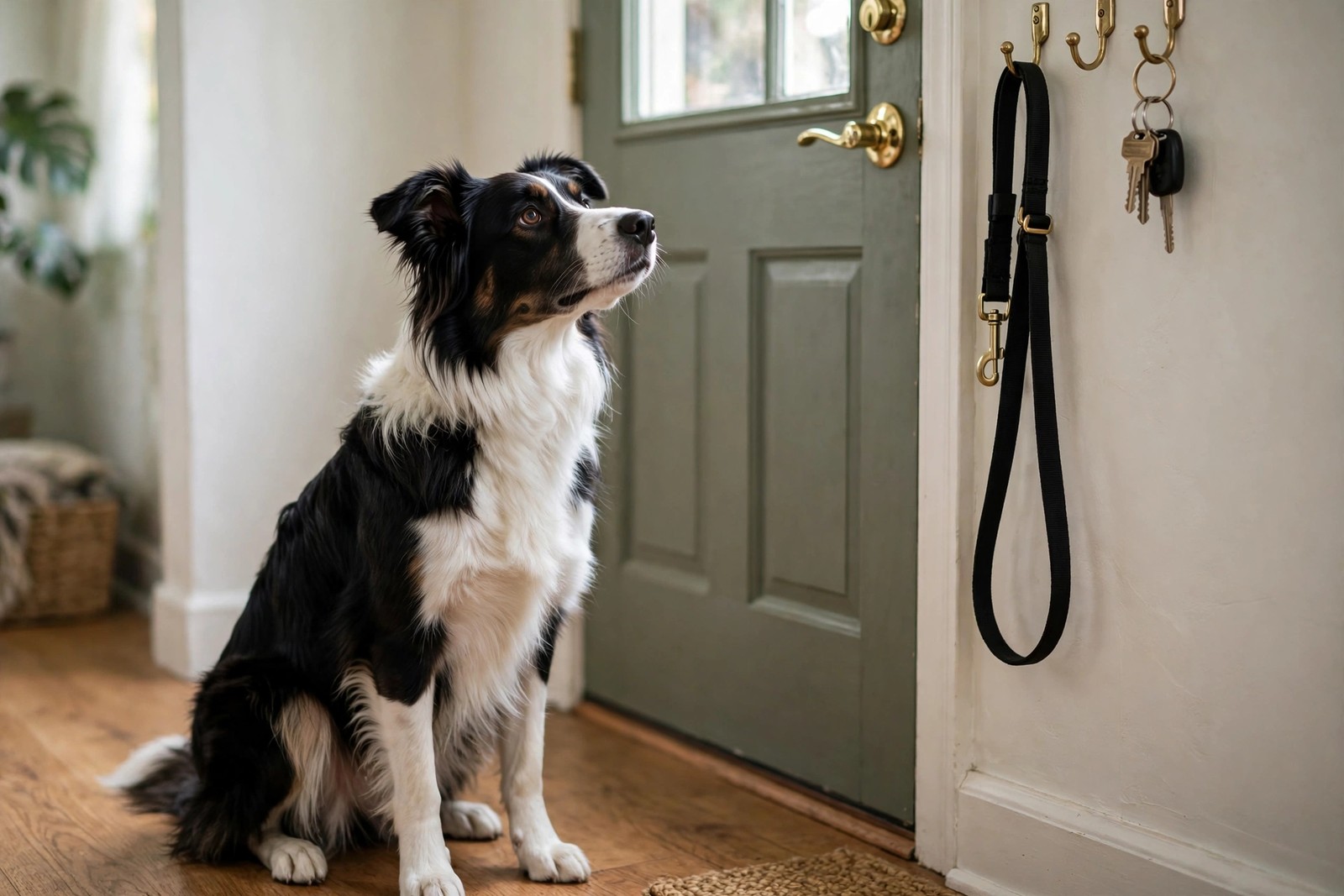
Separation anxiety is distress about being left alone, and its signs make sense only when you line them up against the clock of your departure. A dog who chews a shoe while you watch television is bored or under-exercised. A dog who tears at the front door frame in the first half hour after you leave, every time you leave, is showing you something different — and that timing is the single most useful clue an owner can collect.
Damage aimed at exits and barriers
Destruction in separation anxiety clusters where the dog tried to get out or get to you: scratched and chewed door edges and window frames, dug carpet at a closed doorway, bent crate bars, or a damaged baby gate. Toys and interesting objects elsewhere in the room may sit untouched. Some dogs hurt themselves in the effort — broken nails, worn or broken teeth, and scraped paws after an escape attempt are red flags that the panic is severe and a vet or a qualified behaviour professional should be involved promptly, not after months of hoping it fades.
Toileting, drooling, and a body under stress
A reliably housetrained adult dog who urinates or defecates only when left alone is signalling distress, especially when it happens even after a toilet opportunity right before you left and even on short absences. The wider body picture often shows on a camera recording: pacing the same route, panting with a drooled-wet chest, whining building to barking or howling, and no real settling at any point while the house is empty — quite different from a relaxed dog who toilets rarely and sleeps most of the absence away. Excessive, frantic greeting when you return, far beyond happy, is another clue owners often mention.
Distress that starts before you leave
Many separation-anxious dogs learn the departure routine in detail. Keys, shoes, a coat, a particular bag, or the sound of a specific door can trigger shadowing, following from room to room, panting, trembling, hiding, or refusing food that the same dog eats happily when you are staying in. A dog who will not touch a stuffed food toy while alone but empties it the moment you are home is telling you the anxiety, not the toy, needs attention. Note which cues set your dog off, because any help plan has to start by defusing exactly those moments.
What it is not, and how to confirm it
Do not punish any of this after the fact: the dog was panicking, not plotting, and punishment deepens the fear of being left. Rule out lookalikes first — incomplete housetraining, a medical cause for accidents, boredom in a young dog left too long, and noise fear that only coincides with your work hours. The cleanest confirmation is evidence from while you are out: ask neighbours what they hear and when, and record one ordinary absence on a phone or camera. If the signs fit, talk to your vet, who can rule out medical contributors and discuss a gradual alone-time training plan and whether extra support is appropriate. While you build that plan, using KinsLe's Care Teams to assign who is doing each short practice departure, lunch-hour visit, and training session keeps the whole household working to the same gradual schedule instead of accidentally leaving her far longer than she can yet handle.