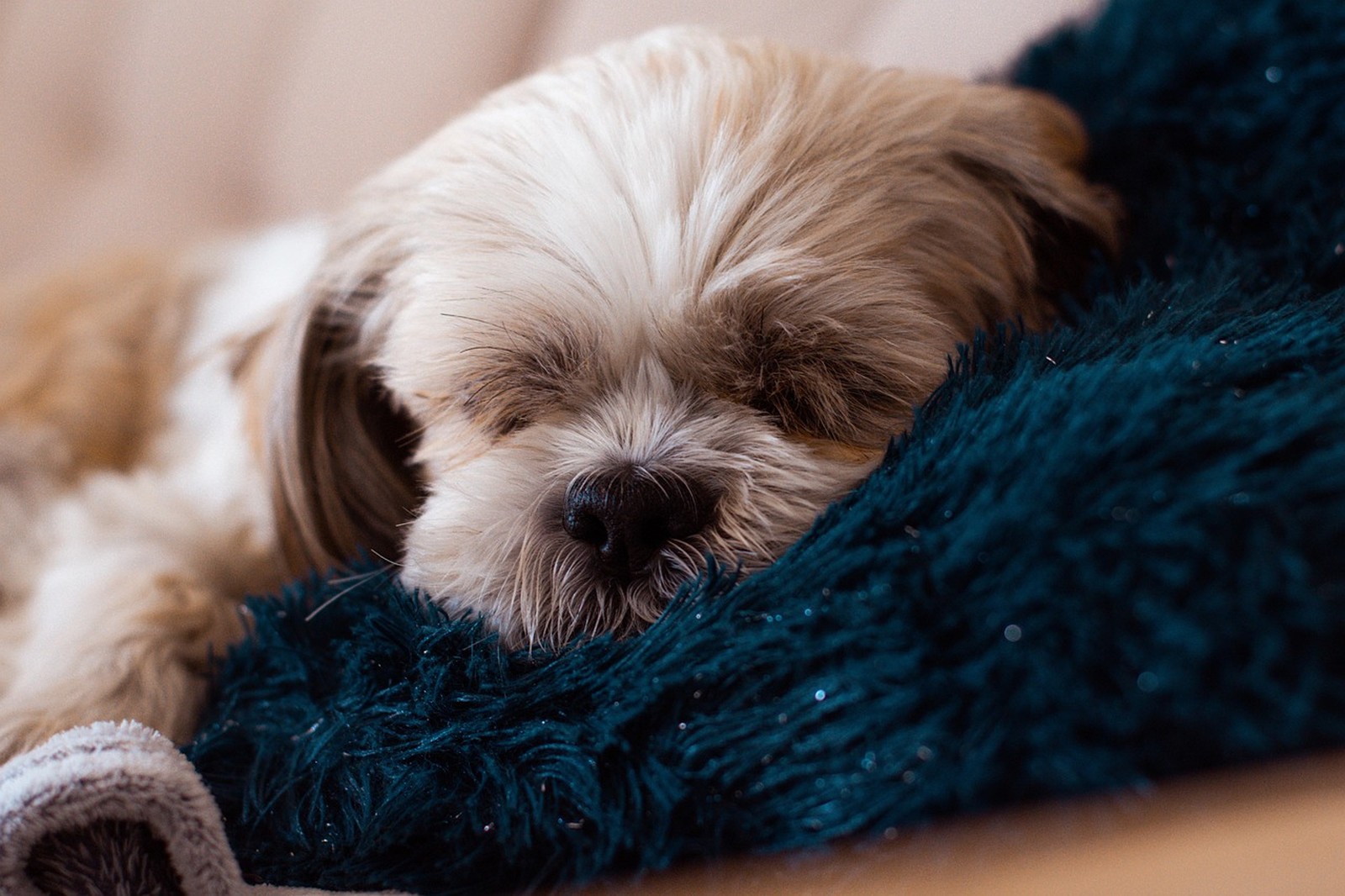
Yes — if there is a breed designed by accident to suit cats, it is the Shih Tzu. Bred for centuries as a palace companion, the Shih Tzu has never been asked to chase, herd, retrieve, or guard anything, and the instincts that make other breeds complicated around cats were simply never selected for. Most Shih Tzus regard a new cat with mild curiosity and then return to the serious project of finding the warmest seat in the room — priorities most cats respect. Pairings between this breed and a confident cat are among the smoothest multi-pet households owners report.
Why the Temperaments Mesh
Size and energy do much of the work. A Shih Tzu is close to a large cat in weight, so neither animal finds the other physically intimidating, and the breed's exercise ambitions are modest: short walks, a game indoors, and then rest. A cat is rarely bowled over, cornered, or chased by a dog whose top priority is comfort. Even the Shih Tzu's social style helps — the breed tends to greet politely and then coexist in parallel rather than demanding constant interaction, which suits the way cats prefer to build trust slowly, at their own pace, on their own furniture.
The Real Risk: Eyes, Not Instinct
The caution in this pairing runs the other direction from most. A Shih Tzu's eyes are large, forward-facing, and prominent, and they sit exactly where an annoyed cat's swat lands. A single clawed swipe during an early disagreement can scratch the surface of the eye, and eye injuries are the kind of problem that needs a vet the same day — watch for squinting, watering, pawing at the face, or a cloudy look to the eye after any spat. Reduce the odds by trimming the cat's claws before introductions begin, supervising all contact until the animals have a track record, and giving the cat escape routes and high perches so a swat is the last resort rather than the only one.
Introductions at a Shih Tzu's Pace
There is no need to rush a pairing that starts this promising. Let the animals swap bedding for a few days, then meet through a gate, with the cat free to withdraw and the Shih Tzu on a lead it barely notices because the sessions are short and well paid in treats. Watch the Shih Tzu puppy problem in particular: an adult Shih Tzu is placid, but a puppy of any companion breed pesters, and a cat pestered daily by a bouncing puppy will either hide or retaliate. Separate the animals when you cannot supervise, put the cat's food and litter where the dog cannot reach them — Shih Tzus are dedicated cat-food thieves, and rich cat food does a small dog's digestion no favours — and let shared calm, not forced cuddling, set the timeline.
When the Household Adds a Kitten or a Second Dog
A kitten introduced to an adult Shih Tzu usually succeeds quickly, but supervise the kitten's side too: kittens play rough, and those prominent eyes are the target again. Adding a second, larger dog changes the calculation more — the Shih Tzu–cat peace does not automatically extend to the newcomer, who needs its own staged introduction. And if your cat is elderly or frail, even a friendly dog's invitations to play can be too much; give the cat a fully dog-free room for part of every day so rest is guaranteed rather than negotiated.
Even an easy pairing holds better when feeding, supervision, and litter-zone rules are run identically by everyone in the house. KinsLe's Care Teams lets you assign the gate meetings, the separate feeding routine, and the daily claw-and-eye check to different family members as shared duties, so your Shih Tzu and your cat get one calm, consistent introduction instead of a different arrangement on every shift.